


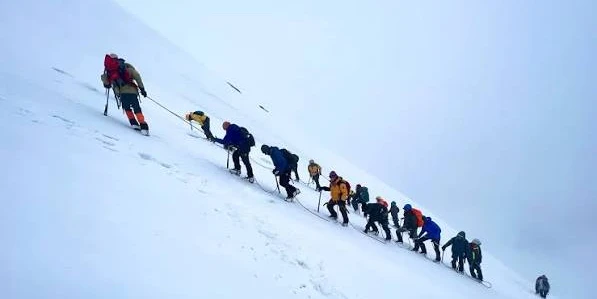
Friendship Peak Trek Distance, Best Time, and How to Reach
Friendship Peak is considered to be an all-time favorite among demanding and rewarding summer mountaineering trips in the Pir Panjal range of Himachal Pradesh. The summit of this beautiful mountain near Manali makes an ideal challenge for senior trekkers and novice mountaineers eager to tackle Himalayan peaks and passes. You will cross glaciers, ascend steep slopes, and climb rocky sections with mountain vistas galore. Know the Friendship Peak trek distance, altitude, difficulty level, best season, and route before heading out for the trek. The Friendship Peak trek is quite different from the normal Himalayan treks. You will need more strength in your body, more technical skills, and mountain expertise. This article covers all the important and useful details of the Friendship Peak trek, like distance, best time to visit, starting point, route, who can do it, and how fit one should be.
Where Is Friendship Peak Located?
Friendship Peak is in the Pir Panjal mountain range of the Himalayas in the Himachal Pradesh state of India. Friendship Peak is in the region of Manali and is amongst the splendid mountain landscapes with glaciers and high mountain passes. It rises 5,289 m (17,352 ft) above sea level. At the summit, due to the elevation and the difficulty, it is known as a popular goal for a mountaineering expedition rather than a gentle family leisure walk holiday.
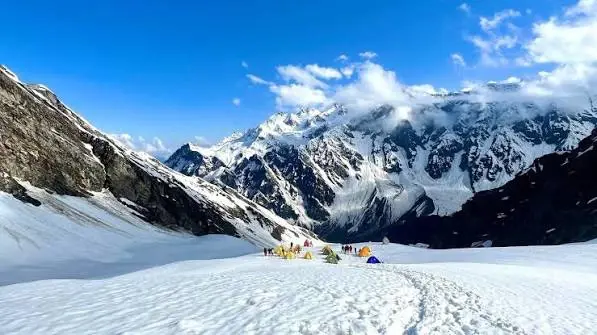
Mountain scenery with snow-capped peaks, alpine valleys, and rugged country. - On days when the weather is clear, the climbers will have the opportunity to observe the Pir Panjal and Himalayan mountain ranges. Manali is the first point to start your trip. The shopping town is the closest position you have to do all you'll need to do, which include purchasing the bus ticket, hiring driver and find the guides before starting for your Mountain. If you're planning the Friendship Peak trek, understanding the route, altitude, and trekking challenges is essential before setting out. Explore our Friendship Peak Trek package to learn more about the trek itinerary, preparation, and guided trekking experience.
Friendship Peak Trek Distance
The possible Days of the Friendship Peak trek would probably differ depending on the proposed path, route chosen, and the campground points, but this is a few-day trek starting from the approach trek, which takes a number of days, an excessive altitude hike, and then the return trek. Total days needed to complete the entire expedition are normally 7-9 days, including approach trekking to base camp, acclimatization, ascent, summit, and descent. Actual trekking distances depend on the selected route and expedition plan.
Friendship Peak Trek Difficulty Level
Friendship Peak. It is suggested to go trekking to Friendship Peak with mountaineering or trekking experience. The challenge is the elements: altitude, steep slopes, glaciers, snow conditions, and summit day.
Why Is Friendship Peak Difficult?
Altitude: As the summit is near 5,300 meters, there is a risk you will need to adapt. With less oxygen in the atmosphere, this can impact your ability and efficiency to breathe and affect your stamina and fitness levels. Some parts have rocky areas, open mountain slopes, and ice slopes with a steep gradient.
Glacier travel: The crossing of glaciers and snow-covered terrain for which experience and knowledge of the route and equipment are needed and, in some cases, equipment.
By the time you reach the summit, there could be a few hours of flat walking in front of you, and a portion of that could be continuous, so pack the strength. Weather conditions—Himalayan weather conditions keep on changing in fractions of seconds; snow, wind, and dirty weather can halt the climbing schedule and delay the summit of the mountain. Hence, you should be somewhat experienced in high-altitude trekking to perform these treks, and you should have very good aerobic capacity to walk throughout the day with your daypack.
Best Time to Climb Friendship Peak
June to July: September may be too late for some routes, yet early summer might present favorable conditions for experts, contingent on snow levels and route access. At the bottom of the passes, the surrounding country is less of a desert; some greener patches begin to appear. At higher elevations, snow is often still plentiful. Bring layers of cold weather gear; be prepared for snow sections and changing weather conditions.
August: Beautiful alpine scenery can be seen in August along the approach route. Monsoon weather conditions in Himachal Pradesh can impact the lower mountain regions as well as roads and trekking routes. Rain, a bove damp and blowing circumstances might make for a hurdle at approach and climbing phases. Before going any further, expedition operators need to consider the conditions.
September: The best time to climb in the Himalaya is sometimes early September, as the monsoon starts to taper off in many parts. The weather might improve,, and the mountain views and visibility might be better. But at higher elevations, snow, cold, and variable conditions can still occur. Climbing dates are based on real mountain conditions and not the calendar. Always check the current route conditions, weather forecast, and expedition schedule before finalizing your climbing date.
Friendship Peak Trek Route: How to Reach the Summit
Manali to Dhundi: Our trek begins by commuting a distance of 21 km from Manali to Dhundi by road, which is a 1 to 1.5 hour drive. Dhundi is the starting point of the trek, where trekkers are dropped off from the car and proceed to the mountain camps.
Dhundi to Bakarthach: Climb through forest sections before the trail slowly descends into alpine meadows. It is located at a height of about 3,300 meters above sea level, where tourists usually spend a night.
Bakarthach to Lady Leg Base Camp: Ascend to Lady Leg Base Camp at about 3,800-3,900 m. The elevation gain over this stretch is high, so you need to keep a consistent rhythm and move slowly to allow yourself to acclimate. Lady Leg provides a crucial rallying point for the staging phase of the summit preparations.
Lady Leg to Summit Camp: After the acclimatization and route preparation, the team proceeds to the summit camp located further up. Some or all of the teams may load carry, snow train, and do some check-out of the equipment prior to going into high camp as per the itinerary.
Summit Attempt: The climb for the summit is usually begun at about midnight or in the early morning depending on the weather conditions and the expedition's plan of action. Ascenders navigate rocky, snowy, and glacier terrain up toward the summit. They pause briefly and gently settle as low as the camping area. The route and camp elevations and summit times may differ due to snow conditions and at the discretion of the expedition leader.
How to Reach Friendship Peak
By Airport: The closest airport is Bhuntar Airport (Kullu-Manali Airport). This is around 50 km from Manali, although it takes a different amount of time to travel due to the state of the roads. Flights to Bhuntar can be sparse and weather-affected. You could, however, fly to Chandigarh or Delhi and travel by road.
By Road: Chandigarh is often used as the initial city for trips by road to Manali. You can take either a bus or a private vehicle between Delhi and Manali, and the average duration is approximately 12-15 hours, but it may be longer due to road or other travel delays. Expedition parties organize the journey from Manali to Dhundi and Solang Valley.
By Train: Manali does not have a railway station. Travellers have the option to reach Manali via train to Chandigarh or any other railhead and proceed by road. We recommend arriving in Manali at least one day prior to the expedition date for the expedition check and briefing, as well as rest and acclimatization.
Fitness Requirements for Friendship Peak
Cardiovascular Training
Running, cycling, swimming, and fast walking can contribute to developing good cardiovascular endurance. Sustained a level of activity that can be maintained for several hours without fatigue.
Hiking Practice
Strengthens your spine. (especially if you hike with a backpack). Practice walking uphill and longer distances on uneven ground with a weight you are comfortable with.
Strength Training
Concentrate on building strength in the legs, core, and upper body to improve your stability on the trail and avoid fatigue. Utilising exercises that include a squat, lunge, step-up, and plank is a great way to add to a training routine.
Altitude Preparation
Previous high-altitude trekking experience is beneficial. But being physically fit will not in itself prevent altitude sickness. It is important to acclimatise properly, ascend gradually, and check your symptoms.
Essential Things to Carry for Friendship Peak
High-altitude trekking boots suitable for the expedition
Warm thermal layers and insulated jackets
Waterproof and windproof outerwear
Gloves, balaclava, and warm socks
Sunglasses with suitable UV protection
Sunscreen and lip balm
Headlamp with spare batteries
Personal medication and basic first-aid supplies
Water bottles or hydration system
Backpack and appropriate sleeping equipment
Technical climbing equipment as required by the expedition
Is Friendship Peak Suitable for Beginners?
Experience doing the same trek. The trek is not suitable for first-time trekkers. While many of our climbing programs do not require that you have a high mountain qualification, you should have some experience of trekking at altitude. It's helpful to have done some serious Himalayan trekking with plenty of vertical as well as long days before trying Friendship Peak. Depending on the route conditions, you may need to have knowledge of crampon walking, ice-axe techniques, and rope-assisted climbing.
Safety Tips Before Going Up Friendship Peak
Go slow: Stick to your acclimatization schedule during the trip and be patient. Never rush up at altitude too quickly.
Beware of altitude sickness. Look out for headaches, nausea, dizziness, and fatigue.
Follow the guide: Technical ascents and crossings of glaciers should be instructed by and undertaken with a guide.
Never try a summit without getting the okay from your leader.
Travel insurance: Ensure your insurance covers high-altitude mountains and rescue.
It's almost certain mountain runs will be weather-delayed, and there may not be enough time to get a reboarding in as a backup.
Friendship Peak Trek Package: Planning Your Expedition
The planning stages for the Friendship Peak have to incorporate routes, climbing equipment, acclimatisation, setting up camp, and technical support. With guided trekking expeditions, trekkers are able to familiarize themselves with the route, ascend stages, and bypass most of the logistics. If you want to make an itinerary for the trek and want to prepare for the same, then you can see the Friendship Peak trek package as the expedition plan itself on the teaser page. Assess the itinerary, inclusions, kit list, and experience requirements to make sure the expedition is appropriate to your level of fitness and trekking experience.
Conclusion
Friendship Peak is a challenging Himalayan Climbing expedition for the mountain climber seeking an exceptional and unforgettable mountain experience. An expedition to Friendship Peak will involve a challenge of high altitude, a tough glacier, a climbing slope, and of course – the spectacular scenery! Having an idea of the Friendship Peak trek distance, time schedule, best season, and fitness level will also help you knowing how to prepare in advance. Technical training and good acclimatisation with an experienced mountain guide make it safe and memorable. If you are a trekker with experience and full of equipment, then a trek can treat you to those picturesque views of the Pir Panjal range and can also provide you with the thrill of conquering the Himalayan peaks.