

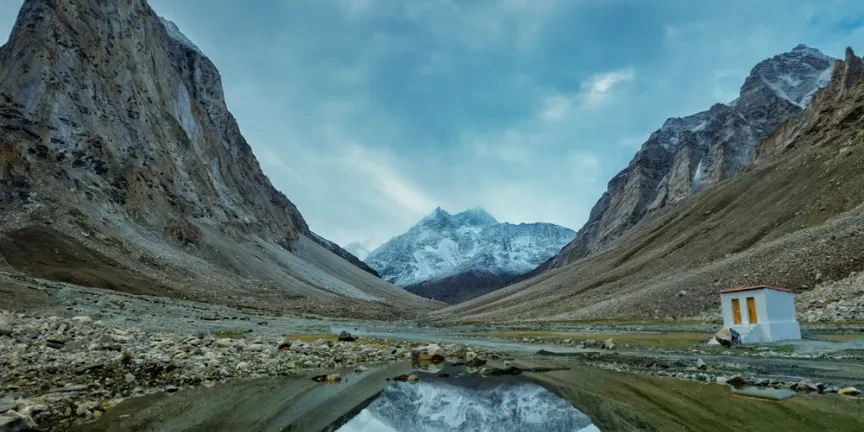
Hidden deep in Ladakh, Zanskar Valley sits far from reach, one of the Himalayas’ most breathtaking remote corners. Snowy peaks rise around it, while the Zanskar River cuts through rugged terrain above 12,000 feet. Clinging to cliffs are ancient monasteries, quiet witnesses to centuries gone by. Untouched beauty draws those who seek stillness, adventure, or something harder to name. Summer wakes the land - green bursts forth, water sparkles, trails wind into silence. Visitors arrive, drawn not by noise but by what remains unsaid beneath vast skies. Far beyond busy roads sits land holding quiet temples built long ago - Stongdey, Karsha - places shaped by faith plus centuries-old ways. When cold nights arrive, Zanskar turns into a trail of frozen waterways where travelers step carefully across thick river ice during dusk. Cut off from cities, life here moves slow, guided by prayers, snow patterns, and rhythms older than memory. Its walls aren’t made of stone alone - they’re held up by distance, silence, between deep mountains and sky. Journeys linger longer when paths lead through places like this: untouched faces, unspoken beliefs buried in icy air.Old traces say people lived here when bronze tools shaped their world. From carvings on stone to quiet ruins, signs linger across rocky slopes. Buddhism began shaping lives long after the eighth century arrived. Through high passes and silent ridges, belief moved slowly westward. Trade wove between mountain folds, bringing more than goods. Spiritual practice settled like dust on old manuscripts. Centuries passed without erasing tradition's deep roots. Monasteries rose quietly beside icy streams. Culture grew not in cities but along remote trails. This place kept rhythm apart from rushing change. Right away, a few monks plus learned folks carried Tibetan Buddhism into Zanskar - art, buildings, everything. Soon after came monasteries like Karsha, tucked in cliffs, then Phugtal rising from rock, Stongdey standing wide in valleys. Inside those walls, people found more than prayer - they got shelter, too. For ages, these spots held sacred texts tight, guarded quiet meditation, kept rituals alive without pause. Adventure seekers frequently choose our Leh Ladakh Tour Package to explore the breathtaking landscapes of Zanskar Valley.Nearby Places around Zanskar ValleyPhugtal Monastery: Hidden deep in Zanskar lies Phugtal Monastery, carved into a cliffside like an afterthought of nature. This quiet home for monks clings to ancient habits - meditation, study, life shaped by stillness. Though time moves elsewhere, here routines remain unchanged since the place began centuries back inside a wild rock hollow. Footpaths alone lead there, twisting through rough terrain without roads or machines. Because reaching it demands effort, few arrive - yet those who do see something rare. Distance keeps noise out. What stays is simple. A community breathing slowly in cold mountain air.Karsha Monastery: High up in Zanskar, Karsha Monastery spreads across terraced slopes like an ancient village frozen in time. This place, bigger than any other monastery in the region, began more than nine hundred years ago under the Gelugpa tradition. Instead of quiet solitude, you might hear drums during festival seasons when masked dancers move through courtyards. Walls inside carry faded murals - scenes painted long before modern roads reached these mountains. Prayer halls rise tall, filled with rows of seats where monks chant at dawn light. From its perch, the whole valley unfolds below, sharp ridges cutting into blue sky. Centuries pass, yet each summer brings fresh crowds drawn by rhythm, color, and silence between chants.Stongdey Monastery: Eighteen kilometers out from Padum sits Stongdey Monastery, the second biggest in Zanskar. Founded during the 1000s, it now holds vivid wall paintings. Old scriptures rest inside, some hard to find anywhere else. Visitors stepping into the valley often pause here, drawn by quiet beauty. What stays with them? A sense of calm, colors on stone, pages centuries old. The air feels still, yet full of presence.Pensi La Pass: Pensi La Pass connects Zanskar Valley with Suru Valley, revealing towering snowy summits alongside the vast Drang-Drung Glacier. Rising above all others here, this mountain crossing stands out not just for beauty but also importance. Reaching high into the sky, it serves as a key route toward Zanskar - quiet, striking, essential.Best Time to Visit Zanskar ValleySummer (June to September): Warm days stretch across June through September, making this stretch ideal for Zanskar Valley trips. Temperatures sit between 15°C and 25°C - comfortable enough to draw many travelers. Roads clear by then, so reaching monasteries becomes easier. Foot trails wind into quiet areas where village life moves at its own pace. Landscapes shift sharply under sunlight, revealing textures often missed earlier in the year. Movement fills these months: hiking, exploring, wandering without fixed routes.Monsoon (July to September): Rainy season hits between July and September. Though Ladakh stays mostly dry, brief downpours show up now and then. Green spreads across the land when moisture arrives. Meltwater fills riverbeds, turning them wide and swift. Travelers keep coming during these months. Yet paths sometimes close after slides shift downhill. Watch each step on trails that feel wet underfoot.Winter (October to May): Cold months run from October until May in Zanskar, where frost bites deep. Temperatures often drop to minus twenty or lower. Snow piles high, blocking every road into the valley. Yet travelers still arrive, drawn by the ice-clad river trail known as Chadar. Walking across the frozen stream feels unlike anything else. Few places offer such a journey through winter silence.How to Reach Zanskar ValleyBy Airport: From the airport at Leh - that’s Kushok Bakula Rimpochee - it’s around 450 kilometers to Padum, the central hub of Zanskar Valley. Once you land in Leh, the road unfolds through towering mountain crossings such as Pensi La, best traveled by vehicle.By Road: Travelers reach Zanskar from Kargil through Suru Valley on a 250-kilometer stretch of road. This route opens up the region, making arrival possible by land. Long as it may be, eyes stay full - villages dot the sides, rivers cut across views, glaciers hang above.By Railway Station: Not far off, tracks stop at Jammu Tawi - no rails go straight into Zanskar. Seven hundred kilometers stretch ahead once you step off the train.