
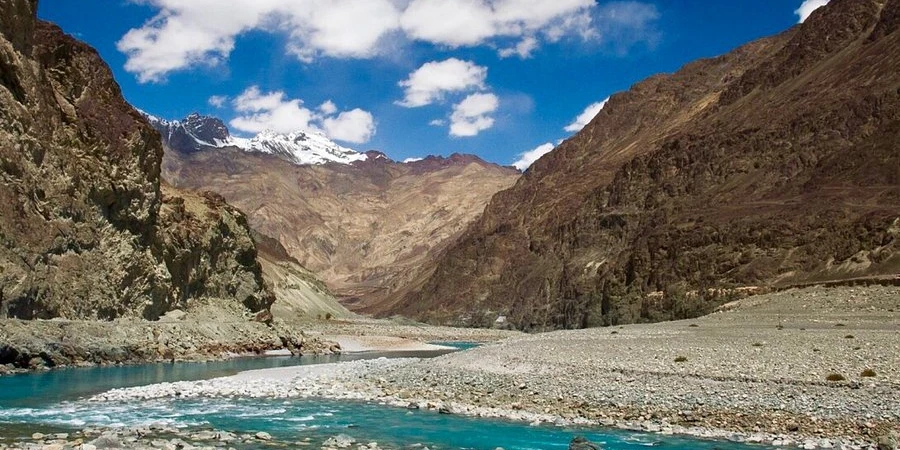
Nowhere else in Ladakh feels quite like Turtuk, tucked far north where mountains close in around quiet paths. Close to the Line of Control - just a short stretch from Pakistan - it stands apart without drawing attention. Once part of an old trade route, this patch of land grows apricots thick between rugged peaks. Stone homes rise beside streams, built low against harsh winds. Wooden footbridges link gardens that thrive even in thin air. Not many travellers make it here; those who do see something rare - a Balti way of life unchanged for generations. Green folds into rock in ways you would not expect after seeing the rest of Ladakh’s open desert. Surprises wait behind every turn: figs ripening near frozen ground, children passing through orchards on their way home, a place so still, yet full of slow-motion life. Hidden between rugged peaks, Turtuk shelters a Balti people shaped by both faith and ancient customs. Warm smiles greet visitors here, along with handwoven textiles and meals passed down through generations.For eight hundred years starting in the 700s, Baltistan fell under the control of the Yabgo rulers, with Turtuk sitting right within that domain. From there, power extended beyond just Baltistan into nearby regions, yet Turtuk stayed key - acting as a hub along ancient paths connecting India to Central Asia. Stone remnants remain: fortress outlines stand quietly, while stories echo through voices shaped by time and ancestry. When Islam arrived among the Baltis, lives shifted in ways deep and lasting. Change flowed gently at first, carried forward mainly by wandering Sufi teachers who wove faith into local habits. Their presence softened boundaries between belief systems; now, traces hum beneath daily routines in homes scattered across the valley. Even today, echoes linger - in chants after dusk, in gestures made without thought - the past folding itself softly into what happens here. Life stayed rooted here through words spoken at home, meals shared daily, moments shaped by high mountain rhythms mixed with old beliefs from faraway plateaus. What happened long ago twisted often, pulled by unseen forces beyond the valley walls. Before maps changed, this place answered to another flag, tied to lands now distant. Fighting shifted borders one winter; soldiers moved where few expected, claiming ground once thought safe.Many travelers visiting Nubra Valley include Turtuk Village as part of our Leh Ladakh Tour Package to experience its unique Balti culture and scenic landscapes.Nearby Places around Turtuk VillageDiskit Monastery: High above the winding Shyok River stands Diskit Monastery, rising quietly through the rugged folds of Nubra Valley. Located nearly ninety kilometers from Turtuk, it holds age like an old story passed down without hurry. One hundred six feet tall, the Maitreya Buddha watches slow across the sands and river bends, seen far beyond village borders. Though stone and prayer fill its halls, life here moves with steady calm. Culture breathes deep within its walls, where tradition gathers without noise or demand.Hunder Sand Dunes: Hunder hides among sand hills far north, tucked away near jagged peaks. Eighty slow kilometres stretch between it and Turtuk, a road that cuts through silence. Double-humped camels move here like shadows from another time. These animals stand only in this patch of India's vast land. Riding them across rippling dunes feels unlike anything else. Mountains watch from all sides, unblinking. Few places offer such stillness under an open sky.Thang Village: Right where India ends, Thang Village sits just two kilometers from the Line of Control. This place earns its title - “The Last Village of India” - not by accident but position. Close to the edge, visitors see across into areas managed by Pakistan. Talking with people who live there brings stories shaped by borders. A quiet spot, yet full of what silence can hold.Bogdang Village: Home to the Ladakh Balti people, Bogdang Village sits quietly between Turtuk and Hunder. Though small, it holds tight to traditions passed down through generations. Apricot trees bloom across the fields, standing beside charming wooden homes built long ago. Life moves slowly here, shaped by seasons rather than speed. Culture lives in everyday moments, not displayed but simply lived.Best Time to Visit TurtukSummer (May to September): Warm days arrive in May, stretching through September, bringing temperatures from 10°C up to 20°C across Turtuk. Apricot trees bloom thick here, set among open green fields under wide stretches of clear sky. Sightseers find their rhythm along winding trails while trekkers move slowly past quiet farmhouses. Culture hides in plain view - carved wood gates, prayer flags fluttering above streams. Blue peaks loom beyond stone walls where children shout during evening games.Monsoon (July to September): Summer rains arrive between July and September, yet Ladakh stays mostly dry with little rainfall. Even so, the season brings life to the land, especially along the Shyok River which runs full and steady. While roads may face small delays now and then, the valley wears a quiet beauty during these months. Fewer crowds wander through, leaving space for calm walks under wide skies.Winter (October to April): Cold wraps around Turtuk from October to April, freezing everything under skies full of snow. Roads vanish beneath thick layers, sealing the village away from Ladakh, keeping travellers out. Stillness settles in when the world turns white, giving locals long, quiet days without outside noise. They eat what they saved months before, using methods passed down through frozen seasons. Life slows, shaped by frost and habit, waiting quietly for thaw.How to Reach TurtukBy Airport: From the sky, reach Leh's Kushok Bakula Rimpochee Airport - Turtuk lies roughly 205 kilometres from there. Flights link Leh with cities like Delhi, Mumbai, and Srinagar. Once landed, travellers might grab a private car or join a shared journey toward Turtuk, moving through Nubra Valley. Reaching the village this way means winding roads, long stretches, and quiet landscapes.By Road: Driving remains the go-to option when heading to Turtuk from Leh, threading through Khardung La Pass - one of Earth’s loftiest drivable routes. Past Diskit comes Hunder; beyond Hunder unfolds Bogdang - each a stepping stone carved into the journey. Seven or eight hours roll by under open skies, wheels eating up terrain while peaks, gorges, and silver rivers flash beside windows. The road itself becomes part of what you remember.By Railway Station: Not possible to reach Turtuk by train - no tracks run into the village at all. The closest rail point sits near Jammu Tawi, roughly 800 kilometres off course. Anyone arriving here must switch to roads or flights heading toward Leh first. Only after that comes the next leg, onward to Turtuk itself.