


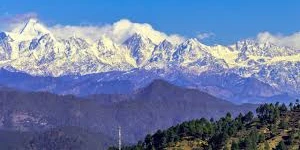
Kausani, a peaceful hill station located in Uttarakhand’s Bageshwar district, is popular for its stunning natural beauty and the vast Himalayan views. It is also known as the "Switzerland of India", which is famous for its superb and picturesque scenery surrounding the three major peaks found in the Himalayan range. Kausani is situated at 1890 m This place delivers an unbeatable 300-kilometre-wide view of the towering Trishul, Nanda Devi, and Panchachuli ranges. Unlike the chaotic hill towns of Nainital or Mussoorie, Kausani is known for its calm, unspoiled charm, making it a perfect retreat for peace seekers, nature lovers, writers, and poets. This peaceful town is a 360-degree getaway from the thick pine forests, hillside tea gardens, and quaint villages that breathe the rustic Kumaoni life. It is also a place of historical significance as Gandhi once stayed at the Anasakti Ashram here and called Kausani the ‘’Switzerland of India.’’’ More than a picturesque town, there are plenty of opportunities for nature walks, birdwatching and exploring ancient temples. The cosy environment and awe-inspiring sunrise and sunset over the snowy peaks lure photographers and dreamers to their paradise. For individuals who want to relax in nature’s lap, Kausani is a treasure that integrates nature’s majesty with cultural richness.The history of Kausani is a combination of cultural heritage, myths, and contemporary fame. The area has been a part of the Kumaon hills for a long time and has been home to the Kumaoni people, who have lived in harmony with nature. Farming, animal husbandry, and handicrafts were their main sources of livelihood, which were fully supported by the fertile valleys and forests of the region. On the one hand, the myths of Kausani are mainly associated with the Indian epics. On the other hand, the Baijnath Temple complex, which dates back to the 12th century, is the primary religious centre of the area, which is devoted to Lord Shiva. These temples that were built by the Katyuri dynasty are the most ancient witnesses of the cultural and spiritual significance of the region. According to the local folklore, Kausani has been connected with several local deities and legends that are passed down from one generation to another. Throughout the Middle Ages, Kausani, as well as its neighbouring valleys, were under the control of the Katyuri and later the Chand kings, both of whom had left the signs of their reign in the form of fabulous temples and folk traditions. The change of rulers in the region has not affected the core of Kumaoni culture. Nearby Places around KausaniBaijnath Temple: It is a temple complex on the banks of the Gomti River, which is around 16 km from Kausani. The temple was established by the Katyuri kings in the 12th century and is an excellent example of stone-carved architecture. It is very sacred and spiritually significant.Anasakti Ashram: It is the place where Mahatma Gandhi stayed in 1929. Now, it is a study and meditation centre with photos and memorabilia of Gandhi’s life and teachings. The peaceful atmosphere makes it one of the must-visit places in Kausani.Rudradhari Waterfalls and Caves: This beautiful area is only 12 km from Kausani and has waterfalls and natural caves among pine forests and terraced fields. Moreover, it is dotted with myths about the gods - Shiva and Vishnu, which make it a place of worship besides being beautiful.Sumitranandan Pant Gallery: This gallery is devoted to the famous Hindi poet, who was born in Kausani and features his manuscripts, works, and personal items. It is a cultural landmark for literature lovers.Tea Gardens: The tea estates of Kausani are a very popular place for the production of high-quality organic tea. Visiting these lush gardens gives visitors an opportunity to see tea cultivation and processing, besides enjoying beautiful greenery.Best Time to Visit KausaniSummer (March to June): The summer in Kausani is acceptable and fun going with temperature from 11 to 26 °C. This season is the best for sightseeing, trekking, and enjoying the crystal clear view of Himalayan peaks. The tea gardens are green, and the weather is perfect for outdoor activities.Monsoon (July to September): During monsoon period there will be heavy rain which will rejuvenate the dry landscapes and makes them crisp and fresh. It is not proper time to go for trek as the trails are likely to be slippery but at the same time nature lovers can take pleasure in misty beauty and few tourists.Winter (October to February): The temperature will be near freezing or sometimes less hence it will be very cold in the winter. It normally snows in December and January and during this time Kausani becomes a beautiful winter wonderland. It is ideal for snow lovers as well as those who are in need of a calm and warm place to spend time with the mountains covered in snow around them.How to Reach KausaniBy Airport: The airport closest to Kausani is Pantnagar Airport, which is about 177 km away. Taxis and buses are readily available to take you from the airport to Kausani via Almora.By Railway Station: The nearest train station is Kathgodam. The railway station is situated 142 km from Kausani and has the best links with Delhi, Dehradun, and Lucknow. Taxis or buses from Kathgodam can then be used to reach Kausani.By Road: Kausani is accessible by road from Almora (52 km), Ranikhet (60 km), and Nainital (117 km) respectively. One can choose to travel either by the regular state transport buses or private taxis from these towns, but the most beautiful way to go by vehicle is when traversing the winding mountain roads.