


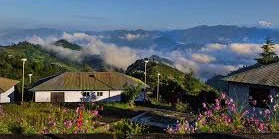
Located in Pauri Garhwal district, Uttarakhand, Khirsu is a brilliantly unrevealed hill station in the shadow of the Himalayas, about 1,700 m above sea level. A place of peace and perfect scenery of the Greater Himalayas, Khirsu is indeed a break from the crowded tourist destinations of Uttarakhand. On a bright day, visitors to this quiet sanctuary have the opportunity to see over 300 of the highest Himalayan peaks, including Nanda Devi, Trishul, and Panchachuli at once. In the midst of dense oak, pine, and deodar forests, Khirsu is the apple orchards and terraced fields that are dressed up with the village, giving it a fresh and natural look. Not as famous as other hill stations, Khirsu has not yet been overrun with tourists and is therefore a perfect retreat for a person who wants to stay calm and have the peace of mind and also get closer to nature. This place is a paradise for bird watchers and photographers, and on the other hand, trekkers can really enjoy the beautiful and scenic trail, which passes through the forest and a local village. This place is also very rich in culture, as ancient temples and the traditional Garhwal lifestyle are its other attractive factors. Maybe you want to quietly let go of your weariness while viewing the Himalayas or taking a peaceful walk amidst nature. If so, Khirsu is the place just right for you to have an experience of meeting the stark reality of the Himalayas away from the chaos of the city.The history of Khirsu is deeply related to the cultural and spiritual heritage of the Garhwal region. With the great Garhwal in the background, the quaint village has been the home of the people of the Garhwal area for many years, surviving on agriculture, orchards, and forest-based livelihoods. The rich land and the abundance of nature allowed Khirsu to be a self-sufficient village where the people’s traditional way of life is still in practice today. A landmark with both historical and cultural significance of the village of Khirsu is none other than the Ghandiyal Devta Temple, a temple dedicated to a local god who is deeply respected by the people of the place and region. This temple has spiritually been a people centre for several centuries. A place where people come together during festivals to make offerings to the deities and seek blessings. Modern-day oral traditions, folk songs, and stories connected to the temple revere the Garhwali culture while emphasising Khirsu’s association with it. As far as the British colonial era is concerned, Khirsu was far less impacted than places such as Pauri or Lansdowne, which are nearer. Nevertheless, the officials of the British regime were not very often, but they did come to the place, attracted by its cool climate and the overview of the Greater Himalayas.Nearby Places around KhirsuTemple of Ghandiyal Devta: Khirsu's cultural centre of attraction is this ancient temple honouring the local god. Offering panoramic views of the surrounding hills, this is a serene setting for prayer.Pauri: Found roughly 15 kilometres from Khirsu, Pauri is a picturesque community noted for its Himalayan views and temples.The Jwalpa Devi Temple: This revered temple dedicated to Goddess Durga is a significant place of pilgrimage about 33 km from Khirsu. During Navaratri, the temple draws followers and provides a quiet spiritual setting.Temple of Kandoliya: Located not far from Pauri, this Lord Shiva temple is surrounded by thick forests. With amazing mountain vistas, the journey to the temple is beautiful and fulfilling.Ulka Garhi: The historic significance of the area is seen in an old fortress close to Pauri, Ulka Garhi. Attracting history buffs, the site provides a perspective on the past of Garhwal.Best Time to Visit KhirsuSummer: March to June: Khirsu is best visited during the summer when temperatures range from 15°C to 30°C. Sightseeing, hiking, and exploring orchards in bloom are best done in this ideal temperature. Clear skies also make it possible to see magnificent Himalayan peaks.Monsoon season, July to September: Moderate to extreme monsoon precipitation falls on Khirsu. The terrain becomes vividly green, and the air fresh and hazy. But sporadic landslides and slick roads can severely hamper travel. Those who love quiet and the unadulterated beauty of nature would flourish this year.Winter (October to February): Winters in Khirsu are frigid; temperatures usually approach freezing. Snowfalls in the area from time to time whiten the surroundings. Though warm attire is a must, this is a mystical season for individuals seeking a tranquil escape and snow enthusiasts.How to Reach KhirsuBy Airport: Around 145 kilometres distant is Jolly Grant Airport, Dehradun, the nearest one. Khirsu may be reached from the airport using taxis and buses.By Train: Kotdwar is the nearest railway station, some 115 kilometres from Khirsu. Delhi and other big cities are well-connected to Kotdwar. Taxi and bus transportation are available from Kotdwar.By Road: Roads link Khirsu well with other important Uttarakhand cities, as well as Pauri (15 km). From Rishikesh, Kotdwar, and Dehradun run shared taxis and regular buses. Private taxis are also a practical choice for a pleasant trip around the mountainous terrain.