


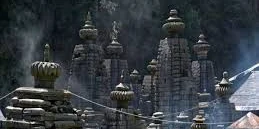
Jageshwar is a temple town located in the Almora district in the Uttarakhand state. It is known as one of the most sacred temple towns of the Kumaon Himalayas. Jageshwar, at a height of 1,870 meters above sea level, surrounded by deodar, pine, and oak trees, is famous for the congregation of ancient temples devoted to Lord Shiva. Considered as one of the twelve Jyotirlingas of India, Jageshwar attracts thousands of devotees and history lovers every year. The holy atmosphere, gushing springs, and snow-capped mountain peaks in the backdrop make it a perfect blend of spirituality and nature. In the locality, a large number of temples made out of stone can be counted. Among those, some temples of Jageshwar may be 7th-century temples. These temples are erected in the Nagara style, and are ornamented with the delicate stone-cuttings, and also with the engravings of mythological stories and gods. The Jageshwar Monsoon Festival and Shivratri Mela are held here with great religiosity, and the onlookers for both events reach from all around India. Jageshwar, besides being a holy place, is also a heritage site that tells a whole lot about the old ways and masterful/artistic people of the past.The temples of Jageshwar are extremely ancient and historical, referring to the early medieval time of Jageshwar, and they also represent a very unique amalgamation of spiritualism, architecture, and cultural attributes of the place. Jageshwar is considered to be one of the twelve Jyotirlingas, a direct indication of its importance as a sacred place for followers of Lord Shiva. It is said that Lord Shiva performed asceticism at Jageshwar; the dense forests around the region were supposed to have emitted a divine atmosphere for the devotees, seekers, and saints. Most of the temples of the Jageshwar region were constructed between the 7th and 14th centuries. The Katyuri kings and queens (rulers of the Kumaon district) had built the temples during their period of stay in the area. The Katyuris were one of the biggest patrons of art and temple architecture, thus leaving a legacy in stone carvings, shikhara-style spires, and idol sculptures visible in Jageshwar. The Chand dynasty (14th–18th centuries) came after the Katyuri dynasty and had a significant influence on the temple complex, as they not only renovated but also extended it. The temple cluster at Jageshwar consists of more than 100 stone shrines, most of which are dedicated to Lord Shiva and temples besides those of Lord Vishnu, Goddess Durga, and other deities. Nearby Places around JageshwarDandeshwar Temple: Dandeshwar Temple is one of the largest temples in the area and is located just a kilometre away from the Jageshwar temple complex. Being a shrine of Lord Shiva, the temple has a very attractive Nagara-style architecture..Vriddha Jageshwar: This ancient temple is about three kilometres from Jageshwar. Locals there say that Vriddha Jageshwar is the first place that Lord Shiva visited before coming to the Jageshwar temple complex.Almora: Almora is a town that is 36 kilometres from here, a place that is quite the opposite of a natural area, as it represents the culture of Kumaon and is famous for its beautiful landscapes, handicrafts, and old temples like Kasar Devi.Binsar Wildlife Sanctuary: BINSAR forest is 30 km from Jageshwar and is perfect for people who love nature because it provides them with dense forests, the animals, and the stunning views of the Himalayan peaks.Patal Bhuvaneshwar: This is a hidden temple of Lord Shiva beneath the ground, filled with weird natural limestone formations that incidentally look like the gods in the myths and is situated almost 90 km away from JageshwarBest Time to Visit JageshwarSummer (April to June): Probably the summer would be the best time to visit Jageshwar when the temperatures are on average between 15°C and 30°C. At the same time, the vibe is very suitable for all the activities such as temple tours, trekking, and even others in the area.Monsoon (July to September): During the monsoons, heavy rains are experienced, which bring the trees back to life, and the whole area turns green. It is not that easy to move around as the roads are usually slippery. Nevertheless, the temple town is amazing even at this time.Winter (October to February): The winters are really tough, and the temperature is most of the time close to the freezing point. However, this period can be chosen by those who are looking for purity, freshness, and want to see the Himalayas covered with snow, as it is a very quiet time for the pilgrims and the travellers.How to Reach JageshwarBy Airport: The closest airport to here is Pantnagar Airport, which is about 150 km away. A car from the airport can take you to Jageshwar via Almora.By Railway Station: Kathgodam is the closest railway station, and the distance from there to Jageshwar is about 125 km. One can get a taxi or a bus from Kathgodam to Almora and from there continue the journey to Jageshwar.By Road: The roads that lead to Jageshwar are quite good, and the place is connected to Almora (36 km), Nainital (100 km), and Haldwani (125 km). Both the pilgrims and the tourists find it quite easy to get there by using the regular buses or taxis that depart from the main Uttarakhand towns, since they can access them.