

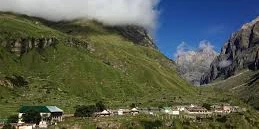
Mana Village Cast Chamoli district of Uttarakhand is known as the “Last Indian Village” on the Indo-Tibetan border. Located at an elevation of about 10,500 feet, Badrinath's close by, Mana is a lovely little village in the Himalayas with a lot of legendary and natural aspects to it. Mana offers a fascinating blend of spirituality, culture, and scenic beauty from snow-capped peaks, alpine meadows, to the Alaknanda River. Being the center of Hindu mythology, the village is. It is said that Pandavas went through Mana to get to heaven, and places like Vyas Gufa (the place where Sage Vyasa wrote the Mahabharata), and Ganesh Gufa, are the most visited locations besides other holy places of the area. Besides that, a natural stone bridge over the Saraswati River, i.e. The Bheem Pul (one of the Pandava legends) is also linked with the Pandava legends. Mana has also been a big about the culture of Garhwal and its people in the past and present. The people of the village are mostly of Indo-Mongolian origin; they live in stone houses with wooden roofs, and practice weaving, handicrafts, and farming. Their lifestyle provides the tourists with a peek into the time-tested traditions of the Himalayas. Mana for tourists is not just a border village; it is the combination of a historic past, spirituality, and adventure. The trek to Vasudhara Waterfall and Satopanth Lake is also here so it makes it not only the starting point for religious tours but also for thrilling Himalayan expeditions.The history of Mana Village is a combination of stories from ancient mythology and its location near the Indo-Tibetan border. Referring to Hindu scriptures, it is a sacred place related to the Mahabharata. The Pandavas are stated to have passed through Mana during their final journey to heaven. As they crossed the Bheem Pul the bridge over the Saraswati River. The mountain dwelling places like Vyas Gufa are said to be the places where Sage Vyasa meditated and composed the Mahabharata while Ganesh Gufa is the place where Lord Ganesha listened and wrote down the epic as dictated by Vyasa. These mythological links are what make Mana a sacred destination for thousands of pilgrims visiting the Badrinath area. From the point of view of history, Mana was an essential town on the road of the ancient trade route between India and Tibet. The villagers used to trade and do business through bartering. The products that were usually exchanged included wool, herbs, and different kinds of handicraft. The Indo-Tibetan trade lasted for centuries until the 1962 Indo-China conflict after when cross-border trade was restricted, and that had an impact on the geography of the region. The cultural history of Mana spans the life of the tribes of Indo-Mongolia who moved in the area of the village a few hundred years ago. Nearby Places around Mana VillageBadrinath: Badrinath is one of the Char Dham pilgrimage sites just 3 kilometers from here. It is dedicated to Lord Vishnu and, therefore, attracts thousands of devotees every year.Vyas Gufa: The Vyas Gufa is a very old cave in the village where it declares that Sage Vyasa wrote the Mahabharata, thus, it is a major spiritual attraction.Ganesh Gufa: It is a holy cave in Mana where Lord Ganesha did write the Mahabharata as per the dictation of Sage Vyasa.Bheem Pul: It is the natural rock bridge spanning the Saraswati River and is known as the one that Bheem after made for Draupadi during the Pandavas’ journey to heaven.Vasudhara Falls: The beautiful waterfall which is only 5 km from Mana and drops from a height of 400 feet is said to have purifying properties. Therefore, it is a must-visit trekking spot.Best Time to Visit Mana VillageSummer (May to June): Summer in Mana is the most recommended time for a trip. The weather is quite nice with the temperatures ranging between 10°C and 18°C, which is perfect for sightseeing, trekking, and visiting Badrinath.Monsoon (July to September): The monsoon rains are heavy and frequent, and landslides are common which makes travel risky. However, the area is attractive to nature lovers and photographers by being lush and bright.Winter (October to April): Mana gets huge snow in winter and the village stays closed for a few months. The snow-covered views are fantastic for those who can come before the roads are blocked even though it is very cold.How to Reach Mana VillageBy Airport: Jolly Grant Airport, Dehradun, is the nearest airport to Mana, about 320 km. From Dehradun, taxis and buses are available to Joshimath and from there, board another vehicle to Mana.By Railway Station: The Haridwar railway station is the nearest, which is approximately 275 km away. After arriving at Haridwar, one may go by bus or taxi to Joshimath and then to Badrinath, from where the road to Mana is short.By Road: It is possible to go to Mana through Joshimath. The latter can be reached via road from Haridwar, Rishikesh, and Dehradun. One may use local transport or walk to get from Badrinath (3 km) to there.