


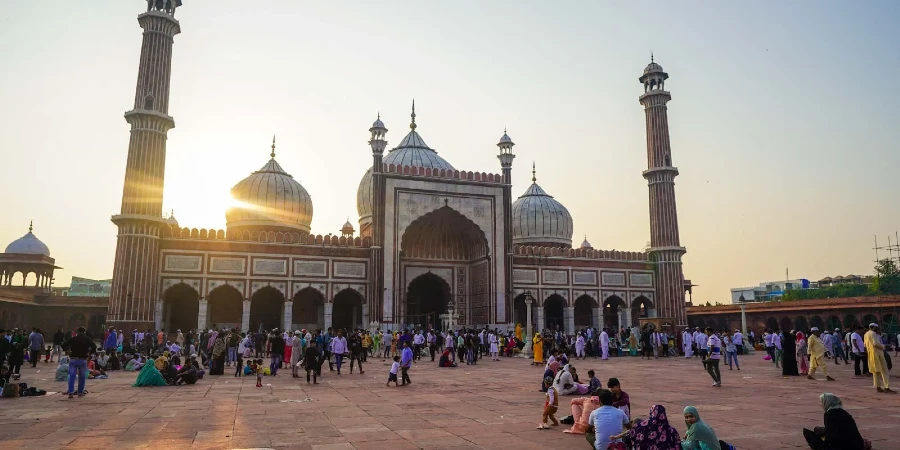
A sudden glimpse of Jame Masjid might suggest plainness, yet its structure unfolds with rare craftsmanship, built apart from common styles through elaborate patterns unlike any early version seen before. Fifth among India's largest mosques, placed firmly in Old Delhi, it stands unmatched in Mughal form - often named an absolute wonder without needing grand claims. Alongside the Taj Mahal and the Red Fort, creations under Shah Jahan dating back to 1656, this site ranks among his key Islamic landmarks, once drawing more than 25,000 worshippers visible all at once. From afar, the mix of red sandstone with white marble catches light oddly well, especially near the trio of wide entrances, four corner towers, and twin minarets rising forty meters tall. These slender spires offer sweeping sights across Old Delhi, revealing layers of city life below through height few buildings allow. From the open-air mosque yard to the grand chamber where prayers echo, every wall sings with carved letters and shapes - proof of how deeply belief shaped Mughal hands. Skip hesitation, move fast toward the tower at the south end for a sky-level glance across bustling Chandni Chowk and the fortress in red stone. Once, this stood as a doorway between worlds unlike our own; today, it holds silence like an archive of fallen empires, built tall with skill, layered in memory, alive only through what remains.Started back in 1650, construction of the Jama Masjid began when Shah Jahan gave the command. Completed six years later, it opened its doors in 1656 following steady effort without pause. Once named Masjid-i-Jahan-Numa - meaning one sees the world from here - it stood as the heart of prayer in Shahjahanabad, today known as Old Delhi. Built mostly using classic Mughal design, blending Persian touches with local Indian forms, the structure shows a quiet balance between two traditions. Domes that catch the light, slender towers rising high, along with detailed stone patterns carved by hand, draw attention most inside this space. Standing out clearly against the red stone below, the largest three domes wear bold stripes of black and white. From a distance, these shapes catch the eye easily, their bright patterns set apart by the pale marble ones nearby.Nearby Places to Visit Jama MasjidRed Fort (Lal Qila): Standing just nearby, the Red Fort greets visitors as a landmark etched deep into Delhi's story. Built by Mughal rulers, its massive walls whisper tales of power and time. Recognition from UNESCO adds weight, yet the stones speak louder than titles ever could. Grand arches and red sandstone define its look, shaped by centuries rather than trends. History lives here, not in textbooks but under open skies where footsteps echo softly.Chandni Chowk: A walk down Chandni Chowk begins where the museum ends, spilling into a lively stretch of pavement stalls. You will find baskets full of turmeric beside carts sizzling with fried snacks. Gold bangles gleam under cloth canopies next to bolts of embroidered fabric. Every few steps brings a new scent, sound, sight. This place never sits still, humming with bargaining voices and clattering trays.Raj Ghat: A quiet tribute rests at Raj Ghat - honoring Mahatma Gandhi - just a short stretch from the mosque, roughly three kilometers away. Here, flames once carried him onward; now stillness holds the ground where that moment settled.Sis Ganj Gurudwara: Right there in Chandni Chowk stands Sis Ganj Gurudwara, a place of prayer tied to Guru Tegh Bahadur. This spot marks where the ninth Sikh leader gave his life. His presence still lingers within its walls. Visitors come knowing it holds deep meaning. History rests quietly here, beyond words. Not just stone and structure - memory lives inside.St. James ‘Church: Away from Jama Masjid by two kilometers sits St. James Church. This building dates back to colonial times, stands among Delhi's most ancient churches, yet follows the same pattern. Its presence links past forms with present views, quietly holding place near crowded lanes.Best Time to Visit Jama MasjidSummer (April to June): Hot weather takes over from April through June. Some days push past 40°C under a relentless sun. Travel might work just before sunrise or long after sunset. Midday heat makes movement difficult. Few people walk far when the air shimmers off roads. Mornings stay brief pockets of relief. Evenings return comfort once shadows grow deep.Monsoon (July to September): Rainy days might not stop the beauty here - sudden soaks could slow things though. July through September brings steady clouds that sometimes burst without warning.Winter (October to March): October through March bring steady skies. A sight stands clear under calm air. Temperatures sit between ten and twenty degrees. This stretch offers a pause where light aligns just right. Fewer crowds pass by then. Sunlight touches stone at an angle that shows every detail.How to Reach Jama MasjidBy Airport: Land at Indira Gandhi International Airport - Jama Masjid sits roughly 20 kilometers northeast. Taxis wait curbside, though ride services offer another option. Public routes include the Metro, reliable and fast. Buses also connect the two points, slower but steady.By Train: Fresh off the tracks, Old Delhi Railway Station sits just 2 kilometers from Jama Masjid. Another option pops up at New Delhi Railway Station - 4 kilometers away, still handy. Trains roll in regularly to both spots, links solid without fuss.By Road: Minutes on foot will get you to Jama Masjid Metro Station, Violet Line. That stop sits near the road route. Close by, yet not right at the entrance. Travelers reach it fast from nearby streets.