


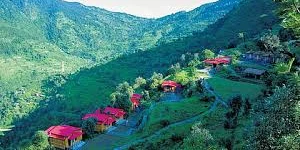
The hill station of Pangot in the Nainital district of Uttarakhand is a place where one can find the beauties of nature and birds quite rare to be seen anywhere else. A small village of around 2000 meters altitude is surrounded by forests consisting of oak, pine, and rhododendron trees. While being a home among birds that has been host to numerous species, Pangot has also been the sheltering quarters of nearly three hundred different species of birds, such as the Himalayan griffon, lammergeier, koklass pheasant, and the stunningly colourful Himalayan monal. Its unspoiled nature, fog-covered valleys, and towering mountains offer a perfect getaway from the crowded tourist destinations like Nainital. Moreover, on its own and without the birds, Pangot constituted a really great destination for trekking, with its paths leading to places such as Naina Peak, Kilbury, and Corbett National Park. The village of the Himalayas, rich in beautiful traditional Kumaoni houses, fruit orchards planted with apples, and cultivated fields with terraces, has become more attractive nowadays. The individuals who are dedicated to the quest for sanctuary are supplied with a slow lifestyle and an unblemished nature with breathtaking sunrises. Located a short distance from Nainital, it is therefore very accessible but still has not been overrun by commercialisation. Petrified birdwatchers, shutterbugs, adventure seekers, and people who simply long for a wilderness vacation can find Pangot as an unseen jewel to uncover.Pangot was the place known for its environmental and cultural impacts rather than kings and wars. The area had been the dwelling place of the Kumaoni communities that depended heavily on agriculture, orchards, and forests for their livelihood, which is through living in harmony with nature. The land was good, and the forests were dense, which sustained a lifestyle that was simple but eco-friendly. In the time of colonial Britain, Nainital, which is close by, became the most popular hill station of the region and the summer retreat of choice. Pangot, on the other hand, was a quiet village that stayed in the mountains when Nainital became a hub. However, it was the woods that attracted naturalists, explorers, and British officers who thought highly of the pure atmosphere and the cool climate. As compared to Nainital, Pangot was still a village with a rustic countryside side, and it still is to this day. The genuine historical value of Pangot rests upon the environmental heritage of the area. Kilbury and Pangot Forest Range, which are parts of the Nanda Devi Biosphere Reserve along with the latter, constitute the natural heritage of the world, and the area has become extremely rich in flora and fauna. Over time, being an internationally known place for watching birds has been the reason for the fame of Pangot in India. Nearby Places around PangotKilbury Bird Sanctuary: This sanctuary is a 6 km detour from Pangot and offers more than 240 species of birds to the bird lovers. It has a few forests and walking trails that can be great for nature walks and also for photography.Naina Peak (China Peak): It is just 10 km from Naina Peak is the highest point in Nainital. The walk from Pangot allows you to see the whole Himalaya, Nainital Lake, and the valleys around with your own eyes.Nainital: It is only 15 km from Pangot to Nainital, a very busy hill station that is popular for Mall Road, Naini Lake, and the colonial-era charm. Naintal is totally different from Pangot as far as tranquillity is concerned.Snow View Point: The distance between Pangot and Snow View Point is 13 km, and Snow View Point offers beautiful views of Nanda Devi and the rest of the Himalayan ranges. One can go there by road or take a cable car from Nainital.Corbett National Park: Corbett National Park is well-known for Bengal tigers, elephants, and a diversity of other animals and is located approximately 80 km from Pangot. Ecotourism enthusiasts can make a Pangot wildlife trip amazing by adding a great extension like this.Best Time to Visit PangotSummer (March to June): Summer in Pangot is really nice when the temperature varies from 10°C to 25°C. The weather is absolutely great for birdwatching, trekking, and sightseeing. Also, the clear sky helps to have very nice views of the Himalayas.Monsoon (July to September): Monsoon rainfall in Pangot is from moderate to heavy. Trees are greener, and birds are quite active. Nevertheless, trekking trails might be slippery, and the tour can be tiring. The season is fantastic for those who are fond of complete isolation.Winter (October to February): Winter in Pangot is very cold, and the temperature is almost at the freezing point. Snow falls in December and January, and this makes Pangot into a lovely white world. It is definitely the time for snow lovers and photographers. However, one needs to wear warm clothes.How to Reach PangotBy Airport: The closest airport to Pangot is Pantnagar Airport, which is only about 70 km. From the airport, there are taxis to Nainital and from there to Pangot.By Railway Station: The nearest railway station to Pangot is Kathgodam, which is about 50 km. Trains run from Kathgodam to Delhi, Lucknow, and Kolkata. Thus, there are taxis and buses for further trips from there.By Road: Pangot is 15 km from Nainital, and you can reach it easily by road. The buses and taxis from Kathgodam, Haldwani, and Delhi to Nainital run at regular intervals. After that, one can take a local cab to Pangot. The drive through the forest roads is also beautiful and scenic.