

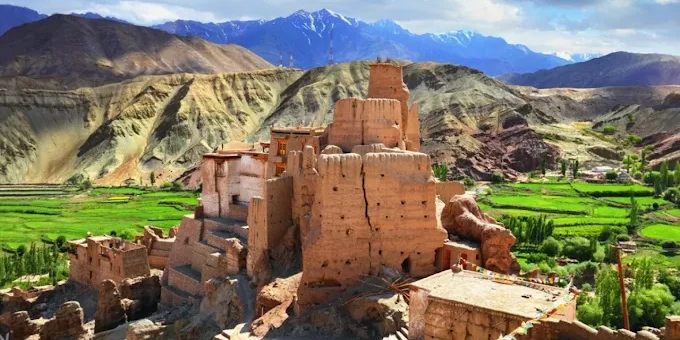
Up on a rocky ridge, far from Leh city, sits Basgo Gompa - once a busy Buddhist monastery along the road to Srinagar. Perched between sharp cliffs and crumbling walls of sun-dried brick, it speaks quietly of Ladakh's deep spiritual past. Its design catches the eye, not through grand size but weathered charm, layered with old painted scenes inside. Centuries ago, under the rule of the Namgyal kings, this place pulsed with prayer, art, power. Not just a temple, it also held royal life within its thick stone rooms. Today, silence wraps around what remains, yet stories linger beneath faded murals and broken steps. A giant figure of Maitreya Buddha stands within the monastery, forming part of the main gathering space where monks once lived. Art from medieval Ladakh comes alive through vivid murals, ancient painted walls, together with sacred texts still kept on site. While larger sites draw crowds, Basgo holds onto quiet strength, making silence feel natural instead of forced. High above, eyes meet the Indus snaking across the land far beneath like a silver thread pulled taut. Once a center of rule and belief, Basgo Gompa now rests as both forgotten refuge and striking echo of how faith shaped stone, time, and mountain alike.Hilltop perch gave Basgo Monastery more than just views - it held ground through centuries of change in Ladakh. Rising in the 1400s under Namgyal rule, it stood as both temple and shelter against outside forces. Positioned high, it watched over the green stretch of the Indus while monks kept rituals alive within stone walls. Power grew slowly until the 1600s, when expansions led by King Jamyang Namgyal sharpened its role across politics and culture. That era marked its peak - few places matched its reach in northern lands. Religious shifts followed, with this place helping root Gelugpa teachings firmly into local life. Towering over the quiet halls, the Maitreya Buddha statue stands firm inside Basgo Monastery - crafted from clay back when the Namgyal dynasty held rule. Though time has passed, its vivid colors remain sharp, every detail carefully shaped to show a promise: one day, salvation and joy will arrive through this future Buddha. Painted across the walls, ancient scenes unfold in the form of sacred murals - gods appear alongside lines of scripture, stories of long journeys taken by monks, all shaping how Buddhism lives here in Ladakh. Art flows from these images, quietly guiding those who study them into deeper understanding of spiritual ways. Then there is stone and shadow - the broken ramparts, the remains of royal homes perched beside prayer rooms, whispering echoes of war fought at high altitudes. Clashes once shook this ground, mainly against forces from Mongolia and Tibet pressing hard through mountain passes trying to claim control. History enthusiasts often include Basgo Monastery as part of our Leh Ladakh Tour Package to experience Ladakh's rich cultural heritage.Nearby Places around Basgo MonasteryLikir Monastery: Likir Monastery appears after a twenty-kilometer journey past Basgo. Rising high above the ground, a large metal statue of Maitreya Buddha - seventy-five feet tall - greets visitors out in the open air. Beauty marks this place, constructed back in the 11th century. Though part of the Gelugpa tradition now, traces from its earliest days remain untouched. Ancient writings, faded thangka paintings, and uncommon sacred objects survive within its walls. Each year, people gather for Dosmochey, the key celebration held right here. Because time has moved on yet so much stays unchanged, walking through feels like stepping sideways into another era.Alchi Monastery: Down the road from Basgo by roughly ten kilometers sits Alchi Monastery, standing as one of Ladakh's earliest centers with deep roots in Buddhist history and artistic heritage. Its reputation grows mainly from Indo-Tibetan artwork found within. While aged murals and detailed woodwork draw attention, it is the Kashmiri-influenced design - unlike anything else among local monastic structures - that sets it apart. Few places in the area carry such a distinct architectural voice.The Leh Palace: High above Leh town, about forty kilometers out, sits the old royal home known as Leh Palace. Built during the 1600s under King Sengge Namgyal's rule, this nine-level structure rises like stone layers carved into the hillside. Taking cues from Tibet’s Potala Palace, its design blends grandeur with simplicity. From up there, eyes catch sweeping scenes - Leh spreads below, backed by the sharp peaks of Stok Kangri. Inside, traces of Ladakh’s past linger through artifacts and faded murals. A visit leaves quiet impressions, more than just tourist snapshots.Magnetic Hill: Down the road about 35 kilometres from Basgo sits Magnetic Hill - here, cars appear to slide upward, defying what gravity should do. This oddity grabs attention along the Leh–Srinagar route, often caught on camera because it pulls in crowd after crowd without trying.Best Time to Visit Basgo MonasterySummer (May to September): Warm days between May and September make trips to Basgo Monastery pleasant. Temperatures stay comfortable, usually from 15°C up to 25°C. Roads open easily then, so reaching Pushkar by rough routes works well. Exploring the monastery becomes simple, along with spots close by. Travel flows smoothly through these months, rarely blocked by weather troubles.Monsoon (July to September): Heavy clouds roll in between July and September, even if Ladakh hides behind mountains where rains rarely reach. A sprinkle might dust the ground now and then, nothing fierce. Greens brighten under sudden dampness, painting valleys with sharper hues. The Indus Valley wears a fresher look, washed slightly cleaner. Travel stays possible without major hiccups most days. Yet roads elsewhere could stall journeys when slopes give way after wet spells.Winter (October to April): Cold months stretch from October through April. Back then, Basgo was seen as a winter getaway. These days, the season feels sharper, harsher. Temperatures fall under minus ten degrees Celsius. Travel becomes rough when ice grips everything. Snow piles up heavily, closing routes without warning. Roads stay cut off for long stretches. Still, some find quiet beauty there. The monastery wears silence like frost on stone. A sense of solitude settles deep in that landscape.How to Reach Basgo MonasteryBy Airport: Kushok Bakula Rimpochee Airport in Leh sits nearest, just around 40 kilometers off. Roads link Leh to places like Delhi and Srinagar across India. Once landed, should you have booked a taxi, reaching Basgo means nothing more than a quiet ride ahead.By Road: Off the highway, Basgo Monastery sits along NH1 linking Leh and Srinigar. Roughly sixty to ninety minutes out from Leh, it shows up mid-journey. Transport options pop up regularly - buses roll through, taxis split fares, private hires wait on call.By Railway Station: Ladakh does not connect directly by train. Closest big rail stop sits near Jammu Tawi, roughly 700 kilometers off. From there, flights head into Leh straight away. Another way opens through Srinagar, reached by road before pushing on. Or travelers might roll in from Manali along mountain routes instead.