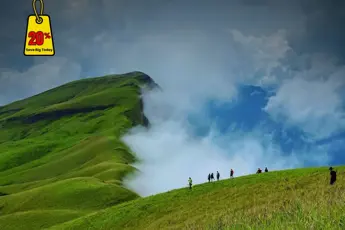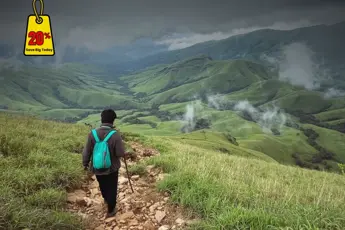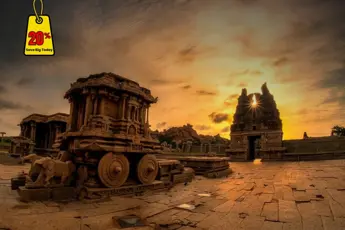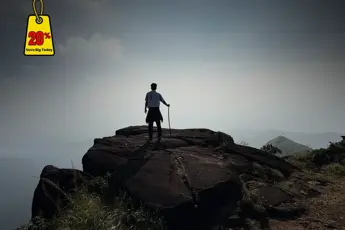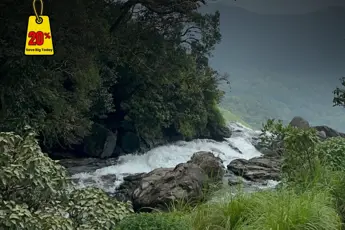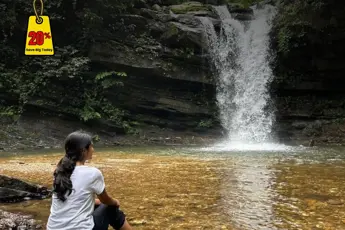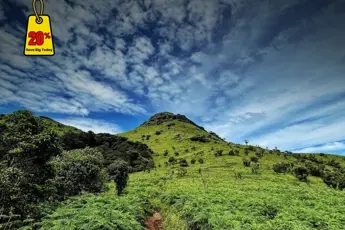


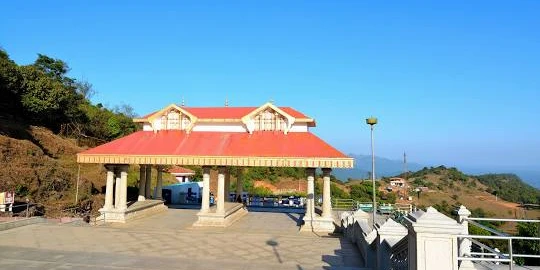
Up in the green folds of Kodagu, Talacauvery and Bhagamandala rest like quiet secrets. From the peak of Brahmagiri Hills comes the honored start of the Kaveri River - this is what people hold true. Water may not rush through it each day, yet a modest spring whispers where life begins. Pilgrims pause there, just as others do who simply love trees, mist, sky. A shrine stands nearby, built for Kaveriamma, carved into earth and time. High above valleys, views stretch wide without asking anything in return. A short drive brings you to Bhagamandala, a quiet place where land meets legend. Rivers named Kaveri, Kannike, along with the unseen Sujyoti, flow together here under open sky. Pilgrims come because they believe waters at this meeting point wash burdens clean. At its heart stands the old Bhagandeshwara shrine, built for Shiva in forms shaped by Kerala hands. Carved wood and sloping roofs tell stories older than most records. Finding peace is easier when sacred sites meet wild landscapes, so Talacaucery and Bhagamandala stand out in Coorg. Their mix of faith, greenery, and tradition pulls visitors who want quiet among meaning. Pilgrims come for prayer; others arrive just to breathe differently. Talacauvery and Bhagamandala are among the most visited attractions featured in our Coorg Tour Packages From Bangalore collection.Long ago, stories say the Kaveri River started at Talacauvery because of something magical. Hidden in the old beliefs of Kodagu, this place holds more than just water - it carries tales. A sage named Agastya once held the goddess Kaveri inside a small holy pot. Then one day, a bird - actually Ganesha playing a trick - knocked it over. Water poured out, became a river, never stopped flowing since then. From that moment, the land changed, shaped by what spilt. Pilgrims have visited Talacauvery for generations, drawn to the shrine of Kaveriamma said to be built ages past by Coorg's early kings. When the sun shifts into Libra, the Tula Sankramana begins - water rises from the sacred spring, pulling crowds like tides. Many arrive just before dawn, their footsteps quiet on ancient stone. Not far away sits Bhagamandala, once under the watch of Kodagu's rulers long ago. Standing quietly through time, the old Bhagandeshwara Temple honors Lord Shiva with design lines drawn from Kerala traditions. Work on its walls picked up again when the Haleri leaders stepped in. Where three rivers meet at Triveni Sangama, people have washed their hands and thoughts for hundreds of years. Travelers interested in nature, spirituality, and scenic escapes can discover more destinations through our Domestic Tour Packages From Bangalore guide.Nearby Places to Visit Talacauvery & BhagamandalaBrahmagiri Hills: Right near Talacaucoma, the Brahmagiri Hills unfold paths that pull hikers into wild greenery and sweeping sights across the Western Ghats. Mist drapes over summits here, while birds call through forests thick with life - perfect for those who crave quiet among trees or a climb that stretches the legs. Since ancient times, these slopes have held meaning because the Kaveri River begins nearby, so pilgrims pause just as often as trekkers do. Beauty meets belief where stone pathways meet sky, leaving visitors full without needing words.Nagarhole National Park: Away a few hours by car lies Nagarhole National Park, counted among India’s top wildlife havens. Elephants roam here alongside tigers, while leopards move quietly through thickets, birds filling the air above. Jeep safaris open paths into deep woods where rivers cut through untouched terrain. Spirit meets wild when travelers seek both meaning and movement within nature’s pulse.Abbey Falls: Water rushes down at Abbey Falls, close to Madikeri, where mist floats through rows of coffee plants. When rain fills the air, sound grows loud, turning the scene into something slow and dreamlike. A visit here pulls attention away from noise, offering stillness beside churning pools. Pictures come alive under dripping green canopies, light shifting without warning.Raja’s Seat: Morning light spills across Raja’s Seat, where steps curve through green hedges toward open air. Kings from Kodagu rested here long ago, drawn by wide skies and quiet winds. Hills roll beneath in layers, shifting color as day slips into dusk. Water dances in rhythm near flower beds trimmed sharp each morning. A soft wind moves past without hurry, brushing skin like a whisper. Visitors sit on stone edges watching clouds stretch slowly sideways. Sunsets flame gold then fade behind distant ridges. Families pause between walks, while others linger just beyond fountains flickering under dimming sky.Iruppu Falls: Down south in the Brahmagiri hills sits Irupu Falls, a quiet cascade tied to tales of Lord Rama. Thick woods wrap around its edges like a green wall. This place draws visitors who seek peace among trees or stories carved into stone. Footpaths wind through misty groves when rains have passed. Some come on foot just before dawn, drawn by water singing over rock. The air feels heavier here after heavy showers. Streams grow louder as clouds break apart overhead. Best Time to Visit Talacauvery & BhagamandalaOctober and March: Cool months from October through March treat visitors to gentle breezes, clear skies, so fewer hassles while moving around. Lush slopes of the Western Ghats glow bright green once the rains pass, giving sharp contrast against morning mist. Sightseeing feels effortless since paths stay dry, air stays fresh, making temple visits more peaceful than sticky. With humidity low and sunshine soft, wandering toward hilltops or riverside spots becomes naturally inviting. Views stretch far across valleys because fog hasn’t yet rolled in to block them. Even midday walks under tree cover remain comfortable thanks to dappled shade. Rain rarely interrupts plans during these stretches, leaving plenty of room for unplanned detours.monsoon season (June to September): Heavy rains between June and September drench the area, turning it into a lush landscape wrapped in fog. Though views become breathtaking during this time, moving around gets trickier because paths turn slick when downpours last for hours. Streams swell under constant rain, adding to the beauty but also slowing foot travel. Mist hangs low most days, softening distant hills while making trails less predictable by afternoon.Summer (April–May): When the sun shifts just right - around October - crowds begin moving toward Talacauvery, drawn by the quiet miracle of water rising from stone. The moment the Kaveri flows again, voices soften, steps slow. Devotion here doesn’t shout; it lingers in bare feet on cool earth, in silence between prayers. What stands out isn’t spectacle, but stillness folding around so many souls sharing one breath.How to Reach Talacauvery & BhagamandalaBy Road: Starting from flat highways, Talacauvery and Bhagamandala sit best when approached through winding roads. Connected clearly to Madikeri, roughly 45 kilometers away, travel remains smooth regardless of your starting point. Coming from Bangalore - nearly 270 kilometers - you might choose a personal car or arranged ride instead. Distance from Mysore measures about 140 kilometers; Mangalore sits slightly closer at around 160. State-run KSRTC services run frequent trips ending at Bhagamandala. From there, an upward stretch of 8 kilometers leads straight to Talacauvery, passable only by small local rides or self-driven options. Reaching the top means leaving big buses behind.By Railway Staton: Finding your way starts at either Mysore Junction or Mangalore Junction. Once there, taxis wait nearby, while buses also roll out toward Madikeri. After reaching Madikeri, roads branch off - follow them onward to Bhagamandala, then push ahead to Talacauvery.By Airport: Travelers usually land at Kannur International Airport - roughly 90 kilometers away. Alternatively, some choose Mangalore International, which sits closer to 160 kilometers out. Kempegowda International, nearly 300 kilometers distant. Once arriving, transport opens up: cabs or public buses head toward Madikeri first. After that, a winding road through green hills leads the rest of the way.