


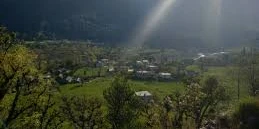
Mandal Village, situated in Chamoli, Uttarakhand, is a stunning Himalayan hamlet famous for its unspoiled natural, cultural richness in culture and being near climbing trails. Around 1500 m above sea level, Mandal is usually called the door to Anusuya Devi Temple and Atri Muni Ashram, hence a retreat of both nature and spirit. The village, which is surrounded by thick forests of oak, rhododendron, and deodar, offers fantastic panoramas of the Garhwal Himalayas with mountains covered with snow and trees having green leaves. The serenity, old-style houses, and the villagers’ goodwill make Mandal an excellent offbeat destination for visitors who are looking for a place to relax and are tired of the hills crowded with tourists. The place is also a starting point for various hikes, including the well-known Kuari Pass Trek and the paths leading to the Bugyals (alpine meadows) like Gorson and Tali. Full of various types of plants and animals, Mandal is a haven for bird lovers and nature enthusiasts. Besides the appeal of Mandal nature-wise, it also has an importance in a cultural aspect as it is the area where the Garhwali people organise fairs and festivals through which they show their culture. Thus, whether it be a spiritual break, trek, or just a desire to immerse oneself in the slow flow of country life, Mandal Village in Uttarakhand presents a very pleasant and lasting memory.The past of Mandal Village is primarily spiritual, concentrated upon its customs and the fact that it was the starting point of the Himalayan mountain climbs. The place is linked with the mythological stories of the Mother Anusuya, a Hindu deity, explained as the spouse of Saint Atri and the one who values purity and devotion. The reference to Mandal as the divine journey origin to the Anusuya Devi Temple, which is about 5 km away, is spoken about in various mythological stories. The temple is immensely popular during Duttatreya Jayanti, when people of all parts of India come to get the blessings and partake in the spiritual vibrations of the location. In those days, Mandal was inhabited by people of Garhwal, who lived on the produce of the land, animal breeding and making handicrafts. A landmark on a Pilgrim’s journey towards Badrinath and other nearby holy places, the village was a venue for rest and reunion. At the same time, it was amid thick forests that the location also made it a natural refuge for holy men and hermits who were in search of separation and peace for their meditation. At the same time, during the British colonial era, Mandal, similar to the majority of the Uttarakhand villages, was on the map as one of the trekking and exploration routes. Several instances of adventurers and researchers were to the region, including examinations they conducted on the practically untouched areas of flora and fauna, and the uniquely different cultural lifestyle.Nearby Places around Mandal VillageAnusuya Devi Temple: Near Mandal, about 5 km, this temple devoted to Goddess Anusuya is a prominent spiritual centre encircled by thick woods and mountain streams.Atri Muni Ashram: Situated near the temple, this ashram is considered the meditation place of Sage Atri and is a quiet place for devotees and tourists.Kuari Pass: Kuari Pass is the place of one of the most famous mountain expeditions, and the best panoramic views of the Himalayan peaks like Nanda Devi and Dunagiri are seen from there, making Kuari Pass one of the main trekking destinations for those coming from all over the world.Joshimath: About 25 km from Mandal, Joshimath is the place of spiritual and adventurer delight, known for its temples, the winter location of Lord Badrinath, and cable car to Auli.Auli: Auli is one of the best ski destinations in India, and it is also well-known for its alpine meadows and stunning mountain views, situated around 30 km from Mandal.Best Time to Visit Mandal VillageSummer (April to June): Summer is the most beautiful time of the year when the temperatures are from 15°C to 25°C. The season, which is good for trekking, sightseeing, and temple visiting, also attracts lovers of nature and devotees.Monsoon (July to September): The rains grant the earth a new, vivid green dress, making the surroundings very lively. However, it is only fit for those who are ready for a difficult journey, as there may be landslides and slippery trails due to the heavy rains.Winter (October to March): Mandal gets transformed into a small town covered with snow during this time. When the temperature falls to the freezing point, it becomes a great place for people who love snow and are looking for an adventure. Though it might be difficult for leisure tourists.How to Reach Mandal VillageBy Airport: Jolly Grant Airport, Dehradun, the nearest airport, is approximately 280 km away. From Dehradun, you can take a taxi or bus to Chamoli and then go to Mandal.By Railway station: The closest railway station to Mandal is Haridwar, which is about 260 km away. The connection to the Chamoli district is the bus and the shared taxis from Haridwar.By Road: Mandal can be reached by road from Joshimath (25 km) and Chamoli (13 km). It is well-connected. The buses and taxis that run on the routes coming from Rishikesh, Haridwar, and Dehradun to these towns are always there. From there, it is not difficult to access Mandal.