


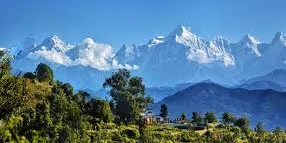
Chaukori, an amazing and very peaceful hill station in Pithoragarh district, Uttarakhand, is a treasure that is not widely known, which hides in the Kumaon Himalayas. Being approximately 2,010 meters above sea level, the beautiful village is covered with green tea gardens, pines, and oaks of different varieties, and moreover, it is crowned with white, snow-capped Himalayan peaks. Crowded tourism centres, Chaukori offers the generous gift of peace, being a perfect getaway for nature enthusiasts, authors, and those looking for a retreat from the life of the bustling cities. The origin of the word "Chaukori" is the "bowl-shaped," and it fairly exemplifies its special shape. Spectacular facets of the holy Himalaya that include Nanda Devi, Nanda Kot, Panchachuli, and Trishul, along with the sunrises and sunsets over them, can be witnessed from here and feel like the sky is decorated by various shades of orange and gold, which are very rare to experience. Chaukori is romanticised with its tea estates, which were introduced during the British era and are still thriving and have become an additional attraction to this serene village.The history of Chaukori is mainly focused on the works of nature, cultural roots, and history related to the British. The place has been the hills of Kumaon, the home of the Kumaoni people, for a very long time. Agriculture, raising livestock, and forest resources were the principal means of livelihood. Terraced farming was the common way to farm in the mountains. The area around Chaukori is, mythologically, very close to Hinduism. Several temples in and around the village are dedicated to Gods such as Shiva, Vishnu, and also local goddesses. These sanctuaries, which are often constructed at the beginning of the Christian era, witness the spiritualism of the mountain dwellers and their experience of the Himalayas as a holy land. Mountains and rivers in the legend can be closely linked with the Himalayas, which are the setting of these epics, and from the spiritual point of view, the Chaukori region gets richer from this connection. The Chaukori history changed during the British rule in India. The British settlers noticed the fertility of the soil and the cool weather that was suitable for tea growing; thus, they planted tea estates in a variety of places. The tea gardens both raised the villagesve economic level and gave it its characteristic name, i.e., the identity of Chaukori. Now they are the leading attractions that keep on producing high-grade teas that are still appreciated by the customers/visitors/guests. Besides this, the place was a peaceful resort for colonial officials who were keen on the calm atmosphere of Chaukori as against the noisy hill stations such as Nainital and Almora. The natural beauty of this area, its proximity to the most famous Himalayan peaks, and its location on the trade routes further stimulated its greatness. The village of Chaukori is steeped in the culture of the area, Kumaoni traditions. Nearby Places around ChaukoriPatal Bhuvaneshwar: Chaukori and Patal Bhuvaneshwar are two places that are almost 37 km apart from each other. Patal Bhuvaneshwar is a cave temple made of stalactite that lies underground and was made for Lord Shiva.Berinag: One can take a car from Chaukori to Berinag covering a distance of 10 km. Berinag is known for being the birthplace of the old snake temples, and the majestic Himalayas, along with Berinag, are the most significant attractions besides it.Gangolihat: Driving from Chaukori to Gangolihat is about 35 km. Gangolihat was past due to the Mahakali temple very famous, and the place' story. It is a holy place that calls not only the different pilgrims from India but also the ones from the whole world.Dharamghar: Dharamghar is 9 km from Chaukori only. Sarla Behn, a follower of Mahatma Gandhi, is well known to have shared her last days in Dharamghar. It is a beautiful and quiet place to get away from it all and enjoy the view of the snow-covered mountains.Kausani: Kausani is approximately 90 km from Chaukori. The Kausani hill station is also known as "the Switzerland of India". From Kausani, the Trishul and Nanda Devi mountain ranges can be seen.Best Time to Visit ChaukoriSummer (March-June): One summer trip to Chaukori is the best time to visit the place throughout the year, with the temperature varying between 10°C and 25 25°C. Sunset reveals the Himalayas’ towering rock faces, which are great for sightseeing and trekking.Monsoon (July-September): There is both moderate and heavy rain in this area. Forest and tea garden lands get very green and lively during the monsoon, but landslides can cover the roads. Therefore, this season is for lovers of mist and unspoiled nature to come and enjoy the region.Winter (October-February): The temperature of winter at Chaukori is to be honest that can drop to zero degrees Celsius, and it is quite cold. At the same time, some snow might be there in the upper reaches. This time of the year is for cold lovers who want to see a snow-covered Himalaya.How to Reach ChaukoriBy Airport: Pantnagar Airport is the nearest airport to the city, which is 205 km away from Chaukori. Visitors can then take the taxis and buses that go from the airport to Chaukori via Almora and Bageshwar.By Railway Station: Chaukori is nearest to the railway station of Kathgodam, which is about 180 km from Chaukori. Trains coming from Delhi, Lucknow, and other large cities are the ones from which we can reach Kathgodam airport.By Road: One can go to Chaukori by car via Almora (125 km), Pithoragarh (85 km), and Bageshwar (45 km). Besides the district, the night-running state transport buses that come through the district, and private cars, on the other hand, really make the trip along the scenic mountain roads very enjoyable and easy.