

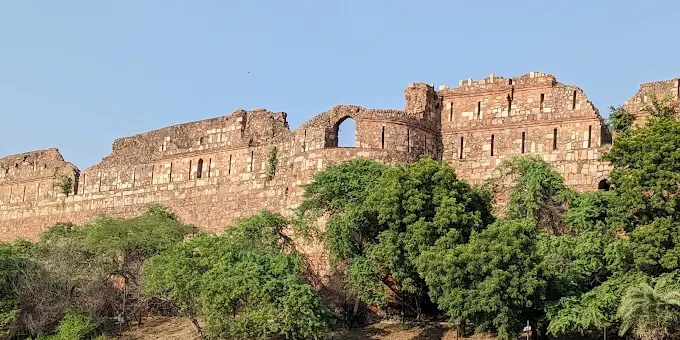
Purana Qila stands where history breathes through stone, an ancient fortress rising near the winding Yamuna. This place - older than most remember - carries echoes of eras long gone, yet its presence feels steady, almost watchful. Some say warriors from the time of the Mahabharata once walked these grounds, though records begin much later. Built by Humayun in the 1500s, layers beneath hint at earlier lives, buried deep like secrets. Massive walls stretch outward, shaped by Afghan boldness, Mughal grace, and Sultanate strength fused into one. Towers guard corners with quiet authority, while wide gates allow passage as they have for centuries. Inside, fragments of palaces lie scattered, telling stories without words. The Humayun Gate holds its ground with dignity, a silent marker of royal memory. Nearby, the mosque attributed to Alauddin Khilji rises with modest grandeur, worn but unbroken. At the heart sits Sher Mandal, neither temple nor tomb, but a chamber of knowledge - one where stars were studied and books gathered under open skies. Nice weather pulls folks in, those who love old stories along with casual walkers, thanks to wide green spaces beside the Yamuna's calm flow. The ancient walls now host music nights under open skies instead of just standing quiet, drawing crowds eager for evening tales lit by soft beams after sunset.Purana Qila carries stories stretching deep into the 1500s. Built under Humayun, the second Mughal ruler, its true shape came later under Sher Shah Suri, who finished construction while pushing defenses further than before. Historical accounts show he reinforced the ramparts, adding strong towers and entry points like the Talaqi Gate. Placed beside the Yamuna River, the location served military needs along with administrative duties. This ground matters beyond India - here unfolded the struggle to reclaim Humayun’s rule, marking the earliest days of a Mughal city rising. Long ago, folks might’ve lived here - finds from digs hint at life under Mauryan and later Mughal rule. Wars shook these walls. Crowns changed hands. Stone by stone, the place grew through time. Standing quiet now, Purana Qila carries Delhi’s past in its bones. Its ruins speak of old power, craft, and how forts once shaped survival. Not loud, but heavy with what came before.Nearby Places to Visit Purana QilaNational Science Centre: Just around the corner sits the National Science Centre, where hands-on exhibits pull you into how things work. Its displays mix curiosity with clear explanations about tech and natural laws. Kids ask questions here without feeling out of place. Students wander through at their own pace, finding bits that stick. The air hums with small discoveries made loud.Humayun's Tomb: A stone’s throw away, roughly 4 kilometers off, stands Humayun's Tomb - a site honored by UNESCO. Gardens bloom around it, framing structures shaped by Mughal hands. You’ll see arches rise where paths meet open sky. Stone pathways lead past water reflections under carved domes. This place holds centuries without saying a word.India Gate: A short trip from Purana Qila - around six kilometers - brings you to India Gate. This war memorial, built after the first global conflict, stands tall for those who remember the past. History lovers might find it worth visiting. Photographers often pause here too, drawn by its quiet strength.Nizamuddin Dargah: A short walk away lies the tomb of Hazrat Nizamuddin Auliya - about three kilometers out. This quiet space draws people seeking peace, no matter where they come from. Followers arrive daily, drawn by something deeper than routine. Though rooted in Sufism, its pull stretches beyond labels. Distance means little when the heart leads here.Lodhi Gardens: Wandering through Lodhi Gardens means stepping into wide-open green spaces nearly 5 kilometers from the old fort. Hidden among clusters of tall trees are ancient tombs, quiet and still. Paths wind between them, not too crowded, perfect if you just want to move slowly. Some people come here to stretch their legs after days indoors. The air feels different - calmer - when sunlight filters through leaves overhead.Best Time to Visit Purana QilaSummer (April to June): Hot months from April through June make Delhi swelter past 40°C, so try reaching Purana Qila near sunrise or just before sunset.Monsoon (July to September): When July arrives, soft rain begins to fall. Trees inside the fortress walls grow thick with fresh leaves. Sometimes water pours down without pause, making paths slippery underfoot. Travel slows during those days, though everything feels alive with color. Fewer people walk near the towers when skies stay dark.Winter (October to March): When winter arrives, from October through March, skies often stay clear. Temperatures sit between 10 and 20°C, making days feel just right. Exploring forts becomes easier once the heat fades. Cameras come alive with light that sharpens stone and leaf. Gardens hold color longer when the air cools down.How to Reach Purana QilaBy Airport: From the airport, reach Purana Qila via Indira Gandhi International Airport (DEL), roughly 15 kilometers away. Getting into town? Taxis wait outside arrivals. Ride-sharing cars line up near exits. Public transit offers metro stops nearby too. Travelers pick what suits their route best.By Railway: From the railway, New Delhi Station sits 6 kilometers away, while Hazrat Nizamuddin is closer at just 4. Both link well to wider rail networks. Reaching either gives solid access by train.By Road: From any part of Delhi, reaching Purana Qila by road works smoothly thanks to solid connections. Buses you find nearby, rickshaws that wait at corners, or cab services booked on phones - all get you close. Just two kilometers away sits JLN Stadium stop on the Violet Line, making subway rides practical too.