

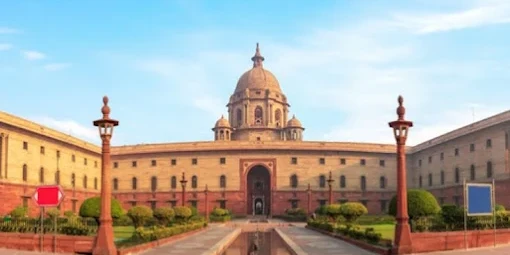
What stands out about Rashtrapati Bhavan isn’t just its role as the President’s workplace. It ranks among India’s grandest, brightest, deeply rooted markers on the map. Beauty? Many call it Delhi’s finest architectural sight. Spread across over 330 acres, it rests at the far west edge of Rajpath. Beyond the main structure lies open green space - wide lawns stretch outward. Then come the famous Mughal Gardens, known worldwide. Hidden corners hold calm courtyards too, silent pockets untouched by city chaos and crowds. Once called the Viceroy's House. Designed by Sir Edwin Lutyens, known far beyond Britain’s shores, finished only by 1929. A blend shaped slowly - European bones meet Indian soul. Notice how domes rise, massive columns stand, each carved stone whispering craft. Big in size, this building spreads across four levels and includes 340 separate spaces. Ceremonial halls sit alongside state rooms, while official zones host changing of the guard plus national functions. Most guests head straight for the Mughal Gardens - that's what draws crowds year after year. When blossoms peak, layered greenery, bright hues, and water features pull in travelers globally. Beyond government use, it breathes history, standing as a quiet landmark in New Delhi’s story.Back in 1912, the British chose to shift India’s capital from Calcutta to Delhi. Designing the Viceroy's House fell to Lutyens - his vision shaped its form. Rather than stick to one tradition, he wove European classicism together with local touches: chhatris here, jaalis there, domes above. Those details gave it character. Construction wrapped up by 1929, after years of labour and planning. Its price tag? Around 80 million rupees - a staggering amount for those days. After being freed in 1947, locals renamed the site Rashtrapati Bhavan, turning it into the President’s residence. Sprawling across acres, this plot holds Mughal Gardens, horse stables, administrative rooms, plus a small museum tucked inside. Through the decades, events here shifted from opulent feasts to solemn national rituals under its wide roofs. Its design, along with green pathways, quietly tells how India moved from foreign control to self-rule - without shouting it out loud. Nowadays, beyond housing the nation’s leader, the compound hums with activity while drawing crowds eager to wander through.Nearby Places to Visit Rashtrapati BhavanIndia Gate: A short stroll leads to India Gate, just three kilometers off. This glowing tribute stands for soldiers who served. Evenings here feel calm, good for walking slowly past its arch.National Museum: A short walk - roughly two kilometres - leads from Rashstrapati Bhavan to the National Museum. Housed within are some of India's most remarkable artworks, historical objects, and cultural treasures gathered from every corner of the nation. What stands out is how each exhibit tells a quiet story of its own time. Distance fades once inside, replaced by centuries speaking through stone, cloth, and script. Few places hold so much memory under one roof.Connaught Place: Right in the middle of things sits Connaught Place, roughly four kilometers away. Shops draw crowds there, restaurants keep it busy, while old British-style buildings give it character. You will find it known for those three things most.Rajpath: Down Rajpath you’ll find a wide road built for parades, cutting through New Delhi toward the President’s residence. This stretch wakes up every January with military displays and dancing schoolkids under winter sun. Most days it stays calm, filled only by strollers avoiding midday heat. People drift here at dusk - some jogging past lamp posts, others just standing near fountains, watching light fade behind columns.Parliament House: A round structure close by hosts India's lawmakers when they meet, standing out simply for what it is.Best Time to Visit Rashtrapati BhavanSummer (April to June): Hot months arrive between April and June. During this stretch, Delhi often crosses 40°C. Pick early hours instead, when the air feels lighter. Late afternoon works too, once the sun loses strength.Monsoon (July to September): Fresh showers arrive in July, washing away the heat just when things felt too warm. Yet plans can shift fast if clouds burst mid-morning during temple visits.Winter (October to March): When winter arrives, between October and March, Delhi finds its rhythm. Temperatures sit between 10 and 20°C, just right for wandering through gardens. Architecture shows its shape best under these skies. Cold air sharpens the edges of old buildings. Morning light lingers longer on stone carvings.How to Reach Rashtrapati BhavanBy Airport: Land at Indira Gandhi International Airport - code DEL - and step into Delhi. Roughly fifteen kilometers stretch between it and Rashtrapati Bhavan. Once down, taxis wait, cabs linger, trains hum beneath; each moves smoothly through traffic. Metro rides glide without fuss, while hired cars offer quiet roads. Comfort follows every choice made after touchdown.By Railway Station: From the rail stops nearby, New Delhi Railway Station sits 5 kilometers off while Hazrat Nizamuddin lies a bit farther at 7. Trains roll in and out of these hubs from big towns across the map. Reaching Rashstrapati Bhavan takes little effort once you step off the platform.By Road: Rashtrapati Bhavan sits easily reached by road. One might take a bus, catch an auto-rickshaw, hop in a taxi, or book a ride through an app. Just off the Yellow and Violet Metro lines, Central Secretariat Station lies close. A short walk leads straight to the front entrance from that stop.