
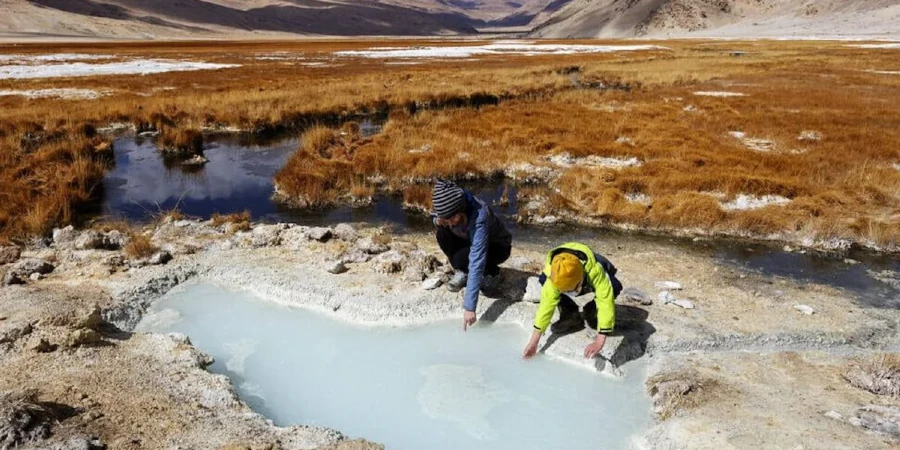
Southeast of Leh, roughly 138 kilometres away, lies Chumathang Hot Springs beside the Indus River - nature showing off quietly. Heated groundwater has drawn visitors here for years, not because of fame but belief in its warmth fixing what ails them. Steam curls from small openings in the ground where sulfur-rich water pushes up, too hot to touch. Even when frost grips everything around, heat rises steadily beneath thin mountain air. Desert stretches everywhere in Ladakh, yet right here, liquid fire bubbles through rock like a secret the earth won’t keep. Nowhere else feels quite like these springs - they hold stories, not just water. Healing runs deep here, locals say, especially for stiff joints or worn-out bodies. Skin troubles too, maybe even long-standing ones, might fade after a dip. Pilgrims come without saying why, drawn by something older than maps. A small monastery sits nearby, quiet, its walls shaped by cold winds. Villages around follow rhythms set by frost and sun, their lives tied to the land's pulse. Travelers pause at Chumathang, gathering breath before heading toward distant spots - Hanle, Tso Moriri, Nyoma - all waiting beyond high passes. A break here does more than quench your thirst - it pulls you into the rhythm of the spot. Chumathang Hot Springs mix quiet landscapes, sacred customs, together with wellness, should you seek something different in Ladakh.Chumathang Hot Springs isn’t just rock and steam - people’s lives shape it too, voices tangled into the land like old roots. Deep beneath ground, trapped fire pushes upward, dragging water through stone until it spills out, thick with sulfur and earthy bits. Locals here have bowed to these waters for generations, treating each pool as if spoken by gods, clean and sharp with purpose. From grandparent to child, tales spread quietly - of pain gone after a soak, skin mended, breath returned - and so belief grew, slow as moss on warm rock. These waters aren’t simply hot, they’re held close. Chumathang once sat where ancient paths met, linking distant Tibet with far-off Ladakh. Over rocky ridges, yaks plodded slowly while horse trains followed behind, winding through high passes like quiet rivers. Tired people would pause there, drawn by steaming water bubbling up from deep underground. Warmth spread through bones stiffened by freezing winds, easing limbs worn thin by miles of walking. Healing heat rose from those pools, lifting weariness the way dawn chases night. Not just a stop but a refuge - these springs became pockets of calm inside harsh mountain crossings. Many travelers include Chumathang Hot Springs in their Leh Ladakh Tour Package to experience Ladakh's famous natural geothermal springs.Nearby Places around Chumathang Hot SpringsTso Moriri Lake: Some seventy kilometers from Chumathang sits Tso Moriri Lake. High up it lies, ringed by peaks wearing snow and wide stretches of green meadow. When summer comes, the water stays clear - birds travel far to nest along its edges. Over there too you might spot the Kiang, that wild ass roaming free. Peaceful, glassy surfaces draw both those who love quiet places and those with cameras in hand.Hanle: Far beyond, 160 kilometers away, lies Hanle village. Perched high up, the Indian Astronomical Observatory stands there - ranked one of the tallest such facilities on Earth. Not far from it rests a monastery built back in the 1600s. Bright, untouched skies stretch overhead at night, so sharp they pull stars into close view. Stargazers find their rhythm here, photographers too, under that wide-open dark.Nyoma: Just past Chumathang by about forty kilometers sits Nyoma, a small settlement tucked into the landscape. This place hums with both soldier presence and local tradition, shaping its identity quietly. Wander around, you will catch glimpses of daily routines lived by Ladakhi villagers going about their days. Travelers heading toward Tso Moriri or turning off to Hanle often pause here without much fanfare. Rest stops blend into the rhythm naturally, nothing forced. Life moves at its own pace, shaped by altitude and habit. Few words are needed where actions speak louder.Hemis Monastery: Starting at Hemis, the road stretches roughly 130 kilometers toward Chumathang. Largest in Ladakh, this monastery draws many who seek its presence. Celebrations erupt here during the time honoring Guru Padmasambhava. History lives within these walls, carried through rituals passed down generations. Culture breathes in every courtyard, shaped by centuries of quiet devotion.Best Time to Visit Chumathang Hot SpringsSummer (May to September): Warm months from May through September suit Chumathang trips best. Temperatures rise to 10°C–20°C when daylight lasts longer. Roads open up once snow melts away completely. Visitors soak in steaming springs while exploring spots nearby. Places such as Tso Moriri appear reachable under clear skies then. Hanle becomes possible to reach without delays caused by ice.Monsoon (July to September): When July hits and rain starts falling across India, Ladakh stays mostly untouched by clouds. Even if a shower slips through now and then, the land remains bone-dry. The Indus, usually quiet, swells with fresh flow - brighter, bolder. Along its banks, steaming pools seem to glow under open skies. But tracks leading onward can turn rough without warning. Puddles gather where gravel once held firm. Travelers hear news best from locals before stepping onto those paths.Winter (October to April): When winter hits - from October to April - Chumathang turns icy, with temperatures often dropping under zero. Snow piles up heavily, cutting off the village from nearby areas; just a handful of people remain during these months. Tourist spots shut down one after another once the freeze sets in. Reaching the hot springs means braving conditions worse than staying in town. These pools keep flowing anyway, offering heat to those stuck behind when everything else stops.How to Reach Chumathang Hot SpringsBy Airport: From the air, landing at Kushok Bakula Rimpochee means you’re already close - just around 138 kilometers from your destination. Flights arrive directly into Leh from cities like Delhi and Srinagar, along with a few Indian domestic spots. Once off the plane, transport options pop up right there, near arrivals. Taxis, private hires, even shared rides stand by, ready to roll. The road trip heads southeast on the Leh–Nyoma highway, winding toward Chumathang.By Road: Chumathang sits on the stretch between Leh and Tso Moriri, linked by winding roads. From Leh, it takes four or five hours behind the wheel, tracing curves beside the Indus where views pull your eyes without asking first. Buses might be rare, yet shared jeeps, rented bikes, private cabs often move up and down. Permits? They’re part of the deal here - skip them, and doors stay shut. Scenery rolls wide and quiet, but rules still hold tight.By Railway Station: Nothing links rails to Chumathang now. Closest stop sits far - Jammu Tawi, around seven hundred kilometers off. Fly from Jammu to Leh if moving that way, after which roads take you ahead toward Chumathang.