
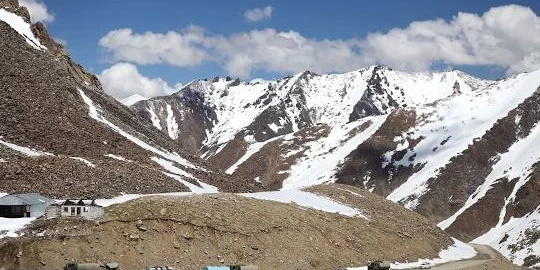
Up on high, near a rugged pass where few roads climb, sits Khardong Village - quiet, still, tucked beneath Khardung La. This spot ranks among Earth’s loftiest drivable peaks. Around 3,700 meters up, eyes meet sweeping mountains, paths winding beside streams, and far down, the Indus threading through the valley floor. Life moves slow here. Old customs remain strong, shaped by centuries of Ladakhi ways. Visitors escaping busy Leh or Nubra find quiet like water after heat. Most folks farm what they eat, tend animals born each spring. Their days follow seasons, soil, sky. Nowhere else feels quite like this quiet cluster of homes tucked into rocky slopes. Visitors watch daily routines unfold across stepped plots where families tend crops by hand. Mud-walled dwellings stand firm under wide mountain skies. Life moves without rush here, shaped by seasons rather than schedules. Some come chasing altitude, aiming for the winding climb up Khardung La. Others arrive seeking stillness after long rides along sharp ridges. Rooms offered in family homes carry warmth found in shared meals and open doors. Bowls of steaming thukpa taste different when eaten among neighbors. Culture thrives despite distance from crowded cities. Old songs echo during harvests. Handmade tools shape barley fields just as ancestors did. Miniature altars appear near doorways, wrapped in wind-tossed cloth strips. Each fluttering flag carries wishes stitched into fabric. Belief shapes routine, not ritual alone. For those passing through, time slows enough to notice details - sunlight on clay roofs, laughter behind fences, silence between peaks. The road upward leaves dust on boots. This place wipes it clean.High up near Khardung La Pass, Khardong Village took shape because of where it sat - right along an old path linking Leh to Nubra Valley, stretching further into Central Asia. Traders once moved through here regularly, using the pass as part of the Silk Road network, carrying pashmina, salt, spices across regions like Tibet, Ladakh, and beyond. Because so many passed through, homes turned into resting spots; meals were shared, shelter given, bodies recovered before tackling the climb over the icy ridge. Connected deeply to Nubra-Ladakh culture, the area saw strong growth in Buddhist practice around the 10th century, drawing monks, travelers, those seeking sacred sites. Over time, faith carved itself into stone and prayer walls; temples rose slowly, small stupas dotted hillsides - all meant to guard against fierce winds, sudden storms, long winters. Life there shaped by movement, belief, cold. Out there among the fluttering prayer flags, stacked stones called chortens, and quiet monasteries lies clear proof of Tibetan Buddhist roots. High up where air thins and skies hang close, Khardong stayed apart from rushing change, letting old ways hold steady. Its homes made of mud and stone still stand like they always have, shaped by cold winds and long memory. Life moves slow here - people farm what grows, tend animals, raise soft-haired goats for wool, just as ancestors once did. Stories pass mouth to ear, season after season, carrying tales of frozen months and shelter given to travelers climbing icy passes. Visitors exploring Nubra Valley often include Khardong Village in our Leh Ladakh Tour Package itinerary.Nearby Places around Khardong VillageKhardung La Pass: Up near Khardong Village, just two kilometers out, sits Khardung La Pass - ranked among Earth’s loftiest roads you can drive on. Rising to 5,359 meters, it throws wide a full-circle scene of white-tipped peaks stretching in every direction. Often called the doorway to Nubra Valley, it pulls folks here for different reasons. Some come aiming cameras at untouched landscapes. Others simply want that rare feeling found only atop a towering Himalayan ridgeNubra Valley: Far beyond just scenery, Nubra Valley holds wide stretches of desert near Hunder where two-humped camels wander freely. Roughly thirty kilometers from Khardong Village lies this place shaped by quiet winds and ancient trails. Diskit and Samstanling monasteries rise within it, built into hillsides like thoughts carved in stone. Where faith meets open sky, travelers find moments stitched between silence and color. Culture flows through these parts without announcement, carried on prayer flags and morning light.Leh Town: Just beyond a winding stretch of road lies Leh Town, heart of Ladakh's cultural life and its main administrative hub, some 40 kilometers from Khardong Village. Rising quietly against the hills, the Leh Palace stands alongside the peaceful Shanti Stupa, while narrow lanes host craft markets full of local hands' work. More than just a starting point for trips across the area, it draws visitors into the rhythm of daily life here, slowly revealing what the region truly feels like.Sumur Village: Hidden among the folds of Nubra Valley, Sumur Village sits nearly 25 kilometers out. Peace settles deep here, where few sounds break the silence except wind near Samstanling Monastery. This spot draws visitors looking to step back from noise, yet still walk close to Ladakh’s inner traditions. Beauty lingers in stillness rather than spectacle. Fewer paths lead here - by design.Best Time to Visit Khardong VillageSummer (May to September): When summer arrives, from May through September, Khardong Village comes alive under clear skies. Temperatures hang between 10°C and 25°C - just right for walking high trails or moving slowly through rocky paths near Khardung La Pass. Beauty spreads across the valley now, colors sharper than at any other moment. Roads open up fully only in these months, making travel possible where it wasn’t before. Few moments match standing there, surrounded by stillness, while warmth touches your skin.Monsoon (July to September): Rain rarely hits Ladakh between July and September. Though it's called monsoon, downpours stay light. A brief shower might pop up now and then. Clouds hang low, feeding colour into the slopes. Landscapes gain a richer look under soft daylight. Most routes remain open for travel. In certain spots, though, water can block the road. Safety stays high across much of the region.Winter (October to April): When winter arrives, from October through April, cold grips everything. Temperatures usually drop under zero, sometimes hitting minus fifteen degrees Celsius. Roads vanish beneath thick snow, especially near Khardung La Pass, cutting off easy access to the village. Still, those willing to face the chill find quiet beauty in the frozen landscape. White fields stretch far, untouched, offering peace instead of comfort.How to Reach Khardong VillageBy Airport: Air travel brings most visitors close via Leh’s airport - Kushok Bakula Rimpochee - just about 40 kilometers from Khardong Village. This airstrip connects daily with flights arriving from places like Delhi and Srinagar, along with a few other major Indian cities. Once on the ground in Leh, travelers usually choose rented cabs for the rest of the journey toward the village.By Road: You can arrive at Khardong Village via NH1 - that's the Leh–Srinagar highway, closest bit of pavement around. Lasts just one or two hours, winding through sweeping landscapes and crossing the well-known Khardung La Pass along the way. Riders chasing open roads and engine hum often pick this stretch when heading toward the village. Scenery pulls you in, slow and steady, while tires eat up the miles without fuss.By Railway Station: Travelers aiming for Khardong won’t find a train station nearby. Roughly 700 kilometers separate the village from Jammu Tawi, the nearest major rail hub. Reaching Leh by air from Jammu makes sense for most visitors. From there, roads take you onward toward the destination.