


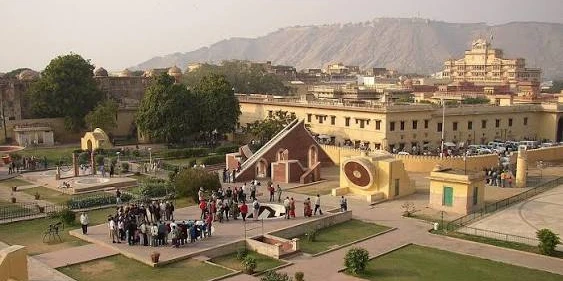
When in Jaipur, a visit to Jantar Mantar the world’s best-equipped and the largest among the Observatories is a must. This astronomical Observatory is not only recognized as one of the World’s Heritage site by UNESCO but it stands as a testimonial to the advanced scientific achievements in India during the 18th century. The Observatory at Jaipur houses as many as 19 different instruments of varying sizes which can be seen at their appropriate astronomical position, that enable in knowing planetary positions and distances between planets as well.Major Attractions: UNESCO-listed astronomical instruments, world's largest stone sundialTop Activities: Explore observatory, guided tour, photographyDuration: 1–2 HoursBest Time to Visit: October to MarchThese instruments helped in determining astronomical positions to quite an extent even without a telescope. Samrat Yantra (the largest of all instruments in the Jantar Mantar) is considered to be the largest sundial in the world. Built of stone and marble it can measure time with an accuracy of 2 seconds in a day! Some of the other important astronomical devices include Jai Prakash Yantra, Ram Yantra and Narivalaya Yantra. The geometric shapes of Jantar Mantar attract photographers and tourists and it’s easy to understand why this Observatory made it to the UNESCO World Heritage List. It makes for a wonderful walk in the early morning or late evening and guides will provide insight into the use of each instrument, helping you visualize the way ancient Indians utilized the laws of astronomy and architecture.