

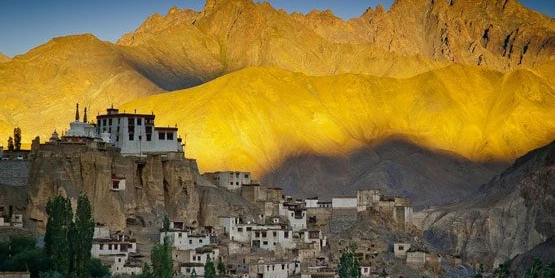
Lamayuru catches your eye along the road between Srinagar and Leh, tucked inside Ladakh's high desert. Called Moonland because it resembles another world, its cracked earth and twisted ridges rise like something from a dream. Erosion carved deep gullies through stone, leaving behind bald mountains and odd shapes that shift with light. Photographers stop here often, drawn by silence and shadows stretching across empty slopes. Hikers pass through too, stepping carefully around ancient trails worn into dust. Perched above it all sits the Lamayuru Monastery - old, quiet, rooted in time. One of Ladakh’s first religious centers, it hums with chants at dawn and dusk. From its perch on a rocky mound, you see far beyond the valley floor. Visitors find more than views - they feel traces of lives lived slowly, deeply, without noise. Stone walls hold centuries; prayer flags flutter where wind never rests. Monks guard ancient texts, wall paintings, walls filled with prayers, rituals passed along family lines - making the site more than just a temple, it holds living heritage. Though tiny, Lamayuru breathes energy through stacked farms carved into hillsides and homes built in old Ladakhi ways. Festivals hum with chants, people gather at morning prayers, stalls appear weekly - these moments let outsiders step close to daily life here. Rocks twist like waves frozen mid-motion, history lingers in stone carvings, silence weighs heavy in meditation halls - a mix hard to find elsewhere. Getting there from Leh takes effort, yet roads connect easily to nearby trails and sights, pulling hikers and wanderers who seek movement alongside meaning.Lamayuru holds centuries of vivid history, shaped over a thousand years. Built on ancient roots, its monastery - also called Yuru - is said to rise from teachings laid down by Mahasiddha Naropa during the 1000s. Other accounts point instead to Rinchen Zangpo, known widely for bringing Buddhist texts into local reach across Ladakh. This spiritual seat follows the Drikung Kagyu path within Tibetan Buddhism, rooted deeply in meditative discipline through the Gompa way. Beyond prayer, it has quietly held space for traditions that define life here. Long before now, seekers came here not just to learn but to sit, reflect, and absorb. Many travelers choose our Leh Ladakh Tour Package to experience the famous Moonland landscapes and historic Lamayuru Monastery.Nearby Places around LamayuruLamayuru Monastery: Lamayuru Monastery sits high on a rise, standing out across the land and drawing eyes from afar. Among Ladakh’s most ancient religious sites, its walls hold old paintings, carved figures, time-worn texts. Held each year here, the Yuru Kabgyat gathering pulls people in from villages near and far. Time seems to slow where stone meets sky, history resting in quiet corners.Famous Moonland Formations: Lamayuru sits in a landscape so strange it feels like another planet. Twisted rock forms rise where wind has carved stone into odd silhouettes. Instead of green valleys, pale ridges stretch under wide skies. Erosion shaped these cliffs over centuries, leaving behind hollows and spires. Hikers find paths through silent mounds that resemble ancient ruins. Photographers wait for light to cut across dusty slopes. What looks lifeless holds quiet beauty up close. Few villages in Ladakh carry such a distinct face. This place earns its name - Moonland - not by myth but by form.Alchi Monastery: Starting off far from Lamayuru - about 110 kilometers away - sits Alchi Monastery, known for its blend of Indian and Tibetan wall paintings along with unique building styles. Most travelers see both spots together, slipping quietly into the deep currents of old Buddhist traditions across Ladakh. While one place holds silence, the other offers color; between them, history speaks without words.Basgo Monastery: Half a day’s ride west from Lamayuru sits Basgo Monastery. Ruins climb the hillside, whispering tales of kings once seated here. Ancient paintings still cling to cracked walls inside dim halls. Once, soldiers guarded these slopes - now monks chant where warriors stood. The place breathes time. Stone by stone, belief echoes through broken archways. History does not shout; it lingers in faded pigments and silent courtyards.Best Time to Visit LamayuruSummer (May to September): Warm days stretch through May until September, making this time ideal for a trip to Lamayuru. Between 15°C and 25°C, the air stays comfortable - perfect for walking long trails or pausing to take in views. Those wide, dreamy landscapes shaped like another planet grab attention without trying. Roads connecting Leh and Srinagar? Smooth during these months, no hurdles worth mentioning.Monsoon (July to September): When rains arrive between July and September, Ladakh stays mostly arid though wet spells pop up now and then. Lamayuru's surroundings take on a fresher look when water touches the land, while skies turn dramatic - ideal for those who carry cameras. Travel plans may stumble if paths in far corners weaken under downpours. Still, moments of green glow softly across stone-heavy views. Footpaths sometimes close without warning where earth shifts after heavy drops.Winter (October to April): When winter arrives, from October through April, cold grips the land hard. Temperatures often sink under –15°C, staying there for long stretches. Snow piles high on roads and mountain passes - travel slows or stops because of it. Yet that same hush, blanketed in white, draws people who crave stillness mixed with risk. Few come here then. Those who do remember quiet like a pulse beneath their boots.How to Reach LamayuruBy Airport: Land at Kushok Bakula Rimpochee Airport in Leh - it sits roughly 125 kilometers away from Lamayuru. Most flyers arrive here after trips from Delhi, Srinagar, or Chandigarh on regular flights. Once feet touch ground in Leh, movement toward Lamayuru begins. A hired cab works fine. Or join others in a shared journey arranged ahead of time. Either way gets you there without fuss. Roads wind through quiet stretches, best taken slow.By Road: Driving here works because Lamayuru sits right on the Leh-Srinagar highway, known as NH1. About two to three hours of riding separates it from Leh. Through winding turns, views unfold - rocky peaks, quiet valleys, clusters of homes tucked into slopes. Instead of buses, travelers tend to pick cabs they book alone, rides split with strangers, or motorbikes kicked to life at dawn.By Railway Station: Near the train stop: Trains do not reach Lamayuru at all. Closest big rail point sits near Jammu, about 700 kilometers off. Travelers heading there usually grab a plane ride from Jammu straight to Leh first. After landing, roads carry them onward toward Lamayuru.