
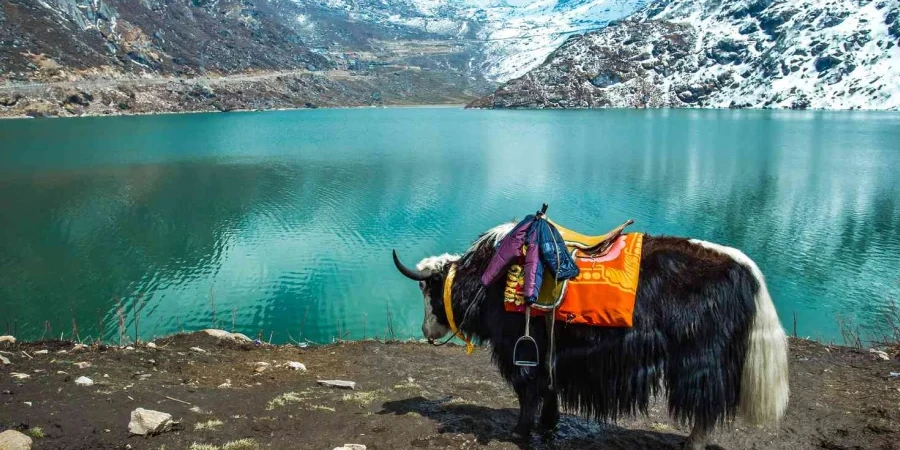
A trip to the yaks close to Tsomgo Lake may linger in your mind more than you think, set within Sikkim’s hushed natural landscape. About 40 kilometres out from Gangtok, sitting at nearly 12,400 feet, is Changu Lake - filled by melting glaciers, cradled among snow-covered ridges and thick forested slopes. To those who live nearby, its waters carry weight, built through stories passed down, seen as a holy space in everyday Sikkimese culture. As winter gusts blow in, the lake hardens completely, still beneath grey, icy clouds. When warmth returns, the water changes completely, mirroring hills and skies as if someone smoothed a mirror across the ground. Over at Changu Lake, people usually take turns riding yaks - a long-standing habit that gives you a real sense of rough highland paths. Tough animals they are, moving slowly yet linked closely to Sikkim’s past. Around their necks sit bold-colored scarves, small bells swing free, strips of cloth dance with every footfall, making hushed forest lanes suddenly bright. Sitting atop one doesn’t spark thrill so much as drop you gently into ordinary moments up where air gets thin. Stillness moves through their steps, built from years among frozen mountains. Comfort sits alongside wonder, though excitement never leads. Over by Changu Lake, people usually ride yaks that amble along the shoreline. With every breath, crisp air rushes in, surrounded by jagged cliffs on all sides. Bright ribbons tied to strings dance when the wind pushes through. Silence from the tall summits settles like a held whisper. In far-off valleys, snow piles thick, frozen and still. Slow steps seem to stretch, floating through the air. Later on, visitors often remember this part more clearly than anything else in Sikkim. Close presence brings insight - into earth, into faces, into how days unfold. People leading the animals usually grin without effort, sharing pieces of their daily world. Talk flows toward customs long kept, beliefs shaped by mountains, and bonds with yaks carried across family lines. On rocky paths, these animals step without slipping, made for high places where engines fail. Hoof by hoof, they touch the ground gently, barely marking the earth. Riding them works well from April to June, while crisp days return between October and December. When frost grips the land, the lakes fall silent beneath white coverings, making travel feel heavier, more real. Seeing yaks cross icy routes, wrapped in bold fabrics, tiny bells chiming at every motion - that sight sticks like a postcard never mailed but kept instead. Some chase thrills here, though stillness slips in just the same, mixed with echoes of how things once were. Afterwards, it is not just about riding an animal, but sensing mountain air deep in your chest, moving slow like those who live above, holding onto something that stays even when Sikkim fades in the rearview. Not motion alone, but quiet presence sticks around.