

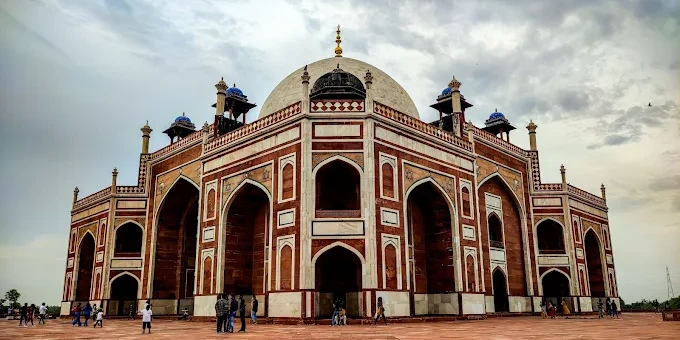
A tomb built long ago surprises many because it shaped what came after, like the famous Taj Mahal. Found in a busy part of Delhi called Nizamuddin, this place carries global recognition today thanks to its past value. Few realize that back in the 1500s, such a design had never been seen before across these lands. Walking through the space, one notices how green paths divide neatly into four parts under open skies. Water features line up perfectly along stone trails, showing ideas brought from faraway Persia. Inside, where rulers once rested, colors and patterns cover walls in quiet elegance. Though old, the layout still feels planned with care, not chance. Each corner reflects choices made centuries earlier, yet remains clear to see now. Gardens wrap around the main structure like arms holding something precious. This was among the first times such balance between nature and building appeared here. Stone meets plant life in ways few buildings managed at that time. Even without loud displays, the site holds attention simply by being there. Visitors come often, drawn less by fame than by presence. What stands is more than brick - it remembers who lived, ruled, left. Time has touched it gently compared to others of its age. Beauty hides in repetition: arches, tiles, corners repeated just enough. No rush needed while walking here; the pace comes naturally slow. Silence fits well within these boundaries despite city noise nearby. The air changes slightly near the center, cooler somehow. Not every detail shouts, but together they speak clearly. Built using red sandstone along with white marble, the tomb features a broad central dome. From up there, views stretch across Delhi’s skyline in sharp detail. Workers shaped more than just an emperor’s resting spot. They left behind a vivid shift between early Islamic forms and later Mughal grandness. Nearby stand older structures too - Isa Khan’s burial chamber sits close, then Bu Halima’s, plus the Barber’s Tomb. Crowds fill this site daily. Visitors come in waves - tourists, scholars, lens-carrying watchers drawn by shape and shadow. Lately, Delhi has turned its gaze back here, paying closer attention.From 1565 onward, the plan for Humayun’s Tomb began taking shape - step by step, built on quiet precision. Nine years past the emperor’s passing, it was Bega Begum who set things in motion. A vision once dim now stood clear, drawn by Mirak Mirza Ghiyas, a builder from Persia. Though Humayun ruled as one of the Mughals’ strongest, his days held sorrow. Yet stories lingered - he’d lived abroad, drawn to Persian art, shaped by its grace. So when he died in 1556, his wife gave form to memory, raising stone into sky. Built in 1572, this was the earliest known Mughal garden tomb, setting a pattern echoed in later structures like the Taj Mahal. In its center stands the architectural marvel, surrounded by a Charbagh - land divided by pathways and flowing water, mirroring descriptions of paradise in Islamic writings. Buried beneath the shadow of the structure lie rulers of the empire, transformed into resting monarchs under earth and stone. Though brief, the final glimpse the last Mughal emperor, Bahadur Shah Zafar, had of Humayun’s Tomb came amid the chaos of 1857’s uprising. Colonial years brought damage and neglect, yet reverence for the site never faded; restoration work continues to preserve what remains.Nearby Places to Visit Humayun's TombIsa Khan's Tomb: A stone’s throw away from one another stand these structures, with Isa Khan's Tomb sitting right beside the other. One of the oldest here, it carries an age that predates much of what surrounds it. Built before Humayun's Tomb, this eight-sided memorial follows a design rooted deeply in the Lodhi period. Its shape sets it apart - distinct, quiet, shaped by a time long gone.Nizamuddin Dargah: A stone's throw away stands the Nizamuddin Dargah, known far and wide. Inside rests the revered Sufi figure, Hazrat Nizamuddin Auliya. When qawwali music fills the air, the atmosphere shifts - deeply quiet yet humming with presence. Though always peaceful, it pulses differently then, more alive beneath the surface.Lotus Temple: Just a short stretch away - around six kilometers - the Lotus Temple rises quietly. Its unique form mimics unfolding petals, soft against the sky. This Bahá'í House of Worship holds stillness at its core. Distance fades when walking toward such calm. Shape speaks before words. Silence waits within curved walls.India Gate: Around five kilometers from Humayun's Tomb stands India Gate, built to honor troops fallen in battle. This open space, ringed by greenery, draws visitors looking to stroll as daylight fades. Evening light softens the stone while crowds drift through pathways. Names of the departed are carved into its surface, silent under the sky. People arrive at dusk, drawn not just by history but by air that cools when sun dips low.Purana Qila (Old Fort): Purana Qila hides a story - some say it held Humayun’s home long ago, just three kilometres off this spot. Inside its walls sits a museum, tucked away like an afterthought. Not many expect history to linger so quietly in stone.Best Time to Visit Humayun's TombSummer (April to June): Heat builds fast here between April and June. Temperatures often climb past forty degrees. Mornings begin calm before the sun takes charge. Evenings cool just enough to walk without strain. A landmark seen at dawn feels different than noon. Late hours let you move easier through open spaces.Monsoon (July to September): When rains arrive between July and September, the grounds around the tomb grow thick with greenery. Still, downpours sometimes make visits shorter than planned.Winter (October to March): Cold months arrive in October, sticking around until March. Temperatures sit between 10 and 20°C, just right for those who enjoy a crisp touch in the air. Walking feels effortless now, especially near monuments and nearby spots.How to Reach Humayun's TombBy Airport: From the airport, reach the tomb via Indira Gandhi International (DEL) - roughly 16 kilometers away. Getting there? Options include taxis, cabs, even the metro. Each choice works without hassle. Distance doesn’t complicate travel; movement stays smooth.By Train: From the train, reach Hazrat Nizamuddin - just 3 kilometers from the tomb. Or try New Delhi Railway Station if that suits better; it sits 7 km off.By Road: Getting to Humayun's Tomb by road works well from anywhere in Delhi. A bus ride might suit some, while others prefer driving their own car. Some people choose an autorickshaw; app-based taxis offer another way too. Closest access comes via JLN Stadium on the Violet Line. That stop sits nearly two kilometers away from the tomb itself.