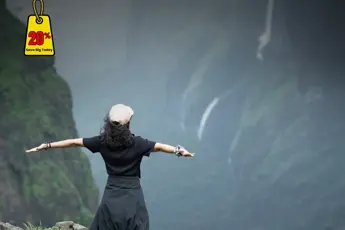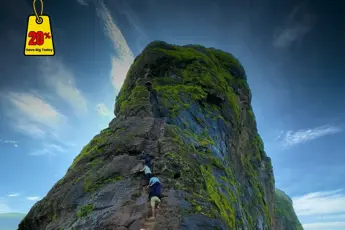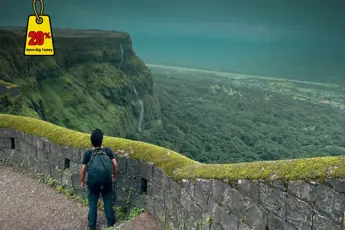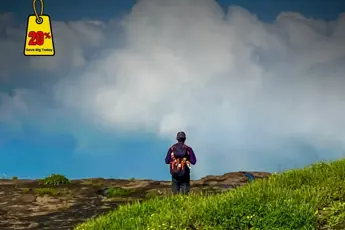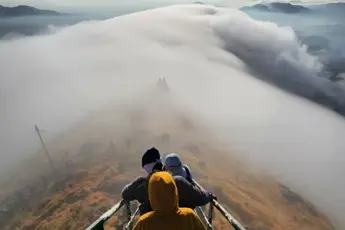


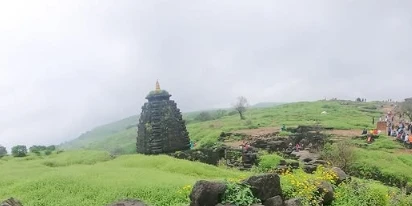
One of the favourite trekking destinations in Maharashtra, India is Harishchandragad. It is an old fort located in the Ahmednagar district. The dating of this fort can be traced back to the 6th century, and according to some history, it is also said that it was built in the times of the Kalachuri dynasty. This spot has been a strategic place for all the dynasties over time, from Maratha to the Mughals. Today, it symbolizes the great glory of the region's rich history and is a favourite among adventure enthusiasts and trekkers. Harishchandragad was not only a dream for a trekker but also an adventure lover. The fort is famous for its amazing landscapes, deep valleys, and scenic beauty, with trek routes probably some of the most thrilling and challenging in the Sahyadri range. The most noticeable attraction is Konkan Kada, a very large concave cliff that creates a breathtaking scene of the region of Konkan. This is a cliff and is famous due to its overhang structure where it creates a false impression as if it creates a vertical fall.Another major attraction of this fort is Kedareshwar Cave, having a large Shiva Linga surrounded by water, which always remains cold throughout the year. This spot, Taramati Peak, is situated atop the highest part of this fort, allowing breathtaking views into all the neighbouring hill ranges and valley ranges, making it a must-place to visit for trekking adventure. It falls in Ahmednagar of the state of Maharashtra at Kalsubai- Harishchandragad Sanctuary. Situated almost 200 Km from the mega-city, Mumbai and also at 170 Km away from the commercial hub Pune it is an easily accessed place for any major city citizen. The fort is situated at an elevation of approximately 1,424 meters or 4,672 feet above sea level. Therefore, it is one of the highest peaks in the Western Ghats. It is a strategically located fort offering a perfect mix of dense forests, rocky terrains, and waterfalls. This is a popular destination for nature lovers and trekkers. Weekend trekkers can explore more mountain adventures through our Treks in Maharashtra guide.Book the Harishchandragad Trek from PuneFrom ₹1,499 per person. Rated 4.7/5 by 49 trekkers. 160 km from Pune. Check dates & book -> Harishchandragad Trek from Pune Best Time to VisitThe best time to visit this hill depends on the kind of experience one seeks. The three main trekking seasons are monsoon (June to September), winter (October to February), and summer (March to May), each offering a different experience.Monsoon (June to September): The monsoons transform this hill to a land full of lush greenery, as waterfalls and streams run up on the hills. A misty feeling infuses this entire place which creates an otherworldly or dreamy aura, however the same makes it rather slippery to walk on such a path dotted with leeches, not to forget just apt for that adventurous trekker.Winter (October to February): This is considered the best season to visit this hill for trekking. The climate is cool and pleasant, so climbing is quite comfortable. The clear sky provides wonderful views from Konkan Kada and Taramati Peak. Besides, nights of winter are great for camping; it will provide a calm and starry experience for the trekkers.Summer (March to May): It can be pretty hot in summer, though an early morning or late evening trek can be beautiful. The dry climate of the trek is not slippery, although the daytime can be a bit too harsh. One must carry sufficient water and begin as early as possible to beat the sun.Generally, this season is the best for trekking to this hill as they are wonderfully bestowed with adequate pleasant weather, great clear views, and a thrilling adventure.How to reach HarishchandragadThis is a hill fort situated in the Maharashtra Western Ghats. It has difficult trek routes and offers a good view. There are routes from different places to reach it, so it attracts trek lovers from the Mumbai, Pune and Nashik areas. The nearest railway stations and airports are given below. The nearest railway stations to the hill are Igatpuri, approximately 41 km; Kalyan, approximately 120 km; and Nashik Road, approximately 90 km. All these stations are well connected with Mumbai, Pune, and other major cities in Maharashtra.From these stations, one can hire a cab or take local transport to reach the trek base. The nearest airport to cover the place of air travel would be Chhatrapati Shivaji Maharaj International Airport in Mumbai which lies about 150 km. Second, an option would be the Pune Airport situated at approximately a distance of 130 km from the hill. Another near Nashik airport is known as Ozar airport located 90 km, but less frequently used by passengers. A passenger can avail of any of the cabs and also a bus to get to the base village from one of the following.Thi is well connected by road and one can drive or take public transport from Mumbai, Pune, or Nashik.From Mumbai (Distance: ~200 km)NH 160 via Kalyan-Murbad and then move towards Khireshwar or Paachnai village. It takes around 5-6 hours.From Pune (Distance: ~130 km)The best road route is through NH 60 towards Alephata, Malshej Ghat, and then to Khireshwar or Paachnai. It takes 4-5 hours by road.From Nashik (Distance: ~90 km)The simplest road route goes via NH 160 towards Rajur and from there to the base villages. It takes roughly 3-4 hours for a drivePublic Transport/Private Vehicle OptionsFor those who entirely rely on public transport, the options include buses from Mumbai, Pune, or Nashik, going to Malshej Ghat, Alephata, Rajur, or Ghoti; then, the option is a shared jeep or private taxi that will take them to Khireshwar, Paachnai, or to the Nalichi Vaat base.If you have a private vehicle then you can park in base villages, such as Paachnai, Khireshwar, or Belpada for Nalichi Vaat. The road conditions are quite good, although the village track might be pretty bad in some places, especially during the monsoons.Starting Points for the TrekPachnai Route (Easy) – Easy for beginners and takes about 2-3 hours to reach the fort. Suitable for families or those who do not enjoy trekking too much.Khireshwar Route (Moderate) – One of the most popular routes, the trail is pretty good for views, and one can reach the top in 5-6 hours.Nalichi Vaat Route (Most Tough) – This is referred to as a steep climb and a technical patch is for expert trekkers. Requires 6 to 8 hours and has rock patches and vertical ascent.Difficult Level and Trekking TipsTrekking can be as easy as walking through a scenic trail to a high-altitude climb that requires technical know-how. The difficulty depends on the altitude gained, terrain kind, and day length. Simple treks that one can attempt to start at lower altitudes say, between 2,000 to 3,500 m and lesser periods of duration, from 3-5 days. Then there are moderate treks which demand slightly higher fitness; cross 4,000 m, with steep climbs and the climate is mostly unpredictable. The really difficult ones (10+ days) have one climbing over high-altitude passes, across glaciers, and along long and rugged routes demanding a lot of one's endurance or experience and acclimatization in the region.The Best Trekking Duration depends on the distance, altitude, and stamina of a person. The best for those who are beginners would be shorter treks like 2 to 4 days. Another aspect is experienced trekkers like 7 to 15 days. The fitness factor plays a crucial role in stamina, leg strength, and cardiovascular endurance. Cardio exercises, strength training, and hiking with a backpack can prepare an individual. For a planned trekking experience, explore our Harishchandragad Trek Package.Best Time for the TrekThe right season makes the trekking experience worthwhile.Summer (April-June): Suitable for high-altitude treks when the snow melts, and landscapes are lush green, with clear trails; however, the lower altitude regions can be hot.Monsoon (July-September): Provides lush greenery and surroundings with vibrant flora, but trails are slippery, and landslides in some areas are not predictable. Rainproof gears are a must.Winter (December-February): Ideal for expert trekkers who will face extreme cold and heavy snow. Some high-altitude passes get closed due to the snowfall.Harishchandragad Camping: An Enthralling Experience. This hill is one of the most famous trekking and camping destinations in India, and it is an ancient hill fort located in Maharashtra's Western Ghats. Breathtaking landscapes and a very tough trek make this fort special, not just because of the history pouring out from each stone, but because it provides an experience beyond imagination. The adventure of pitching a tent amidst the serene beauty of the Sahyadris, coupled with the thrill of exploring ancient caves and temples, makes it an ideal getaway for nature lovers and trekkers alike.Alternative Attractions NearbyKalsubai Peak, Malshej Ghat, and Pimpalgaon Joga Dam are a few of the most incredible alternative attractions near popular trekking destinations in Maharashtra. Each place has something unique to offer, making it ideal for nature lovers as well as adventure seekers and for people who want to experience and explore the beautiful landscapes of the Western Ghats.Kalsubai Peak: The highest peak in Maharashtra reaches a great altitude of 1,646 meters, equivalent to 5,400 feet above sea level. This place is popularly known as the "Everest of Maharashtra." It has a trek from the summit that is moderately difficult with a clearly defined trail consisting of metal ladders and rocky pathways. From atop, it is breathtaking, where one gets to see some close mountain ranges, lush green valleys, and Arthur Lake so serenely still. The best time to visit Kalsubai is during the monsoon and winter months when the surroundings are covered in mist and vibrant greenery. The peak is also home to the famous Kalsubai Temple, dedicated to the local deity Kalsubai, which sees a steady influx of pilgrims.Malshej Ghat: Malshej Ghat is another breathtaking destination that lies in the Sahyadri mountain range. Malshej Ghat is a haven for nature lovers and photographers as it offers breathtaking views of road drives, waterfalls, and misty mountains. The ghat drive is unforgettable, especially during the monsoon. The clouds hovering above the valley, waterfalls cascading down the cliffs, and lush forests on either side of the road create a mesmerizing atmosphere. Malshej Ghat is also famous as a birdwatcher's paradise, especially during the migration season when flocks of flamingos arrive from Europe and Siberia. The dramatic rugged cliffs and rock formations enhance the beauty of this region. The place is great for trekking and camping. Some attractions include Fort, with an adventurous trek and scenic view from Konkan Kada, a vertical cliff overlooking the Konkan region.Pimpalgaon Joga Dam: is a water reservoir situated near Malshej Ghat, built on the Pushpavati River. It is a big dam that supplies water to the surrounding areas and offers a peaceful abode for people who want to be alone. The backwaters of the dam are home to many migratory birds. Thus, it is perfect for birdwatching and photography. The surroundings are calm and tranquil, making it a perfect picnic spot with reflections in the water's surface of the sky and hills. Monsoon water raises the levels inside it, providing a beautiful charm and scenery. Each of these attractions, Kalsubai Peak, Malshej Ghat, and Pimpalgaon Joga Dam, has its charm and appeals to different travellers. Whether you are a thrill-seeker, want a picturesque drive, or are looking for peace and tranquillity amidst nature, there is something here that will satisfy the needs of even the most serious city slicker.