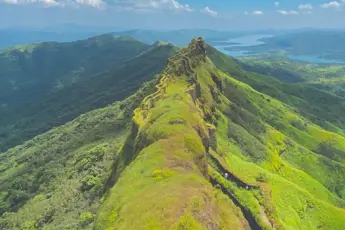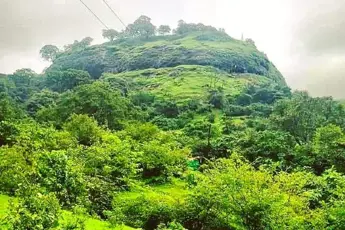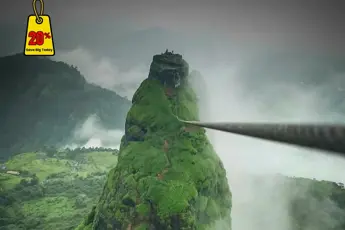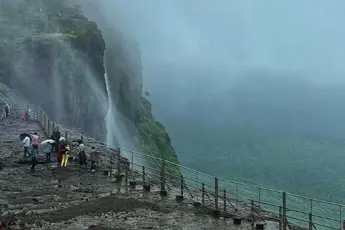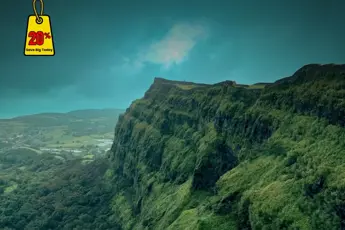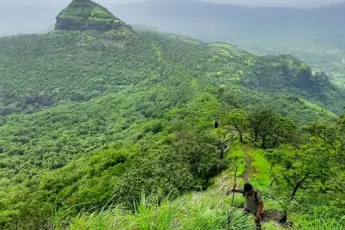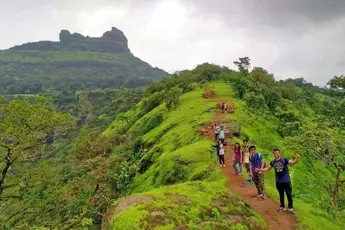

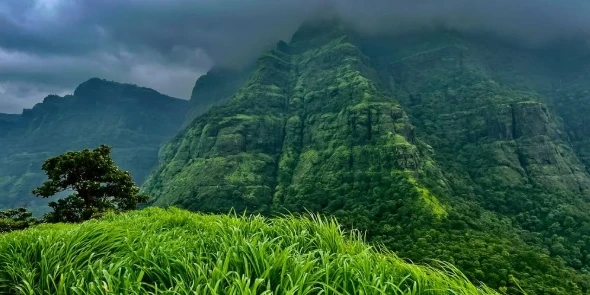
Gorakhgad Fort is an ancient hill fort of Sahyadri hills of Maharashtra, India. The fort is among the trekkers' most popular forts because it has steep slopes, wide vistas, and history. The fort has been given a name based on Saint Gorakhnath, a great yogi and ascetic who is believed to have meditated in these caves. Although not giant, Gorakhgad holds priceless historical value with its siting, background, and structural wonder. Gorakhgad is of endless interest to nature lovers, adventurers, and historians alike because it offers a lifetime experience of heritage and adventure combined. It is proof of medieval Marathas and kings' war intelligence. Not a suitable military camp, Gorakhgad Fort was a war camp and a watchtower in times of war. The remains of the water cistern, caves, and fortifications speak of its purpose and age. In contrast to some of the larger and more significant Maharashtra fortresses, Gorakhgad has nothing but ruins of historical significance and boulder formations to attract historians and trekkers. Ancient caves and steep climbs make our Gorakhgad Fort Trek Package popular among adventure seekers.India's Maharashtra state Gorakhgad Fort was an ancient fort that came into existence several decades ago in recorded history when it didn't exist. It was also named after the holy saint Gorakhnath and was a meditation centre and retreat for sages and ascetics. The harsh terrain and unapproachability of the fort rendered it a suitable location for the spiritual aspirants and later a fortress for the kings who wanted to conquer the region. We do not know when Gorakhgad Fort was constructed, but based on historical facts, it is certain that for ages it served as a watchtower and war hub. The fort was situated here to assist the rulers in governing trade routes and movement through the Deccan Plateau and Konkan. It was dominated by different dynasties that governed Maharashtra throughout history. Gorakhgad Fort witnessed the emergence and decline of various dynasties that left their mark on the fort in their own way. Travelers exploring weekend trekking destinations can browse our Treks in Maharashtra guide.Nearby Attractions Siddhagad FortSiddhagad Fort: Siddhagad Fort is a historic and beautiful hill fort in the Indian state of Western Ghats in Maharashtra. The elevation of about 3,230 feet above sea level provides the fort with an excellent location among historians and trekkers. Trekking facility to Siddhagad fort, grassy meadow grounds, and wide Sahyadri range panoramic view make it greatly attractive among historians and mountaineers. Siddhagad was once in the past a cornerstone of Maratha Empire days. It was one of Chhatrapati Shivaji Maharaj's forts and was strategically used by him as a watch tower during his days when he sought to keep tabs on the movement of enemies.Siddhagad Fort: Siddhagad Fort is the most sought-after among trekkers because of its beautiful trail, which starts from the Kharivali village. The climb is of a moderate grade and lasts for 5 to 6 hours. While climbing up, one has the chance to cross dense jungles, coarse streams, and open tablelands with the broad scenery of the country. The summit offers a great view to the spectator with emerald green valleys, waterfalls on slopes, and far-stretching veiled peaks. The beauty of Ahupe Ghat is its pristine wilderness. It's a decent place for camping and wildlife photography. The monsoons turn the whole area green, and it's a place nature lovers have to go to.Bhimashankar Wildlife Sanctuary: Bhimashankar Wildlife Sanctuary is an adventurer's and wildlife admirer's haven. It is a total zone of approximately 131 square kilometres in the Western Ghats and encompasses a very dense flora as well as fauna. It is famous especially because of the Indian Giant Squirrel or Shekru, which locally would be called so, but also being the state animal of Maharashtra. It is a biodiversity hotspot with a dense forest cover of semi-evergreen and evergreen forests. It is heaven for birders with an extensive range of over 200 birds such as the Malabar whistling thrush, Indian eagle owl, and crested serpent eagle.How to Reach Gorakhgad FortNearest Railway Station and Road NetworkThe nearest railway station to Gorakhgad Fort is Kalyan Junction, which is well-connected to Mumbai, Pune, and other Maharashtra cities. The trek has to be done from Kalyan to Murbad, a small town that acts as the hub for all the trekking activity in the region. Murbad is 50 km from Kalyan and can be reached by state transport buses or private taxis. From Murbad, the trekking base village is Dehri village. Dehri is 25 km from Murbad and is connected with Murbad by local buses or by hiring an auto-rickshaw or taxi. Dehri roads are mostly good, although some parts of it will be bad for sure, particularly during monsoons.Transportation Facilities from Mumbai and PuneFrom MumbaiBy Train: Travel by local train from the Central Line to Kalyan Junction. Travel by state transport bus or taxi from Kalyan to Murbad and then Dehri. By Road: Travel by car via NH61 (Mumbai-Nashik Highway) until Murbad and the local road until Dehri. Mumbai to Dehri is about 90 km, which takes 2.5 to 3 hours by road. By Bus: MSRTC buses are very often found from Mumbai to Murbad. From Murbad, go by bus or drive by private car to Dehri.From Pune By Train: Catch a train to Kalyan Junction and the same route via Murbad to Dehri. By Road: Take NH60 and NH61 for around 160 km, which will take around 4 to 5 hours.By Bus: MSRTC buses are also operated from Pune to Murbad but in fewer numbers than Mumbai. It is also feasible to travel by bus to Kalyan and then move on to Dehri and Murbad.Best Time to Visit: Monsoon vs. Winter Trek ExperienceMonsoon Trekking ExperienceJune to September monsoon trekking in India is a dream tour where nature unfurls its most colourful shades. Rains bless the land with the promise of life, and landscapes are re-moulded into a green paradise. Dry and barren trails are converted into greens, waterfalls are replenished, clouds cover the mountains with a layer of veil, and the trip becomes heavenly. Arguably, the greatest plus of monsoon trekking is sheer visual attractiveness. The forests become greener, flowers are in full bloom, and the entire landscape turns into gold touched with hues of green and dense foliage.Winter Trekking ExperienceWinter trekking, which one does between November and February, is an entirely new but exciting experience. The scenery looks mystical with mountains, meadows, and forests getting covered in snow. Shivering cold winds and the feeling of fresh snow beneath your feet crunching make winter treks exciting and worth it. The greatest solitary attraction of winter trekking is the spell of snowfall. The snowy terrain, waterfalls frozen into motion, and frozen trees so serene and silent. Unlike monsoon routes wrapped in greens, the winter treks have their charm of a sort with frozen blues, immaculate whites, and dead silences. The numbing cold in the air makes the treks turn out to be bracing physical exercises.