


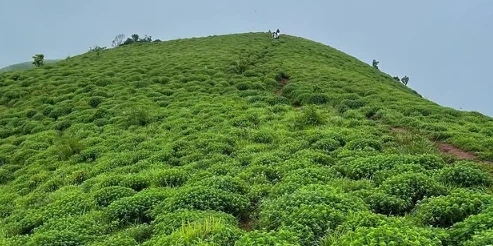
Kudremukh means literally "Horse Face" in Kannada, and it is a scenic group of hills in India's Western Ghats area of Karnataka. It is renowned for its green cover, rolling tops, and very high level of biodiversity. The Peak, with an elevation of 1,894 meters (6,214 feet), is the third-highest peak in Karnataka and a paradise for trekkers. It is situated in the buffer zone of Kudremukh National Park, a mixed flora and fauna forest reserve.Book the Kudremukh Trek from BangaloreFrom ₹5,499 per person. Rated 4.4/5 by 183 trekkers. 330 km from Bangalore. Check dates & book -> Book the Kudremukh Trek from BangaloreMythological links, colonial discoveries, industrialisation, and conservation in the present are integral to the scenic hills range of Kudremukh in Karnataka. The region so named after the "horse-face" peak is long-anticipated and is of cultural and ecological importance. Nature lovers can explore more trekking adventures in our Treks Near Bangalore guide.Trekking at Kudremukh: A Complete GuideThe most picturesque and adventurous trekking destination in South India is Kudremukh in the Karnataka state of the Chikkamagaluru district. With its lush meadows, mist-shrouded peaks, and dense forests, Kudremukh is a paradise for nature lovers and adventure seekers alike. The trek offers views of green canopy, falling waterfalls, and gorges for which the trek is a destination worth visiting for trekkers.Trekking Route DetailsKudremukh trek is a medium-difficulty grade trek and demands excellent physical strength and endurance. The distance of the trek is 20–22 km (there and back) and would take 8 to 10 hours depending upon the speed of the trekkers. The trek starts from the Mullodi village, and the trekkers will have to report and start the trek from the same place.The trek can be classified into three phases:First Ascent (2–3 km): The climb is mild, traversing extremely biodiverse forests. The slope is flat but slippery during monsoons.Rolling Meadows and Waterfalls (6–7 km): The best-looking part of the trek, with massive grasslands, tiny streams, and two or three waterfalls. The slope is moderate and the climate is cold and windy at higher elevations.Last Steep Climb (2 km): The last climb is the steepest with a steep slope to the top. Climbing can be tiring, but the views at the top are all worth it.Entry Permits & RegulationsBeing under the Kudremukh National Park, the trek lies with the authority of the Karnataka Forest Department. Entry is being managed for purposes of conservation as well as cost ability. Below are some of the prominent rules:A trekkers entry permit should be procured by the trekkers from the Forest Department of Gurumukhi.The approximate entry charge of ₹600 per person (negotiable) must be paid.Only a few trekkers are allowed per day, so booking is advisable.Daylight trekkers only (6:00 AM to 6:00 PM).No plastic at all, and the trekkers must carry back the garbage with them.The trek requires a guide for safety and on the trail.Best Time for TrekkingThe ideal time to trek Kudremukh is from October to February when the weather is pleasant and the landscape is greener. During these months:Temperature varies between 10°C and 25°C, which is ideal for trekking.The misty valleys enhance the landscape to make it more beautiful.Post-monsoon vegetation and waterfalls enhance the scenic beauty.Sighting of wildlife is more in this season.Monsoon treks (June–September) with heavy rain, leeches, and slippery roads are to be avoided. Summers (March-May) are tiring with the heat.Scenic HighlightsKudremukh is famous for its scenery and natural splendour. Some of the best highlights are:Rolling grasslands stretch endlessly with great views.Shola forests with dense and lush flora and fauna, with deer, Malabar giant squirrels, and exotic birdlife.Waterfalls and streams, the cool and refreshing stops en route.Panoramic view at the top, where the trekkers have a 360-degree view towards misty valleys and hills around.Safety Tips & Must-Carry Packing ListSafety first when trekking, and planning will make it a cakewalk. The safety tips needed are:Trek early in the morning to complete the trek before dusk.Stay with the group and follow the instructions of the guide.Don't throw trash and look after nature.Walk gently close to animals and don't be loud.Verify the weather forecast before the trek.Packing Items:Backpack (20–30L): Comfy and lightweight.Trekking shoes: Strong, good traction.Clothes: Quick dry T-shirts, trek pants, light jacket.Raincoat/Poncho: In case of unexpected rain.Water bottles (minimum 2 litres): Remain hydrated.Snacks & Energy Bars: Dry fruits, protein energy bars.first aid kit: Band-aids, antiseptic, painkillers, and personal medication if needed.Cap/Sunscreen: Sun protection.Torch/Headlamp: As a precautionary measure.Top Attractions in KudremukhKudremukh, one of the scenic hill stations of Karnataka, is famous for its hills and greenery, forests and high biodiversity. Kudremukh, situated at the core of the Western Ghats, is a paradise for trekkers, wildlife tourists, and nature lovers. With picturesque waterfalls and sacred temples, trekking trails and tea plantations, Kudremukh is the perfect destination for all types of tourists.Kudremukh Peak: The most frequented place in the area is the 1,894-meter-high Kudremukh Peak. "Kudremukh" literally means "horse face" since the hill has such a strange profile. The climb to the summit is one of the best ones, with forest cover, meadow, and emerald streams on the path. The view from the top is simply breathtaking, a "must-see" for all trekkers and adventure enthusiasts. The trek, from the village of Mullodi, is around 6–8 hours and spotting wildlife in the form of deer, leopocks, and peacocks on some days.Kudremukh National Park: The Kudremukh National Park has been a protected area since 1987 and is a big national park of Karnataka occupying nearly an area of 600 square kilometres. The park is blessed with a rare diversity of flora and fauna of the likes of leopards, tigers, wild boars, langurs, to even lion-tailed macaques one can even imagine to spot. Bird watchers will also get a glimpse of some extinct birds such as Malabar trogons, hornbills, and flycatchers. Some trekking routes are going through some dense evergreen forests of the park, and thus heaven for nature enthusiasts. The best season to visit the national park is October to May when the weather is nice.Hanuman Gundi Falls: Hanuman Gundi Falls or Suthanabbe Falls is one of the most beautiful waterfalls of Kudremukh, which is located inside the Kudremukh National Park. This is the precipitous fall of approximately 100 feet, which forms a breathtaking landscape. Both locals and visitors can descend to the ground level of the falls and enjoy a brief hike, where they can take a cool dip in the natural lake. This is surrounded by thick forests and is ideal for photography and tranquillity.Lakya Dam: Located between Kudremukh hills and Lakya River, Lakya Dam was constructed by Kudremukh Iron Ore Company Limited (KIOCL). The serene dam is surrounded by beautiful scenery of the nearby hills and valleys. The dam was originally constructed for silt collection from iron ore mines but today is a scenic point. Though there is no entry into the dam, the dam could be viewed from the vantage points around the location. The location is well suited for a far-off weekend getaway, especially during sunrise and sunset.Gangamoola Hill (Varaha Parvatha): Gangamoola or Varaha Parvatha is a centre of pilgrimage as well as nature enthusiasts' destination. The hill is said to be the source of three famous South Indian rivers, i.e., Tunga, Bhadra, and Nethravathi. It is also revered due to the fact that there lies a cave temple of Lord Varaha (Avatar of Vishnu). Gangamoola besides being revered is a superb trekking spot and a beautiful spot to enjoy the misty view of Western Ghats.Kadambi Waterfalls: The Kadambi Waterfalls, another picturesque waterfall close to Kudremukh, is a perfect place for tourists to unwind amidst nature. The waterfalls are route-bound, and hence it is a good place to halt during the journey to the destination. The sight of the water flowing down through dense forests is mesmerizing, especially during monsoon. There are sufficient birds around too, so the location is a good place for bird-watching.Kalasa: Its ancient temples and coffee plantations that are making this town renowned everywhere are the peaceful little town of Kalasa, near Kudremukh. The most visited here is the Kalaseshwara Temple, which also greets the religious and history enthusiast group. The temple that was constructed in the Dravidian school of architecture is the epitome of the bygone era. Kalasa is also renowned for coffee cultivation with thick coffee plantations where plantation tours may be conducted and coffee cultivation and processing acquired.Horanadu Annapoorneshwari Temple: Approximately 30 km from Kudremukh is Karnataka's sacred Horanadu Annapoorneshwari Temple. Goddess Annapoorneshwari temple, which is dedicated to the food goddess, lies in a picturesque Western Ghat landscape and receives thousands of pilgrims. Lunch is served gratis to all, as decreed in the legend that no man shall ever be hungry here in this divine temple.Tea and Coffee Plantations: There are coffee and tea plantations here and there in Kudremukha's surrounding areas of Kalasa and Sringeri. One can take plantation walks, and during the same one can see the life cycle of tea and coffee production, from their picking to the roasting of coffee beans. Tea and coffee plantations are perfect picnic spots where one relishes nature's ambience without interruption.Elaneeru Falls: One of the most well-kept secrets of the Kudremukh region, Elaneeru Falls is renowned for its natural beauty and crystal clear water. The name itself "Elaneeru" is a translation of "tender coconut" because the water here is believed to be as transparent as coconut water. The falls are surrounded by thick forests, and hence it's a perfect destination for adventure enthusiasts and wildlife photographers.How to Reach Kudremukh It’s situated in the heart of Karnataka's Western Ghats, is a paradise for nature enthusiasts and travellers with an eye for beauty, scenic views, rolling emerald grasslands, and incredible flora and fauna. This is located in the district of Chikkamagaluru and falls under the jurisdiction of the Kudremukh National Park, the state's biggest national park. Even though the place is very inaccessible, it is nicely connected by road to all the significant cities of Karnataka, such as Bangalore, Mangalore, and Chikkamagaluru. The people can move to this hill through various forms of transport, like air, train, and road. Explore grasslands and mountain trails through our exciting Kudremukh Trek Package.Nearest Airports & Railway StationsAs there is no airport or railway station in this hill, the residents are forced to utilise airports and railway stations within the vicinity. This duo of the good ones are Mangalore International Airport and Kadur Railway Station.By Airport: Nearest AirportsMangalore International Airport (IXE) is roughly 100 km away and the closest airport to the hill. Mangalore Airport is conveniently connected with important Indian cities like Bangalore, Mumbai, Chennai, Hyderabad, and Delhi, as well as global Middle Eastern and Southeast Asian cities. Private car rental, taxi, or bus service can be availed from Mangalore Airport to Kudremukha. The road journey from Mangalore to Kudremukha takes 3 to 4 hours, depending on the road situation. Kempegowda International Airport, Bangalore (BLR) is a 340 km drive. But the road distance from Bangalore to Kudremukha is around 7 to 8 hours, and hence Mangalore Airport becomes the nearest alternative for air travellers.By Train: Nearest Railway StationsIf you are travelling by rail, then the nearest stations to the hill by train are:Kadur Railway Station (170 km) – Very well connected, very much from Bangalore, Mysore, and HubliMangalore Junction (110 km) – Excellent big railway junction with trains from all parts of the country of IndiaUdupi Railway Station (100 km) – The most popular tourist destination for travellers coming from Mumbai and GoaBest Time to Visit Kudremukh for Nature LoversPost-Monsoon (October - February): It is the best time for treks and wildlife holidays. The climate is nice and cool, and the forests are dense and green. Deer, elephants, and birds are on migration during this time.Winter (December - February): Best season for bird watching since migratory birds are present in the hill. Foggy scenery adds beauty to the park.Skip Monsoon Months (June - September): Park gets too much rain, and trekking becomes a nuisance with slippery trails and an infestation of leeches. Spotted animal sightings are also zero since animals move to deep woods.Signature Cuisine of KudremukhAkki Roti (Rice Roti): An old breakfast dish made using rice flour, coconut shreds, and spices, shallow fried in a hot pan. Coconut chutney or tomato chutney with chilli sprinkled over it makes a good accompaniment.Kotte Kadubu: Steamed soft food like idli but made using rice batter and steamed particularly in jackfruit leaves, giving a special flavor and aroma.Bisi Bele Bath: Karnataka's speciality, a mixture of rice, lentils, tamarind, jaggery, and special spice powder, was hot topped with a spoonful of ghee.Kayi Sasive Chitranna (Coconut Mustard Rice): Light rice flavoured with coconut, mustard seeds, green chillies, and lemon juice—a good light food for trekkers.Pathrode: A Malnad traditional dish prepared using colocasia (arbi) leaves spread with spicy rice-lentil paste, rolled up, steamed, and pan-fried sometimes.Pandi Curry (Coorg-Style Pork Curry): Non-vegetarians cannot afford to miss the Coorg-style pork curry. It is seasoned with spices made locally, curry leaves, and black pepper, rich, flavorful, and very good with rice.Malnad Chicken Curry: Chicken curry seasoned with fragrant spices, black pepper, and coconut, very good with akki roti or steamed rice.