

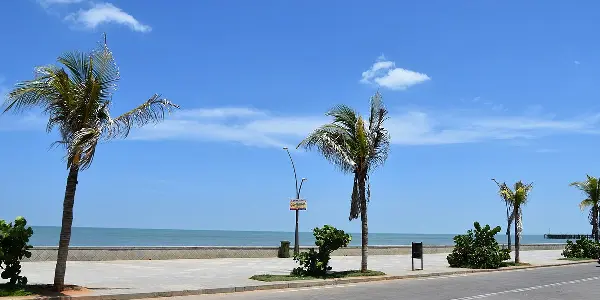
Puducherry, formerly Pondicherry, is a southern Indian city that combines the colonial French feel with Indian zest. The French Quarter of the town has tree-lined streets, colonial architecture, and bougainvillaea everywhere, talking about its French roots. Puducherry is well-known for its serene beaches, including Promenade, Paradise, and Auroville Beach. Auroville, the international community initiated in 1968, draws various groups from there to Matrimandir, their meditation centre. Historical Landmarks Sri Aurobindo Ashram Manakula Vinayagar Temple Basilica of the Sacred Heart of Jesus. French and Tamil cuisines blend beautifully to offer delectable cafes and restaurants with local and international fare. Therefore, making the destination fit the attractions through the 'culture festival' and traditional handicraft festivals and making it serene attracts people to look for the fusion between history, spirituality, and relaxation on the seaside. Looking for relaxing coastal escapes? Explore our Weekend Getaways From Bangalore guide.History of Pondicherry Ancient times has evidence of being the remarkable port of the Roman period. The evidences found by the archaeologists reveal that this town was known as Vedapuri in the Chola period of history when the Chola kings ruled over Tamil Nadu and even a part of Southeast Asia between the 9th and 13th centuries. The Cholas were oceanic people and extended their influence from the southern parts of India, including Puducherry, as their seashore region has always been a lively centre for trade. Another theory was that this was the centre of barter, culture, and ideas for the old Indian kingdoms and foreign traders. After the Cholas, Puducherry came under several regional powers , including the Pandyas and the Vijayanagara Empire. After declining in the 16th century, the Vijayanagara Empire took over Puducherry and the entire coastline of Tamil Nadu as the Sultanate of Bijapur and, subsequently, the Mughal Empire. Most important, though, is the early 17th-century establishment, with colonial powers establishing trading posts down the coast of the Indian subcontinent. The Portuguese established the first European settlement in Puducherry in the early 1500s. However, this grip was short-lived since the French East India Company captured the town in 1674. The middle decades of the 17th century consisted of a French grip that lasted much longer in the region. The French influence helped make Puducherry one of the chief trading ports for textiles, spices, and everything else. It soon became a core part of the French colonial empire, and the French made infrastructures- including forts, churches, and administrative buildings - to make the town distinctly European, which is still very much evidenced today. Explore more seaside destinations in our Beach Trips From Bangalore guide. The French ruled for nearly 280 years, interrupted by relatively brief periods of British occupation. During the 18th century, the British East India Company temporarily controlled the city during the Anglo-French War from 1744-1763. However, it was re-established under the Treaty of Paris in 1761, and the French regained control over the city. The French controlled Puducherry, but the town needed help with the British approach to expansionism at this point on the globe. Being a small enclave sandwiched by British-held territory, the French identity in Pondicherry remained relatively strong. The colonial authorities were orientated towards French culture and identity, which found expression even in the architecture, language, and administration that came to flourish during this very period. However, the 19th and early 20th centuries marked the spread of increasingly turbulent political activity throughout India, with the struggle for independence against Britain in full swing. Puducherry remained a French colony, but this larger historical context of the Indian freedom struggle influenced the region. In the early 20th century, movements like the Indian National Congress and the Non-Cooperation Movement swept through the nation, and most of the people from Puducherry joined the national demand for independence. When the rest of India embarked upon its journey towards freedom in 1947, Puducherry was still in France. The French wanted to maintain control over Puducherry and the other three contiguous enclaves, Karaikal, Mahe, and Yanam. However, by 1954, pressure from the Indian government and popular movements for integration into France increased further. Upon the referendum in which the people of Puducherry and the adjoining regions decided to opt for joining the Indian Union, France agreed to cede Puducherry to India. Experience French-inspired coastal charm with our Pondicherry Trip Package from Bangalore.The French finally relinquished Puducherry to the Indian Union on August 16, 1962, and declared it a Union Territory. Puducherry remained distinctive from the rest of India even after it merged into the union. The city retained its Frenchness, as exemplified by the use of the French language and systems of administration complemented by colonial architecture, which were constituent of her identity. Puducherry became a Union Territory by propagating her original cultural blend of French and Indian influences. The town became a flourishing spiritual and cultural centre, especially after the setting up of Auroville in 1968 when the spiritual and philosophical thinker Mirra Alfassa came to stay known as "The Mother," who also was Sri Aurobindo's companion. Auroville was an international township for human unity and peace, and people worldwide came here. Pondichery Beaches: Promenade Beach: Promenade Beach is the most popular beach in the middle of the city, along the coastline. It is a 1.5-km stretch famous for morning walks, evening strolls with the sea breeze, and a view of the Bay of Bengal scenery over the War Memorial, Gandhi Statue and the Consulate of the French countryside. Although it has a small probability of swimming, tidal currents make it an exciting place from the pressure of the world. The walkway will be too crowded, with locals and foreign guests having a lively look at their lives. Paradise Beach: This is about 8 kilometres from the city centre and was one of Puducherry's quiet beaches in its kitty. One had to ride from the Chunnambar Boat House to reach this secluded beach. It has golden sand, crystal-clear water, and less crowd for relaxation, swimming, jet skiing and kayaking. Its natural beauty and peaceful atmosphere make it one of the beaches most in demand in the region. Auroville Beach: Auroville Beach, which is pretty close to Auroville- an international township dedicated to human unity- is very serene in its ambience. Sea conditions are also less crowded and straightforward, thus perfect for swimmers and sunbathers. Therefore, it is ideal for scouting a quiet beach day with lush greenness and a peaceful ambience. Auroville Beach is also a surfing area where local surf schools offer first-time and seasoned surfers lessons. Serenity Beach: The name speaks of the serenity of clean sand, quiet waters and scenic surroundings. It is located approximately 10 kilometres from the city, and it is a good place for swimming, picnicking, and just relaxing along the beauty of the coast; it fares relatively better compared to Promenade and Paradise since it is less populated, thus giving a quiet feel towards the beach. Surfers also go there as they have places that can teach one to surf and then rent boards to first-time surfers. There are small eateries and cafes at intervals along the beach, where one can sit down and enjoy some snacks along with fresh coconut water. Kottakuppam Beach: It is next to the Kottakuppam village, which is secluded, more private, and less commercialized than the well-known ones. Seclusion offers a serene atmosphere to people who detest crowds. Still, calm water makes it an excellent place for swimming and for those who need a quiet life. Locals also spend most of their time here, where they cast their givingnets, giving one a feel of the region's culture, tradition and fishing practice. Backwater Beach (Chunnambar Boat House): The other beautiful beach in this list of backwaters in India is called Backwater Beach. It is situated near the Chunnambar Boat House. You could also enjoy the backwaters with a short boat ride from the boat house to the beach. It is much less crowded than other beaches, offering a more relaxed atmosphere for a quiet day by the sea. The waters are also calm and ideal for swimming and paddle boating. Mahe Beach: It is a small town in the Mahe district. It falls under the Union Territory of Puducherry and lies on the border of Kerala-Puducherry. While the beaches here are commercial places for recreation, Mahe Beach is peaceful and less commercial. Coconut groves form a border around the beach, making it an appropriate spot for solitude in nature. It is a good, unwinding place as the water is calm and the environment is silent. Veerampattinam Beach: Veermampattinam Beach is 7 km from the Puducherry city. It is one of the oldest fishery villages in that specific region . It is a tranquil, less touristy beach; one is bound to see many fishermen going about their daily activities. It is also an excellent venue for those interested in fishing or a simple, peaceful day beside the sea. The beach is a perfect place to swim, and the village surrounding it gives the actual and natural experience. Best Time to Visit Puducherry: October to March would be the best time to visit Puducherry; in winter, the climate is the perfect time to indulge in outdoor tourism activities and sightseeing. The temperature during this time ranges between 20°C and 30°C, which is equivalent to between 68°F and 86°F, making it a good season to visit cultural attractions in the city, spend some days on beaches, and enjoy outdoor games without the scorching heat and humidity. This also reduces the humidity levels. Hence the air is friendly for travelling. This is also the season of various cultural activities and fairs. This season brings to life and colours Puducherry. For example, French Week in December brought out the colonial French past of Puducherry through music, art, and food. One can glimpse local traditions and customs during Pongal in January. It's not so good , on the other hand, to venture out and roam when there is heavy rain from June to September; it is not so cool too , because it carries along humidity, and sometimes it shoots up to 40°C (104°F), not so great for travelling too. How to Reach: By Air: The nearest airport would be Puducherry Airport, which has limited domestic flights. However , the nearest major airport would be Chennai International Airport, which is 135 km away and has more flight options with road accessibility. By Train: Puducherry has a railway station connected to major cities like Chennai, Bangalore, and Mumbai. Trains from Chennai are frequent and convenient to reach Puducherry. By Road: Puducherry is well connected by roads to nearby cities. It takes about three hours to reach Chennai through NH32. Private taxis, buses, and rental cars operate the journeys.