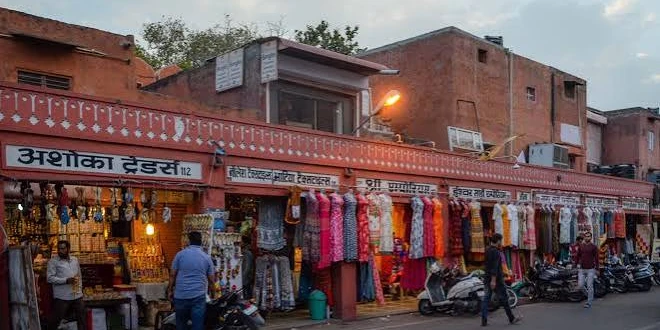
Shopping in Jaipur | Bapu Bazaar The shopper’s delight - one of the oldest markets in Jaipur, Bapu Bazaar provides everything a shopper dreams about with the traditional Rajasthani Handicraft, clothing and gifts.Major Attractions: Traditional handicrafts, textiles, jewelry, Rajasthani souvenirsTop Activities: Shopping, street food tasting, souvenir huntingDuration: 2–3 HoursBest Time to Visit: October to March or during evening hoursIf you are trying to find an original one-of-its-kind with ethic items, then this the Bapu Bazaar for you! Well known for clothes, jewellery, foot-wear, pottery and handcrafted articles, the Bapu Bazaar has all that comes to life with colours of all kinds. You would get there handcrafted jewels, coloured clothing that is all embroidered, the Rajasthani Mojari (leather footwear), and colourful lac and glass bangles along with other handcrafted articles of beauty. Also, to beautify your homes, you will discover there decorative household products of stone, blue pottery, along with other artefacts of marbles, with beds and bed sheets with patterns printed using blocks from Jaipur for a modest sum. Located amid the very centre of Pink City, Bapu Bazaar could possibly be combined with sightseeing as it is only close to City Palace, Jantar Mantar and Hawa Mahal. Visit Bapu Bazaar in the latter part of the day or evenings to fully relish its hues when the city turns more vibrant and lit with colours of all kind. You would want to carry extra cash as not many shopkeepers may accept card and wear comfortable shoes, so you will be lost with the charm and colors of this beautiful marketplace.
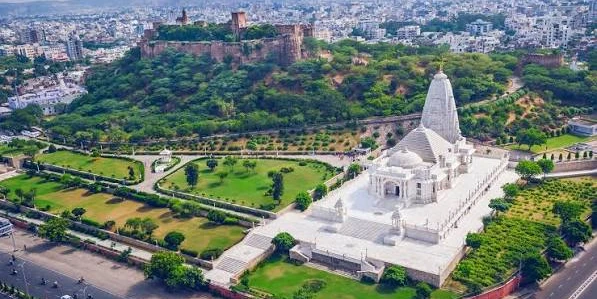
Nestled at the foothills of the Moti Dungri Hill in Jaipur, Birla Mandir or Lakshmi Narayan Temple is one of the finest and the most placid place of worship of the city. Conceived and erected by the well known Birla family in 1988, the grandiose structure made of white marble is dedicated to the worship of Lord Vishnu in his Lakshmi Narayan form and goddess Lakshmi. The state-of-art building, with subtle Indian architectural influences, is an eccentric departure from the fort and palace complexes that line the city’s sky.Major Attractions: White marble temple, intricate carvings, peaceful gardensTop Activities: Temple visit, evening prayers, photographyDuration: 1–2 HoursBest Time to Visit: October to MarchIt is so arresting and commanding with its domed-shaped spires and detailed pillar work. Anyone can visit this temple irrespective of religion, as it features reliefs of men of letters, philosophers and gods, saints, scholars from all faiths inscribed on its interior walls, along with representations of diverse views. The glorious statue of Lord Vishnu and goddess Lakshmi, sculpted from pristine white marble, holds the center stage in the main chamber and attracts the eyes of devotees. The soothing gardens around Birla Mandir offer perfect repose, and the entire complex is illuminated during the evenings with elaborate lights and sounds, imbuing the site with a divine appeal. It is during festivals like Janmashtami and Diwali that many visitors throng to the temple for the evening aarti. In the immediate proximity of the Moti Dungri Fort and the Albert Hall Museum, Birla Mandir is a popular attraction, easily fitting into any tour schedule of Jaipur. A visit to Birla Mandir just before the sunset will be best to experience its delicate, gleaming, lustrous surface made of pure white marble.
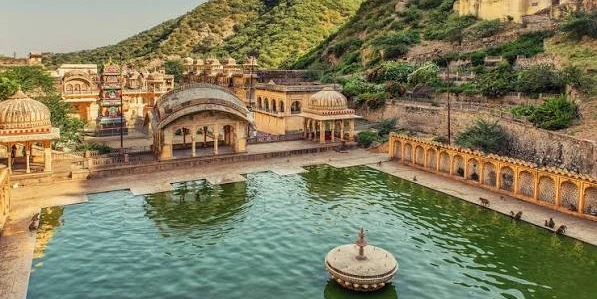
Nestled in the picturesque Aravalli Hills, a short distance from Jaipur, the Galtaji Temple is an impressive site to visit for lovers of religious and historical places. Often nicknamed the 'Monkey Temple' due to the numerous playfully swinging monkeys found on its premises, this holy destination is one of the ancient pilgrimage centres in Rajasthan. It is said that the complex of the temple, constructed of pavilions, temples, and springs in 18th century, was built by Diwan Rao Kriparam during the reign of the Jaipur rulers.Major Attractions: Ancient temples, sacred water tanks, hilltop views, monkeysTop Activities: Temple visit, photography, trekkingDuration: 2–3 HoursBest Time to Visit: October to MarchPink sandstone construction, a number of pavilions, natural springs and some tanks called kunds make up the Galtaji Temple complex. A perennial natural spring flows through the complex and doesn’t run dry even during peak summers. This holy water is a great fascination for visitors, and a number of them take a dip into the Galta Kund, especially during Makar Sankranti. Other temples on premises include ones dedicated to Lords Rama, Hanuman, and Krishna. A highlight of Galtaji is its resident troop of monkeys, whose lively behaviour entertains onlookers. It’s not advisable to tease or feed them. Besides the sanctity, the beauty of Galtaji can captivate the onlookers due to its pink sandstone structures, natural setting, and enchanting views of Jaipur city and the Aravalli Hills. Make an early morning visit to prevent overcrowding and excessive heat and remember to wear comfortable footwear.
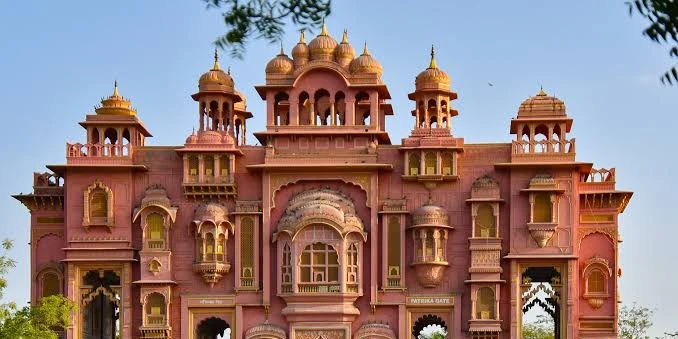
Patrika Gate, a dazzling gateway to the beautiful Jawahar Circle Garden in Jaipur, is one of the city's most colorful and sought-after attractions, a testament to Rajasthani art and culture. It was built by Patrika Group and has instantly become one of Jaipur’s best photo spots.Major Attractions: Colorful Rajasthani artwork, intricate murals, vibrant architectureTop Activities: Photography, sightseeing, social media shootsDuration: 30 Minutes–1 HourBest Time to Visit: October to MarchDesigned as a ode to Rajasthan's history, the Gate is an absolute visual treat, with ornately painted corridors, colorful arches showcasing murals, floral artwork, traditional designs and paintings reflecting Rajasthan's heritage, monuments, culture, wildlife, architecture and festivals of the state’s regions. The colorful structure has striking symmetric symmetry and eye-catching painting all around, making it a popular place to photograph, travel blog or have a pre-wedding photo shoot. The paintings look their most attractive in the morning light, so try visiting it before the crowds and let natural light illuminate the art work. Patrika Gate also aims to help preserve the traditional painting art of Rajasthan in this urbanized setting as well, presenting Rajasthan's heritage in a colorful public space where meticulous attention has been paid to every stroke and section of the art form. Located just beside Jawahar Circle, one of the largest circular parks in Asia, visitors can walk, jog or spend some leisure time in the surrounding park which offers stunning landscape gardens and musical fountains. They may even enjoy the night light show after an exploratory visit to the gate. Entry is absolutely free, and Patrika Gate is accessible from the Jaipur International Airport and hence can be one of the first or last stops for your trip to Pink City. Although one of the recent landmarks of the Pink City, it has managed to etch its name as one of the most celebrated and identifiable places in Jaipur.
05
Albert Hall Museum Jaipur
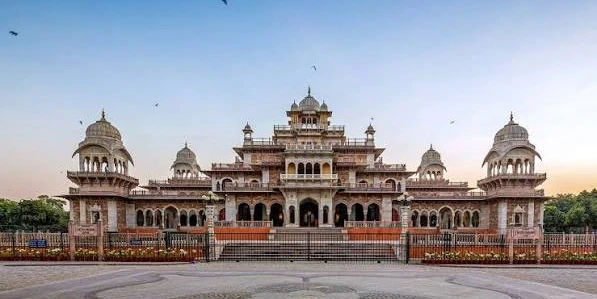
Albert Hall Museum The oldest museum in Rajasthan, Albert Hall Museum is one of the best examples of Indo-Saracenic architecture in Jaipur. Built amidst the lush Ram Niwas Garden, it was designed by British architect Sir Samuel Swinton Jacob and officially opened to the public in 1887. Initially conceived as a town hall, the building was soon converted into a museum. Albert Hall Museum showcases the glorious artistic and cultural traditions of India.Major Attractions: Indo-Saracenic architecture, Egyptian mummy, royal artifactsTop Activities: Museum visit, photography, cultural explorationDuration: 2–3 HoursBest Time to Visit: October to March It flaunts a magnificent facade of domes, ornate arches, intricately carved balconies and decorated corridors which draw inspiration from Indian, Mughal and European styles of architecture. The façade, enhanced by evening illumination, makes Albert Hall Museum one of the most captured landmarks of Jaipur. An interesting array of artifacts dating back to ancient and medieval times from India and around the world are displayed in the Albert Hall Museum. Here you can see antique sculptures, miniature paintings, regal portraits, ceramic ware, carpet weavers, metal crafts, textiles, royal ornaments, music instruments and arts and ornaments. It has one of the finest and unique collections of antique objects, a significant item being an Egyptian mummy, which attracts many travelers from the entire world. The museum gives you an understanding of the history of Rajasthan, the royal lifestyle and the traditional arts. Albert Hall Museum presents an engaging exploration of various schools of arts. Situated in beautiful gardens, there is a lot more than just the museum to be explored around. One can walk through fountains and walking paths. Albert Hall Museum attracts lovers of art and architecture, photographers, history buffs, families and those with children. Visit Albert Hall Museum During winters or when the weather is cool (October to March). The evening view of the illuminating museum and surrounding areas are quite breathtaking. Albert Hall Museum is a must visit if you want to discover the rich cultural heritage of Rajasthan and want to admire one of the city's grandest pieces of architecture.
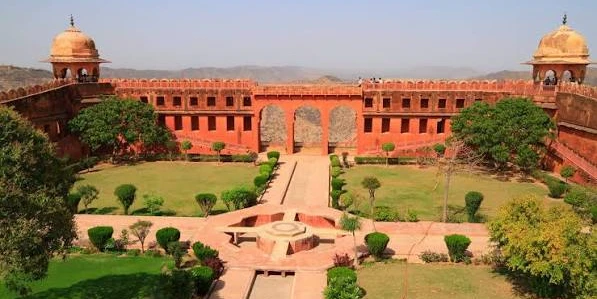
Perched on the Cheel ka Teela (Hill of Eagles) that overlooks the Amer Fort, the Jaigarh Fort is one of the finest-preserved military fortresses in Rajasthan. The fort, constructed in 1726 by Maharaja Sawai Jai Singh II was primarily aimed at guarding the Amer Fort and served as the military headquarters of the kingdom. Its formidable walls, massive structures and a location on top of a hill ensured that the fortress was considered almost impregnable.Major Attractions: Jaivana Cannon, fortifications, underground passages, hilltop viewsTop Activities: Fort tour, photography, sightseeingDuration: 2–3 HoursBest Time to Visit: October to MarchThe fort made of red sandstone extends over 3 km and comprises watchtowers, gateways, subterranean passages, armouries, water storages and numerous defensive systems. A secret tunnel links Jaigarh to the Amer Fort for the royal families to make a quick escape during times of emergency. Perhaps, the main attraction of Jaigarh Fort is its historic Jaivana Cannon - said to be one of the largest wheeled cannons in the world that was fabricated in the fort's own foundry in 1720. It was apparently fired only once during testing and the cannon is an ode to the great ingenuity of the Rajput empire. Within the fort, the fort houses some wonderful museums where you can find the display of antique arms and armaments, royal artifacts, war gear, and historic manuscripts that throw more light on the military history of Rajasthan. In fact, the large system for water harvesting and underground water chambers used for storage, apart from other engineering skills, reveals the planning behind the construction of the fort. At an altitude from where you can have a bird's eye view of Amer Fort, Maota Lake and the nearby Aravalli Hills, this fort offers spectacular panoramic views of the vicinity, especially during sunrise and sunset when photographers are often seen here capturing some memorable images. In contrast to some of the other places in Jaipur, the Jaigarh Fort is comparatively less crowded, and you can explore the architectural marvel at your own pace. So make sure to wear comfortable walking shoes as it covers quite a large area.
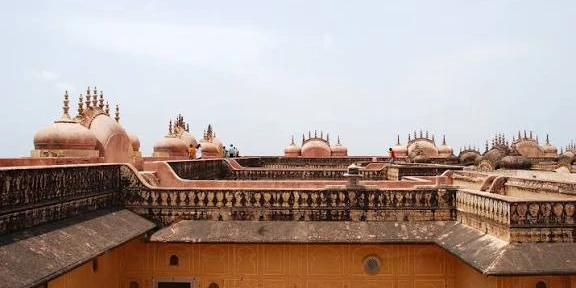
Overlooking the Pink City of Jaipur from the Aravalli Hills, Nahargarh Fort is a glorious monument known for its grandeur and impressive sightlines. Erected in 1734 by Maharaja Sawai Jai Singh II, the fort was initially erected as a stronghold to safeguard the pink city in conjunction with Amber and Jaigarh forts. As it goes, Nahargarh is derived from the 'house of tigers', and local legend claims a ghost of Prince Nahar Singh continued to haunt the place during its construction, until his statue was placed in his place. Combining impressive fortifications of the military with decadent royal private palaces, Nahargarh Fort is a perfect blend of architectural finesse and historical essence.Major Attractions: Hilltop fort, panoramic Jaipur views, Madhavendra BhawanTop Activities: Sunset viewing, photography, fort explorationDuration: 2–3 HoursBest Time to Visit: October to MarchWhat attracts us to the Nahargarh Fort is that most of it, is made up of royal apartments which have been exquisitely decorated and were constructed keeping in mind the privacy of every queen and king. Madhavendra Bhawan is an important part of Nahargarh Fort that was designed by Maharaja Sawai Madho Singh II, comprising king's, queen's lavish suites with connecting corridors, separated from one another. The rooms at Nahargarh are decorated with fine carvings, paintings, courtyard and murals. Apart from the historical charm and beautiful architecture, the panoramic view that this fort offers is amazing. You get a clear view of the Pink City of Jaipur from here and this view is complemented with that of the hills around and the city's most talked-about edifices. It's all the more lovely during dawn and sunset when the whole fort shines with golden colours; therefore it is a major spot for photographers and nature lovers. The fort is equipped with some additional tourist attractions like wax museum, sculpture park and food cafes, where one can simply grab a snack and admire the sweeping views of the pink city. As the dusk settles in, tourists can enjoy the glimmering lights of the pink city. It can be very bustling with both tourists and residents, once the city is lit up. If you’re someone who likes adventure, biking or driving up to the fort along with navigating the hilly terrains can also be thrilling. This fort is also a significant spot for various festivities and cultural events in Jaipur. To explore Nahargarh Fort fully, the ideal time to visit is from October to March when the weather is favorable. It’s a full feast of history, nature, and art that simply can’t be missed on a visit to Jaipur.
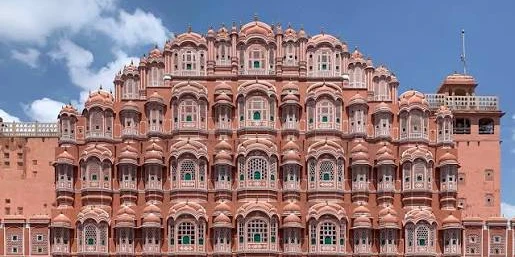
Jaipur’s Hawa Mahal or Palace of Winds – is an apt landmark which perfectly depicts the glory of architecture in Rajasthan. Constructed in the year 1799, the Hawa Mahal was commissioned by Maharaja Sawai Pratap Singh and the architect behind this magnificent five-story structure is Lal Chand Ustad. Hawa Mahal is an excellent edifice made up of pink and red sandstone and represents the crown of the Lord Krishna, which signifies the immense devotion of the King.Major Attractions: Iconic honeycomb façade, 953 windows, Rajput architectureTop Activities: Sightseeing, photography, museum visitDuration: 1–2 HoursBest Time to Visit: October to MarchThe palace is famous for its unique honeycomb architecture that consists of 953 latticed windows 'jharokhas'. These windows were made to allow the royal womenfolk a peek into the outside world, without revealing themselves, an ancient practice known as purdah and also for free ventilation that gave the palace its name ‘Palace of Winds.’ Besides this ornamental exterior, the palace is surprisingly narrow and has a network of corridors and ramps to access the different levels rather than staircases. Visitors can explore this structure up to the top level and soak in the splendid panorama of the bustling city bazaars of Jaipur, Jantar Mantar and the City Palace. With its precise jharokhas and symmetrically carved details, Hawa Mahal has become a highlight for photographers in India. A modest museum located inside houses ancient objects, royal paintings and an outline of the city’s history and royal family’s history. Best time to visit Hawa Mahal, a monument in pink is to go there in the early morning. As the rising sun illuminates its façade with a halo and creates an enchanting ambience, this palace is ideal for your photographs. Hawa Mahal is located in the very heart of the old city of Jaipur, surrounded by lively bazaars selling everything from clothes to jewellery. A visit to Hawa Mahal offers an experience that seamlessly blends history, culture, and stunning architecture.
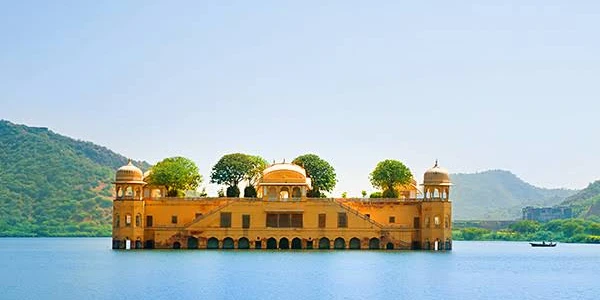
A majestic red sandstone edifice standing on the middle of Man Sagar Lake is the beautiful Jal Mahal of Jaipur. Constructed by Maharaja Madho Singh I and renovated by Maharaja Jai Singh II in the 18th century, the 'Water Palace', was primarily used for holding a royal hunt and as a relaxation spot and it stand out as the finest symbol of royalty that was used by the Jaipur kings. With the typical Rajput architectural style, Jal Mahal appears to float on the waters of the lake.Major Attractions: Palace in the middle of Man Sagar Lake, scenic backdropTop Activities: Photography, lakeside stroll, sunset viewingDuration: 30 Minutes–1 HourBest Time to Visit: October to MarchOut of five floors of the palace, four have remained under water once the lake has its fill up. It is very strange indeed to witness a palace sticking out from the water. You cannot step inside the palace but can admire the wonderful look of Jal Mahal from the bank of the lake. You can also appreciate its reflection in the clear waters. You can feast your eyes by looking at the Palace during Sunrise or Sunset. It has such good reflections in water and the surrounding Aravalli Hills, thus creating an ideal photograph. In the winter season, lot of migratory birds are spotted in this lake and birdwatching is a very common and enjoyable pastime at this location. This region has cafes, view points and shops around to walk at your pace while admiring the Water Palace. In night, the Palace glows from inside, and it is an enthralling experience to look at. It offers solace and peace from the crowded and busy Jaipur city. Tourists visit Jal Mahal in Combination with nearby Amber Fort, Nahargarh Fort and Jaigarh Fort. The Best season to visit Jal Mahal is from October to March, the cooler part of the year. This Palace is a wonder that blends architecture with nature, and it definitely needs to be included in your itinerary when you are visiting the Pink City of Jaipur, for amazing views and solace.
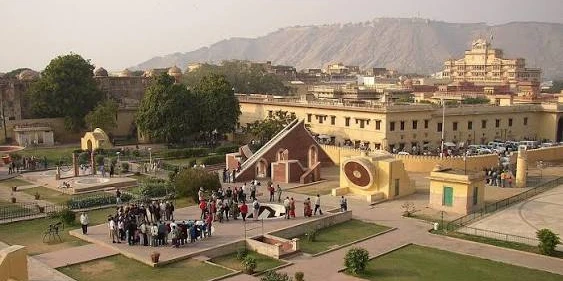
When in Jaipur, a visit to Jantar Mantar the world’s best-equipped and the largest among the Observatories is a must. This astronomical Observatory is not only recognized as one of the World’s Heritage site by UNESCO but it stands as a testimonial to the advanced scientific achievements in India during the 18th century. The Observatory at Jaipur houses as many as 19 different instruments of varying sizes which can be seen at their appropriate astronomical position, that enable in knowing planetary positions and distances between planets as well.Major Attractions: UNESCO-listed astronomical instruments, world's largest stone sundialTop Activities: Explore observatory, guided tour, photographyDuration: 1–2 HoursBest Time to Visit: October to MarchThese instruments helped in determining astronomical positions to quite an extent even without a telescope. Samrat Yantra (the largest of all instruments in the Jantar Mantar) is considered to be the largest sundial in the world. Built of stone and marble it can measure time with an accuracy of 2 seconds in a day! Some of the other important astronomical devices include Jai Prakash Yantra, Ram Yantra and Narivalaya Yantra. The geometric shapes of Jantar Mantar attract photographers and tourists and it’s easy to understand why this Observatory made it to the UNESCO World Heritage List. It makes for a wonderful walk in the early morning or late evening and guides will provide insight into the use of each instrument, helping you visualize the way ancient Indians utilized the laws of astronomy and architecture.
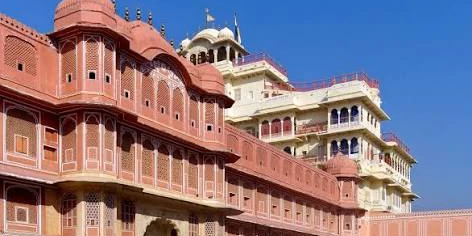
The City Palace of Jaipur is located at the heart of Jaipur city and showcases the splendour of Rajasthani culture in all its glory. The magnificent building was created in 1727 by Sawai Jai Singh II, the founder of Jaipur city. In the year 1727, the visionary ruler envisioned a new architectural haven in Rajasthan that brought to combine Indian, Mughal, and European styles of architecture into a single abode for royalty.Major Attractions: Royal courtyards, museums, Chandra Mahal, Peacock GateTop Activities: Palace tour, museum visit, photographyDuration: 2–3 HoursBest Time to Visit: October to MarchThe sprawling compound of the city palace complex not only consists of beautifully maintained gardens and courtyards but also has many museums and art galleries apart from grand public rooms. Of all the attractions within the grounds of the City Palace, Chandra Mahal, Mubarak Mahal, Diwan-e-Khas, Diwan-e-Aam, and Peacock Gate are definitely a must-see. Peacock Gate, which symbolizes the different seasons, is richly ornamented. Among the many museums in the grounds of the city palace, you will find large collection of royal possessions, such as ancient texts, weapon collection, regal garments, royal artworks and Textiles. A couple of sterling silver containers on display at the City Palace are amongst the largest such vessels on earth. It is said that there is not an inch in this marvelous place which is not adorned with detailed marble designs, colorful fresco, elaborately carved gateways, and decorated balconies. You can get breathtaking views of Jaipur and its outskirts from the City Palace grounds. You may go on a guided tour to know about the history of the royal family and this landmark in detail. Various cultural exhibitions and performances are also conducted from time to time. Being a stone’s throw from Jantar Mantar and Hawa Mahal, the City Palace can be a perfect destination for those intending to visit the important monuments of Jaipur in a single day. October to March are considered the best months to visit this grand royal structure to understand the reign and history of the bygone kingdom at ease.
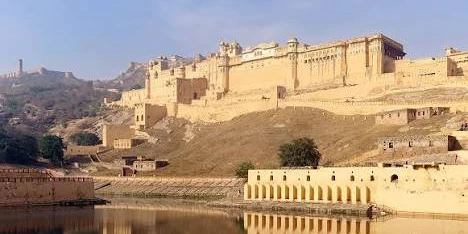
In the foothills of Aravalli range, atop a hill at the distance of mere 11 km from Jaipur lies the crown of Rajasthan the Amber fort. Amber Fort is one of the five forts of Rajasthan, designated a UNESCO World Heritage site, was first constructed in the 16th century by Raja Man Singh I of the Rajput clan.Major Attractions: Grand Rajput architecture, Sheesh Mahal, courtyards, scenic hilltop viewsTop Activities: Fort tour, elephant ride (optional), photography, light & sound showDuration: 2–3 HoursBest Time to Visit: October to MarchThe structure was later extended by successive Rajput kings. This resulted in a mix of the Rajput and Mughal architecture; built of sandstone and white marble the magnificent fortress watches over the tranquil water body, the Maota Lake, and is one of the most quintessential images of Jaipur. The Amber Fort complex contains many courts, magnificent gates, ruler’s chambers and marvelous mirror works. Among these, the 'Sheesh Mahal' or Mirror Palace is an attraction for the thousands of small mirror pieces adorning its walls which turn the chamber into a magical world. The 'Diwan-e-Aam' (Hall of Public Audience), 'Diwan-e-Khas' (Hall of Private Audience), 'Ganesh Pol', the gardens, etc. Are sure to mesmerize you. You can explore the maze like corridors and witness many artistic work of Rajasthan like painting, carving and latticed windows and get spell bound with a bird’s-eye view of the Aravalli hills. In the evenings, the 'sound and light show' re enacts the legends and stories related to the glory of the Amber Fort. Photography lovers can get hold of some really beautiful pictures from the view points available at the fort. Amber Fort is a visit to marvel at the architectural skills and an attempt to step into the glorious bygone eras of the royal families of Rajasthan. It is recommended to visit either early in morning or in late evening and wear comfortable footwear.