

Rishikesh
Rishikesh



 Chamoli, Uttarakhand
 Min Age18+
 TaxNo Hidden Charges
Starting from INR 24998
Per Person
( Inclusive of all taxes )
 CHRISTMAS SALE

Meal

Permit

Trekking

Guide

Tea Snacks

Transport

Tent Stay
Meal
Permit
Trekking
Guide
Tea Snacks
Transport
Tent Stay
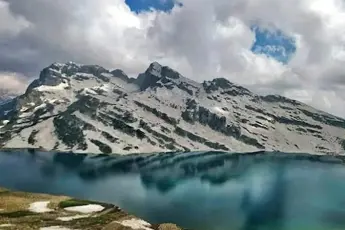
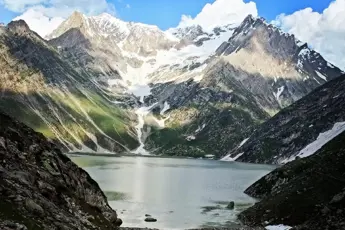
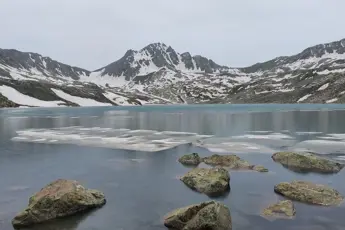
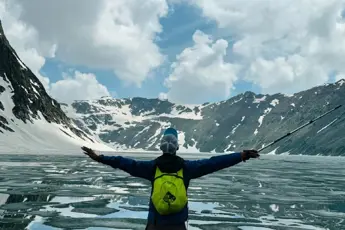
Trek to the sacred Satopanth Lake, located at 4,402 meters, surrounded by towering peaks and glaciers.
Witness the majestic Swargarohini Peak and other stunning Himalayan peaks during the challenging trek.
Traverse diverse terrains, from dense oak and rhododendron forests to high-altitude meadows and snowfields.
Experience the spiritual significance of Satopanth Lake, a site
Activity location: Chamoli, Uttarakhand
Trip Duration: 6 Days | 5 Nights
Best Time to Visit: May-June & Sep. Mid To Oct
Trekking Distance: 45 Km Round Trek
Max. Altitude: 4600.MTS
Kagbhusandi Lake Trek Difficulty: Moderate
Meals: Vegetarian meals
Accommodation: Camping Tent (Triple/Quad Sharing)
About Satopanth Lake Trek, Uttarakhand:
The Satopanth Lake Trek is an adventurous and spiritually enriching journey nestled in the heart of the Garhwal Himalayas, Uttarakhand. Known for its mesmerizing landscapes and tranquil environment, this trek takes you to the sacred Satopanth Lake, a high-altitude glacial lake that holds immense religious significance. Situated at an elevation of 4,402 meters (14,409 feet), the lake is surrounded by towering peaks and pristine nature, making it a must-do trek for adventure enthusiasts and spiritual seekers alike. The trek offers an exciting mix of challenging terrains, lush meadows, and awe-inspiring views of snow-capped mountains, including the famous Swargarohini Peak.
The Satopanth Lake Trek is not just a test of physical endurance but also a journey steeped in mythological importance. According to Hindu mythology, this sacred lake is where Lord Vishnu, Lord Brahma, and Lord Shiva are believed to have meditated, which adds a sense of divinity to the trekking experience. The trek, starting from the town of Mana near Badrinath, follows a scenic route that crosses the lush forests of oaks and rhododendrons, with intermittent views of snow-clad peaks. The highlight of the trek is reaching the serene and mystical Satopanth Lake, a place that fills trekkers with a deep sense of peace and connection with
.
Rishikesh to Joshimath by Road.
Meet your trekking team and begin your adventure toward Joshimath.
Witness the confluence of the Alaknanda and Bhagirathi rivers, forming the holy Ganges.
Drive through this scenic town, which hugs the Alaknanda River, offering beautiful river views.
Arrive at the meeting point of the Alaknanda and Mandakini rivers, adding more charm to your journey.
Travel through lush green landscapes where the Pinder River merges with the Alaknanda.
Reach this quaint town known for its religious significance and as a base for various treks.
Recharge and prepare for the exciting days ahead after this scenic road trip.
Joshimath to Badrinath by Road, Badrinath to Lakshmi Van by Trek.
After a hearty breakfast, embark on a short drive to Badrinath, a sacred pilgrimage site, offering breathtaking mountain views along the way.
Upon reaching this revered destination, your trek officially begins from here.
Head towards Mana, the last village of India near the Indo-China border, a place of both cultural and historical significance.
Trek towards Vasudhara Falls, a stunning waterfall renowned for its scenic beauty and its connection to Hindu mythology.
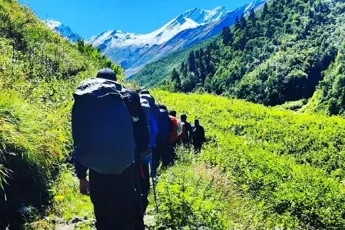
Follow a gradual route through lush greenery, crossing small streams and walking through tranquil landscapes.
After trekking for 9 km, reach Lakshmi Van, your campsite for the night. Nestled amid Bhoj Patra trees and glaciers near Balakun Peak, it offers a peaceful and scenic setting for rest.
Lakshmi Van to Chakrateertha by Trek.
Wake up to a breathtaking view of the mountains and prepare for an exciting trek to Chakrateertha.
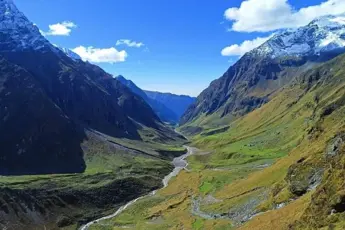
The trail follows the Alaknanda River, with the sound of rushing water and distant peaks keeping you energized throughout.
Enjoy the gentle ascent as you walk through lush meadows and cross the Dhano Glacier’s terminal moraine.
The trail offers panoramic views of the Bhagirathi Peaks, especially on clear days, providing an awe-inspiring backdrop.
Reach Shastradhara, a mystical spot with small cascading waterfalls, believed to hold spiritual significance.
As you continue, get your first glimpse of the majestic Mount Neelkanth.
Arrive at Chakrateertha, your campsite for the night, nestled amidst pristine greenery and surrounded by towering peaks.
Chakrateertha to Satopanth Tal and Back to Chakrateertha.
Today’s trek leads to the mystical Satopanth Tal, a high-altitude triangular-shaped lake steeped in legend and spiritual significance.
The path becomes more demanding with boulders and moraines, adding an adventurous element to the journey.
Hike through open grasslands and rocky terrain, gradually making your way to the serene waters of Satopanth Tal.
According to Hindu mythology, the lake is believed to have been a meditation spot for the trinity of gods – Brahma, Vishnu, and Shiva.
At the lake’s edge, discover a small cave where Mauni Baba, a local sage, resides year-round.
The lake’s reflective surface mirrors the stunning nearby peaks, including Mount Chaukhamba and Mount Neelkanth, creating an enchanting view.
After absorbing the mystical beauty of the lake, retrace your steps back to Chakrateertha, where you’ll rest for the night under a starlit sky.
Chakrateertha to Badrinath by Trek.
Today, the trek is mostly downhill, retracing your steps back to Lakshmi Van and then continuing toward Mana Village.
As you descend, you’ll pass by familiar beautiful landscapes, offering one final opportunity to appreciate the surroundings.
Reach Badrinath, a sacred site, and explore its spiritual offerings.
Take time to explore the Badrinath Temple, a revered pilgrimage destination.
Refresh yourself with a rejuvenating dip in the Tapt Kund hot springs, known for their healing properties.
After several days of trekking, spend the night at a guesthouse or hotel in Badrinath, enjoying well-earned comfort and relaxation.
Badrinath to Rishikesh by Road.
Enjoy a filling meal before beginning your journey back to Rishikesh.
Retrace your route through picturesque valleys, rivers, and confluences, offering a peaceful and reflective end to your trek.
Once back in Rishikesh, you have the option to explore the local sights, such as the Lakshman Jhula or Ram Jhula.
Head home with unforgettable memories of your Satopanth Tal Trek, carrying with you the beauty and serenity of the Himalayan wilderness.
CHRISTMAS SALERishikesh
Rishikesh
Clothing:
Thermal wear, fleece jacket, and waterproof jacket
Trekking pants, quick-dry t-shirts
Woolen gloves, cap, and socks
Raincoat/poncho
Footwear:
Sturdy trekking shoes with good grip
Extra pair of socks
Essentials:
Backpack (50-60L) with rain cover
Sleeping bag
Trekking poles
Water bottles or hydration pack
Sunglasses, sunscreen, and lip balm
Headlamp or flashlight with extra batteries
Basic first aid kit and personal medications
Snacks like energy bars, dry fruits
Other Gear:
Trekking gear (tents, sleeping mats if not provided)
Power bank and camera
These essentials will help ensure you’re prepared for the high-altitude and unpredictable weather conditions of the Satopanth
Trusted by 50,000+ travelers for unforgettable outdoor adventures across South India.
Professionally curated itineraries
Experienced trip captains & support team
Safe, organized, and beginner-friendly experiences
Comfortable transport & verified stays
Highly rated with excellent traveler reviews
Transparent pricing with no hidden costs
12+ Years of Experience
4.8★ Google Rating
Starting from INR 24998
Per Person
( Inclusive of all taxes )
CHRISTMAS SALE

4.6
Out of 5.0
5
32
4
20
3
0
2
0
1
0

Nikita Basu
Reviewed: Jun 13, 2025
5/5
Satopanth Lake feels like something out of a mythological tale. With escape2explore, our 6-day trek was absolutely magical. The trek route from Chakrateertha to Badrinath by Trek was breathtaking. We... Read More
Nisha Rao
Reviewed: Jun 13, 2025
5/5
Just returned from a wonderful journey with escape2explore. The Satopanth Lake Packages for 6 Days were thoughtfully curated—great meals, cozy campsites, and expert guidance. Trekking from Chakrateertha to Badrinath by... Read More
Arjun Patel
Reviewed: Jan 25, 2025
5/5
The trek to Satopanth Lake (4.6 km height) organized by escape2explore exceeded expectations. The Satopanth Lake Trek package included tasty meals and expert support. Chakrateertha to Badrinath by Trek was phenomenal
Harshit Purohit
Reviewed: Jan 18, 2025
5/5
Satopanth Lake Trek with escape2explore was beyond expectations. I was nervous about the altitude (around 4.6 km), but the guide team ensured we were well-acclimatized. The food was delicious and served... Read More
Bhavna Patel
Reviewed: Dec 21, 2024
5/5
Our group booked the Satopanth Lake Trek package through escape2explore, and we were blown away. Every day of the 6-day trek brought something new—valleys, glaciers, rivers. Trekking from Chakrateertha to... Read More
Satopanth Lake is a high-altitude glacial lake in the Garhwal Himalayas of Uttarakhand, near Badrinath. It sits at 4,600 meters and is considered sacred in Hindu mythology.
The trek is categorized as moderate to difficult, with steep ascents, rugged trails, and high-altitude conditions. Prior trekking experience and good fitness are recommended.
The ideal time is May to June and September to October, when the weather is stable. Monsoons (July-August) bring heavy rainfall, making the trail slippery and risky.
Yes, since the trek passes through protected forest areas, obtaining necessary permits from local authorities or forest departments is required.
Satopanth Lake is believed to be spiritually significant, where the trinity of Brahma, Vishnu, and Mahesh meditated. The stunning backdrop of Neelkanth, Chaukhamba, and Balakun peaks adds to its charm.
The trek starts from Badrinath (3,300m) and ascends to Satopanth Lake (4,600m), making acclimatization essential to avoid altitude sickness.
The trek starts from Mana village, which is 4 km from Badrinath. Badrinath is accessible by road from Rishikesh, Haridwar, or Dehradun.
While beginners can attempt it with proper preparation, the trek’s challenging terrain, glacial moraines, and altitude gain make it more suitable for experienced trekkers.
There are no guesthouses on the trail. Trekkers need to carry tents, as camping is the only option. Some packages provide porters and camp setup services.
Expect poor or no mobile connectivity beyond Mana village. It's advisable to inform family and arrange emergency communication methods before starting the trek.
The trek passes through rocky trails, glacial moraines, meadows, and steep ascents, making it a diverse yet challenging journey.
Yes, you can join the trek to Satopanth Lake Trek. The trek’s difficulty level is moderate and can be attained without someone’s support. Wear robust footwear, and comfortable clothes, and maintain basic fitness to complete the trek.
The safety and security of women/girls are paramount to us. Hence, it's entirely safe for women/girls to participate in our treks and travels. Our trek leaders always accompany the group, offering constant assistance and direction. Our campsites are thoroughly secure and provide a safe lodging environment. In addition, our female trek leaders often join our treks.
Your money will be refunded within 2-3 business days.
Unfortunately, it's not feasible to reschedule your trek to a future date if you're unable to attend on the designated day, regardless of the circumstances (like family emergencies, health problems, or work commitments). However, if you have concerns about this policy, please don't hesitate to email us at info@escape2explore.com, and our team will get in touch with you to discuss further.
Life is unpredictable and we understand that sometimes you have to cancel or change your trip dates and we endeavour to make it as easy as possible for you. However, please understand that we plan everything including guide fees, permits, accommodation and rations in advance. Therefore, any cancellation means inconvenience and certain losses to the people involved in various stages of the programme. Keeping that in mind, our cancellation charges are as below -
Cancellations before 30 days from the start of the event: Get a monetary refund with 15% of cancellation charges.
Cancellations between 30 days and 15 days to the start of the event: 50 %refund.
Cancellations less than 15 days to the start of the event: No refund.
Cancellations will
Deep in the Garhwal Himalayas of Uttarakhand, the Satopanth Lake Trek is a hallowed and beautiful journey. Located at an elevation of about 4,600 meters (15,100 feet), Satopanth Tal is a glacial lake encircled by snow-capped mountains including Chaukhamba, Neelkanth, and Balakun. Hindus hold the lake as very holy because it honours Satopanth, the path of truth. Legend has it that the three corners of this triangular lake were where the sacred trinity of Brahma, Vishnu, and Mahesh sat in meditation. Its famous importance and unspoiled beauty draw both trekkers and visitors. From Mana Village, the last village before the Indo-China border and just a few kilometres from Badrinath, the march starts. Passing approximately 25 to 30 kilometres one way, the track passes over a variety of terrain, including stony terrain, glacial moraines, small ridges, and lush grasslands. Trekkers traverse breathtaking landscapes, each steeped in mythology and natural beauty: Laxmi Van and Vasudhara Falls.
With the elevation and changing weather, the trail is rather difficult and best suited for seasoned hikers. The trip is a real transforming experience, presenting great vistas and quiet possibilities. Often observed meditating along the beaches, local experts appear to sense the spiritual energy around the lake. Among the unforgettable magical experiences stored in memory is stargazing near this glacial lake. More than just a physical test, the Satopanth Lake Trek is a soul-moving journey into the core of nature and legend. Ideal for someone looking for calm, beauty, and a view of ancient legends, it remains among the most respected and least monetised hikes in the Indian Himalayas.
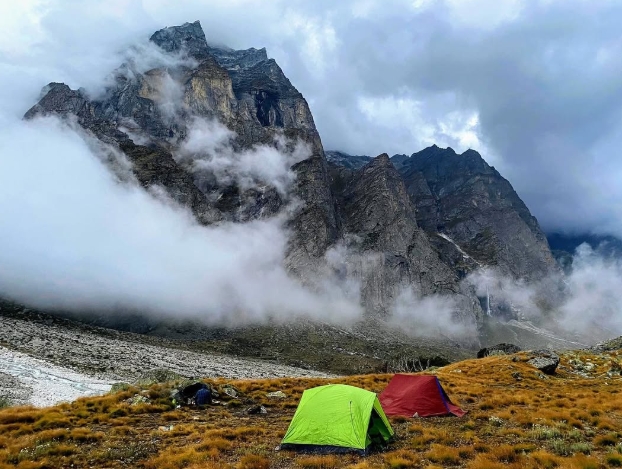
Deep origins in mythology, religion, and ancient legends dating back to the Mahabharata era, Satopanth Lake, also known as Satopanth Tal, is a glacial lake set in the Garhwal Himalayas. This triangular lake has been honoured for millennia and is of great religious significance for Hindus; it is considered to be sacred ground, 4,600 meters near Badrinath in Uttarakhand. Derived from two Sanskrit terms: sato, truth, and panth, path; Satopanth is thus understood as the way of truth. At the three edges of the lake, Brahma (the Creator), Vishnu (the Preserver), and Mahesh or Shiva (the Destroyer), the Trimurtis were believed to have meditated. This legend alone raises Satopanth to a degree of spiritual importance that draws saints, philosophers, and devoted tourists to its frigid coastlines.
The Pandavas in the Mahabharata are also closely tied to the lake. The Pandavas are said to have followed this path, forsaking all earthly ties on their last trip to paradise (Swargarohini Yatra). According to legend, Draupadi and most of the Pandava brothers perished on the difficult terrain surrounding Satopanth Lake, but only Yudhishthira kept the trek going and eventually soared to paradise, followed by a loyal dog (thought to be the deity Dharma in disguise). Many people regard the trip as a contemporary pilgrimage since this narrative elevates the area with a mystic and revered component. Aside from mythology, wise guys and ascetics who have meditated and performed penance in the quiet of the high Himalayas have long resided in and travelled through the region. Still occasionally seen by the lake, hermits live humbly and meditate in biting chill. Local people recall one such well-known yogi, Baba Kalpa Vriksha, for his spiritual teachings and decades of meditation, sitting close to Satopanth. Because of its difficult climb and remote position, Satopanth has remained relatively unexplored by mass tourism over the ages. Most of its guests are experienced hikers looking not only for natural beauty but also spiritual comfort. They are dedicated pilgrims. The lake's historical importance is elevated by regional customs passed down through millennia of Mana and Badrinath residents. The conjunction of mythology, religion, and the natural world that sets Indian spiritual geography apart is embodied in Satopanth Lake.
Nearby Places Around Satopanth Lake Trek
Mana Village: Serving as the launch site for the Satopanth Lake Trek, Mana is the last populated settlement before the border between IndoChina. Rich in mythology and culture, it is also known as the "Last Village of India." The village is thought to be the residence of the Pandavas before they started their voyage to heaven. Pilgrims and visitors alike like Vyas Gufa, Ganesh Gufa, and Bhim Pul.
Badrinath Temple: Found just a few kilometers from Mana, the Badrinath Temple is one among the Char Dhams of Hindu pilgrimage. Honoring Lord Vishnu, this shrine is a major spiritual stop for hikers on their way to Satopanth. A must visit is this location for its spiritual atmosphere, old architecture, and picturesque setting along the Alaknanda River.
Vasudhara Falls: Located around 9 km from Mana, Vasudhara Falls is a magnificent waterfall dropping over 400 feet. It is said that the waterfall only showers its waters over people pure at heart. It offers a beautiful and significant detour along the journey surrounded by magnificent mountains and alpine beauty.
Laxmi Van: En route to Satopanth lies this tranquil wooded region, said to be the site Goddess Laxmi lived during the Pandavas' final journey. Known for its serene setting and legendary significance, the forest is thick with Bhojpatra and birch trees.
Base Camp Chaukhamba: One of the great Himalayan summits, Chaukhamba may be seen up close from several locations along the hike. Trekkers who enjoy adventure occasionally visit its base camp for a better view of this great mountain. It presents an unrivalled panoramic vista of the snow-covered Garhwal ranges.
Swargarohini Stages (Mythical): Many think beyond Satopanth Lake lies the legendary Swargarohini Steps, the path Yudhishthira took to ascend to paradise, despite not being a physical location easily reachable. Although metaphorical, this conviction imbues the location with a mysterious and heavenly presence.
Best Time to Visit Satopanth Lake Trek
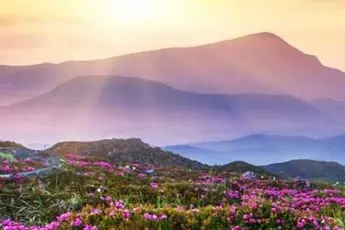
Summer ( May through June ): Starting the Satopanth Lake Trek this season is the most often chosen one. The routes come into light as the snow melts, and the weather is quite constant with sunny weather. Though evenings are cool at greater elevations, daytime temperatures are still pleasant. Because there are plenty of flowering alpine flowers and lush meadows, the terrain lends itself to both hiking and photography.
Post-Monsoon Season ( September to mid-October ): Post monsoon, go to Satopanth Lake to see the clear skies and newly cleaned green surroundings. Nearby peaks like Neelkanth and Chaukhamba have unusually clear views. Fewer tourists this season also make for a quieter and immersive trekking excursion. Though nights may be extremely cold, early snow may start in late October.
Monsoon Season ( July to August ): Usually, the Satopanth journey is not recommended when the monsoon season starts. Heavy rain in the area can create slick trails, landslides, and traffic congestion, especially in mountainous regions. Trekking is dangerous during this time as the risks exceed the benefits.
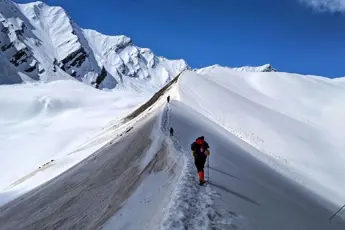
Winter Season (November to April): Severe cold and heavy snowfall continue to render Satopanth Lake unreachable in these months. Heavy snow covers the hiking paths; temperatures far below freezing make camping and travel extremely hazardous. Only seasoned mountaineers with appropriate equipment sometimes attempt the route during this time.
How to Reach Satopanth Lake Trek
By Airport: Approximately 315 km from Badrinath, Jolly Grant Airport in Dehradun is the nearest airport to get to the base of the Satopanth Lake hike. You can travel from the airport to Badrinath through Rishikesh and Joshimath, either by taxi or bus. Trekkers coming from far-off areas find air travel a practical choice since regular flights run from major cities like Delhi to Dehradun.
By Railway Station: Roughly 295 kilometres from Badrinath, Rishikesh Railway Station is the nearest station. From important towns including Delhi, Haridwar, and Dehradun, trains provide an excellent connection to Rishikesh. One can take a bus or hire a cab from Rishikesh to get to Joshimath and then take a road to Badrinath.
By Road: The Satopanth Lake trek begins at Badrinath, which is conveniently linked by road to the main cities in Uttarakhand. Buses and shared jeeps go from Rishikesh, Haridwar, Dehradun, and Joshimath to Badrinath. Along beautiful hill towns and meandering mountain roads, the road trip passes. Three kilometres from Badrinath, Mana village, the last accessible road serves as the base for the trip.
When exploring the Satopanth Lake Trek from Bengaluru and beyond, escape2explore stands out as a trusted name in adventure and experiential travel. Here’s why hundreds of travellers choose us for their getaways:
Trusted, Well-Reviewed Local Operator: escape2explore has gained the trust of thousands of content tourists all over India. With persistent positive feedback and an unblemished reputation for delivering quality experiences, we assure you that your experience will be hassle-free, memorable, and value-packed. Our insider local knowledge guarantees that you will always be in safe hands.
Seasoned Guides: Our trips are led by friendly, trained, and professional guides who are passionate about the outdoors and your safety. Whether it's a beach trek, a cultural tour, or a spiritual walk through temples, our team knows the terrain, the stories, and how to make each moment count.
Safe & Curated Itineraries: Your safety is our number one priority. Our tour packages are thoughtfully crafted with safety measures, researched accommodations, and easy travel arrangements. We take care of the details so you can have the experience hassle-free and worry-free.
Unique Experience That You Won't Find Anywhere Else: With escape2explore, you discover more than the tourist attractions. We go off the beaten track with hidden beaches, unusual treks, offbeat cultural destinations, and true interactions.
Hey there!! 👋
Have any enquiries

Unleash adventure near Bangalore! From hills to caves, immerse in nature's thrill. Unforgettable memories await!









318/A, 9th Main Rd, Ideal Homes Layout, BEML Layout 3rd Stage, Rajarajeshwari Nagar, Bengaluru, Karnataka 560098